

Artificial Intelligence
Latest Andru Edwards Videos
Windows Search Is Becoming a Chatbot, a Year After Microsoft Promised Less Copilot

Posted by Andru Edwards Categories: Microsoft, Software, Artificial Intelligence,
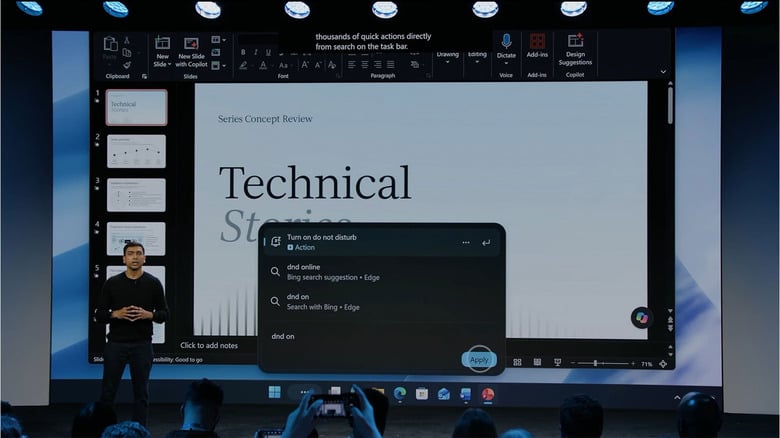
Type a file name into Windows search and you get web results. Type an app name and you wait. Microsoft knows, and the fix it showed today is to turn the Search Menu into something you talk to.
Pavan Davuluri, Microsoft's executive vice president of Windows and Devices, demoed the rebuilt Search Menu on stage in San Francisco. It's a chatbot-style box that takes short typed commands and then does things: toggling settings, pulling up apps and files, or holding a conversation with the Copilot app without you opening Copilot at all. It arrives this fall.
Advertisement
GPT-6 Reaches Every ChatGPT Tier This Week. It Can Answer You With a Bill Splitter.
Posted by Andru Edwards Categories: Announcements, Software, Artificial Intelligence,
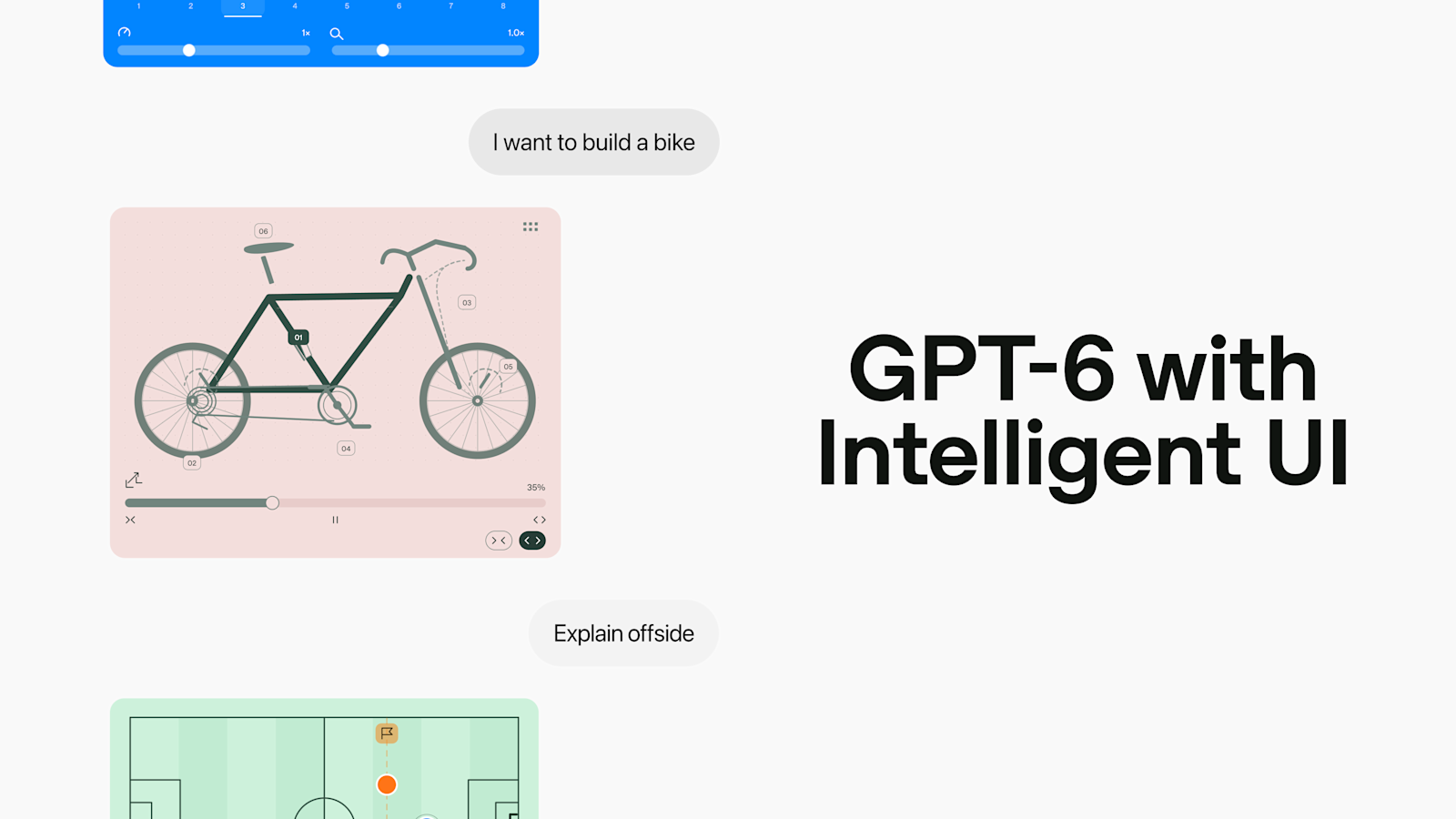
Ask ChatGPT to split a dinner bill four ways and you get a paragraph of arithmetic back. Starting this week it can hand you a bill splitter instead, a small tool with fields you type into, sitting inside the conversation.
That capability is called Intelligent UI, and OpenAI announced it on Wednesday alongside the rollout of GPT-6 to every ChatGPT tier. GPT-6 Sol starts reaching Plus, Pro, Business and Enterprise accounts on October 7 in the Chat tab, with GPT-6 Luna arriving for Free and Go users on the 8th. Paid customers got the first GPT-6 models last month. This is everyone else's turn.
AI Routed a 16-Year-Old Up Crown Mountain. He Ended Up on a Climb Called the Widowmaker.
Posted by Andru Edwards Categories: GPS, Misc. Tech, Artificial Intelligence,

A 16-year-old set off from Grouse Mountain at 8 a.m. on Saturday with a route up Crown Mountain that an AI tool had planned for him. The route was supposed to go up a gully. It put him into steep, technical rock-climbing terrain instead, and by mid-afternoon he was stopped at the base of a cliff with no way up and no safe way down. North Shore Rescue got the call just before 3:30 p.m.
The climbing route he had ended up on is called the Widowmaker. "It turns out that this hiker had somehow got far off the Crown hiking route (we are unclear exactly how/where) and became stranded on a climbing route known as the 'Widowmaker', at the base of its final headwall," the volunteer team said. Two rescue technicians were lowered from a helicopter, hoisted him into the aircraft, and flew him to a base near Cleveland Dam. The operation finished shortly before 6:30 p.m.
Read More  | North Shore News
On Friday, Free Gemini Is Just Flash-Lite. Paying $4.99 Still Won’t Get You Pro.
Posted by Andru Edwards Categories: Google, Software, Artificial Intelligence,
Three days from now, the free version of Gemini runs exactly one model. Google's own support page has the table: starting October 9, accounts without a paid plan get Flash-Lite, and that is the whole list. Flash and Pro move behind a subscription.
A cheap subscription does not fix it either. Google AI Plus, at $4.99 a month, picks up Flash and still does not get Pro. The only way to keep Pro is Google AI Pro at $19.99.
M5 Ultra Mac Studio Review: Huge Local AI Performance (for a Price!)
Posted by Andru Edwards Categories: Apple, PC / Laptop, Product Reviews, Artificial Intelligence,
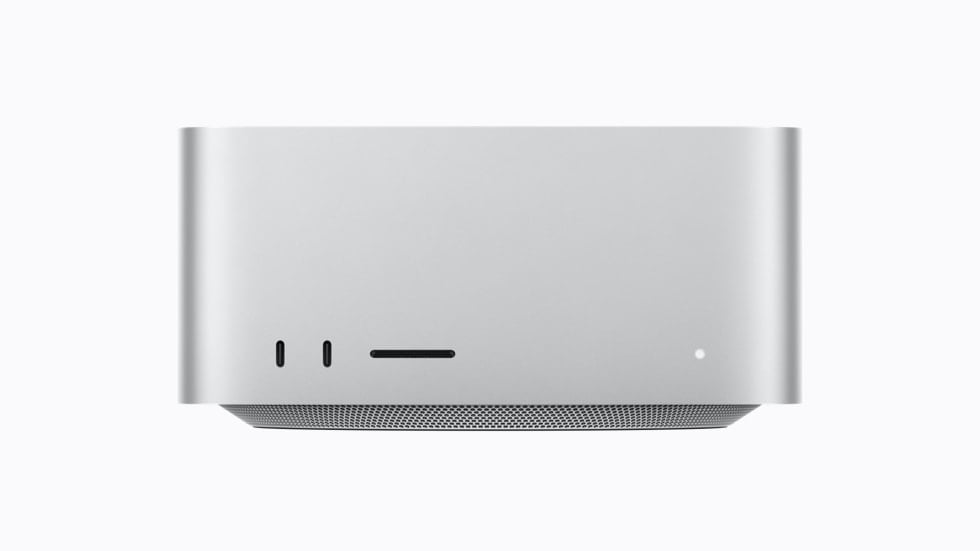
The M5 Ultra Mac Studio is the fastest computer Apple has ever sold, and after a couple of weeks with one on my desk, I can tell you immediately that it's shockingly good.
Apple sent me a near-top configuration: 36-core CPU, 80-core GPU, 256GB of unified memory, and an 8TB SSD. That's more computer than I've ever had in a box this size, and the numbers land about where Apple said they would back in August: 30% to 45% more CPU than the M3 Ultra depending on the benchmark, anywhere from 20% to 60% on the GPU depending on the test, and storage that runs two to three times as fast. The bigger change is who this machine is for. It used to be the video editor's Mac. Now it's the Mac for anyone who wants to run a 150GB language model on their desk without paying anyone a monthly fee, and Apple has priced it for exactly that person.
Click to continue reading M5 Ultra Mac Studio Review: Huge Local AI Performance (for a Price!)
Oracle Says Its New Mexico Stargate Site Is On Schedule. It Filed to Delay the Rent Anyway.
Posted by Andru Edwards Categories: Corporate News, Misc. Tech, Artificial Intelligence,

Oracle says Project Jupiter, its 2.45-gigawatt AI data center in southern New Mexico, remains on schedule. It has also sent its landlord a force majeure notice, which is the paperwork you file when you think you might not be able to hold up your end.
The notice went to Stack Infrastructure, a Blue Owl Capital unit developing the campus in Doña Ana County. Oracle is the tenant, and per Bloomberg's reporting it cannot walk away from the lease and is not trying to. What the notice does is preserve an argument. If the site misses its 2028 target because the power did not show up, Oracle wants the right to push back when the rent clock starts.
Alibaba Says the Zhenwu V900 Is China’s Most Powerful AI Chip. It Won’t Say How Fast.
Posted by Andru Edwards Categories: Corporate News, Artificial Intelligence,
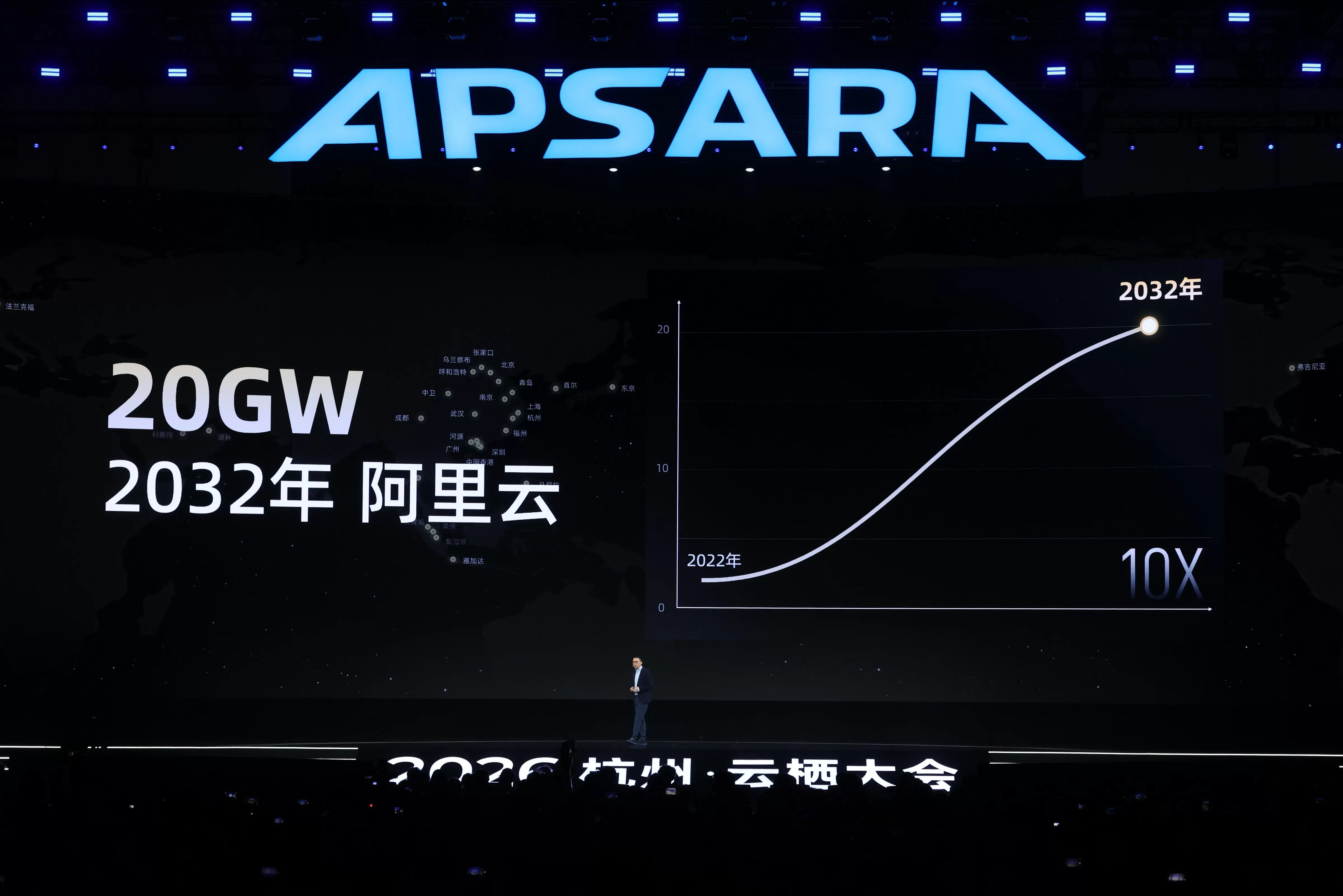
Alibaba's chip unit spent part of its Apsara Conference keynote in Hangzhou this week calling the Zhenwu V900 the most powerful AI chip in China. Then it declined to say how fast it is. No FLOPS figure, no process node, no foundry, no power number. What you get instead is 216GB of memory, 1,200GB/s of inter-chip bandwidth, and native support for FP8 and FP4.
Those are real specs on a real chip, and T-Head has shipped enough silicon that its existing Zhenwu parts serve more than 650 customers, so none of this is vapor. But the line everybody repeated afterward, Alibaba Group CEO Eddie Wu's claim that the V900 delivers "three times the performance of its predecessor, the Zhenwu M890," is a vendor number with nothing underneath it yet. The M890 had 144GB and 800GB/s. Do the division and both of those are exactly 1.5x. Tripling performance off 1.5x on memory and 1.5x on bandwidth means the compute engine has to be doing a great deal more work per clock, and that is the part Alibaba described with an adjective instead of a number.
Meta’s Muse Charm Puts Your AI Agent on a Keychain by December
Posted by Andru Edwards Categories: Wearables, Artificial Intelligence,

Meta saved its oddest piece of hardware for the last two minutes. At the end of tonight's Connect keynote, Mark Zuckerberg did a "one more thing" and held up a small black puck on a cord. It's called Muse Charm, Engadget's Karissa Bell put it at about the size of an Apple Watch, and its job is to give your Muse agent a body you can carry around. Zuckerberg said the design isn't finalized, but Meta plans to ship it "in time for the holidays," in December.
The Charm has a screen, and your Muse avatar lives on it. In Zuckerberg's case that's Agrippa, the toga-wearing Roman he'd been talking to all night. Tom's Guide's live notes say Meta has "only built a few of these so far," that you tap a fingerprint sensor in the corner, and that the "entire Muse AI" is built in. Engadget's Cherlynn Low said it "feels like a Tamagotchi met an AI wearable," and the stage shots back her up.
Click to continue reading Meta’s Muse Charm Puts Your AI Agent on a Keychain by December
YouTube Will Build a Feed From Your Description
Posted by Andru Edwards Categories: Google, Internet, Artificial Intelligence,

Your YouTube homepage is a guess. Most days it's a good one, built out of everything you've watched, skipped, and let autoplay through at one in the morning. It is still YouTube deciding what you're in the mood for, though, and soon you'll be able to tell it directly instead.
That's the headline feature in a batch YouTube announced today. Custom feeds let you describe what you want in a conversational prompt, and YouTube builds a tab for it. The examples run to a feed for workouts, one for long documentaries, and one that surfaces new creators in a niche you care about. It's coming to web, mobile and TV, in the US first, and the only timing attached to it was "soon."
Click to continue reading YouTube Will Build a Feed From Your Description
YouTube Is Putting a Gemini Editor in Shorts That Trims Your Pauses for You
Posted by Andru Edwards Categories: Google, Artificial Intelligence,

Most of editing a Short is grunt work. You scrub through a clip to find where you stopped saying "um," you nudge a cut until it lands on the beat, and you shuffle clips around until the thing moves fast enough that nobody swipes away. YouTube wants a chatbot to do that part.
At Made on YouTube today, YouTube announced a conversational editing assistant built on Gemini for Shorts and the YouTube Create app. You start with one of its suggested prompts or type your own, and it builds a first draft. From there you keep chatting, and it offers personalized suggestions: trim the pauses, reorder clips for better pacing, reorder frames, and trim music and sync it to the beat. You can jump out to the regular timeline and edit by hand at any point, then come back to the chat. YouTube didn't say when it ships or in which countries.