

Wednesday September 23, 2026 8:59 pm
Meta’s $1,299 VR Glasses Weigh 100 Grams Because the Computer Rides in Your Pocket

Posted by Andru Edwards Categories: Wearables, Displays, Video Games
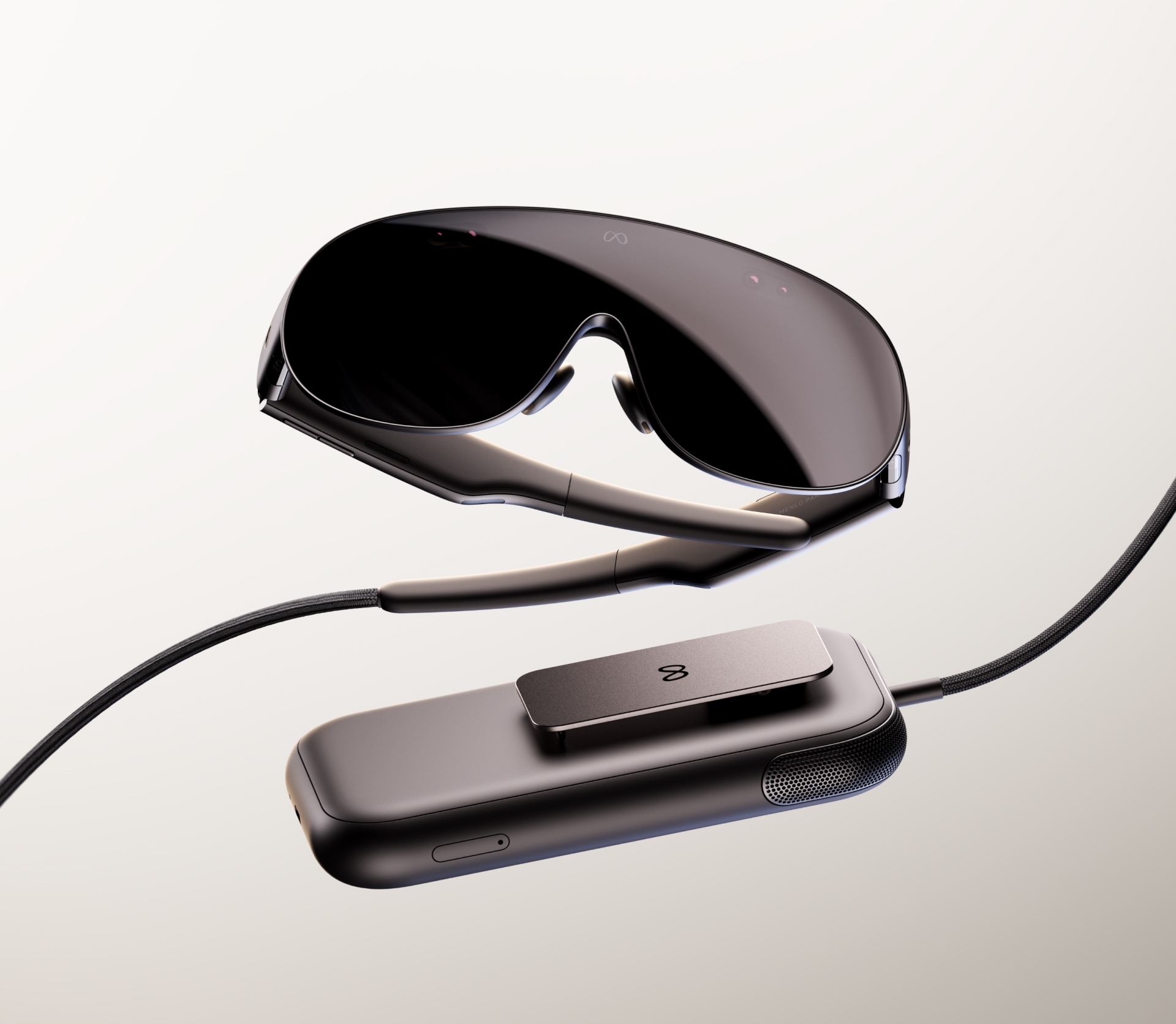
Every VR headset asks you to strap a computer, a battery, and two screens to your face. Meta's new VR Glasses take the computer and the battery off. The glasses weigh about 100 grams, roughly a deck of cards, and everything heavy lives in a phone-sized puck that clips to your pocket and runs a cable up to your temple. They cost $1,299.99 and go on sale in spring 2027.
Mark Zuckerberg spent a big chunk of tonight's Connect keynote on them. Meta had been focusing less on the metaverse unless there was a breakthrough, he said, and then: "This is a breakthrough." He called it the result of more than a decade of work. It's Meta's first new VR hardware in about two years, since Quest 3S in fall 2024, and the pitch on stage came in three words: "Cinema. Computer. Console."
The weight went into your pocket
Meta says the glasses are five times lighter than Quest 3. The frames hold the displays and sensors. The puck, connected by what Meta calls an optical tether, handles compute, battery, and storage, and it runs on Qualcomm's new Snapdragon Reality Elite chip. Meta rates the battery at up to three hours of continuous high-resolution media playback, with 45W fast charging. UploadVR reports 12GB of RAM and 128GB of storage with a microSD slot.
Zuckerberg didn't mention the puck on stage, which Engadget's Devindra Hardawar was quick to point out. It's the whole reason the 100-gram number works. Engadget reports the puck itself weighs about 300 grams, and Tom's Guide found it warm to the touch at the end of a demo. I think that's a reasonable trade, since your pocket handles a battery better than your forehead does. But three hours covers one long movie and change, not a cross-country flight, and you're wearing a cable from your head to your hip the entire time.
Sharp screens, narrower view
The displays are the best thing on the spec sheet. Meta pairs micro-OLED panels (5K total, or 2412 x 2288 per eye according to UploadVR) with pancake lenses built for this device, and quotes 37 pixels per degree. Android Central puts Quest 3 at about 20 and Vision Pro at roughly 34. Gizmodo, after a hands-on, called the picture comparable to Vision Pro. Meta adds Dolby Vision, Dolby Atmos audio built into the frames, and IMAX Enhanced certification, which it says is a first for a VR device.
The cost of that sharpness is field of view. Meta's announcement doesn't list it, but UploadVR and Engadget report 70 degrees horizontal, well short of Quest 3. The sides are open, so you see the room at the edges, and full-color passthrough shows you your desk and phone when you need them. Gizmodo noted the light blocking isn't as complete as a headset's, and nobody has tried these in direct sunlight yet.
Eyes, hands, and a keyboard on the table
Controllers don't come in the standard box. You look at something and pinch to select it, or you talk to Meta's AI agent, Muse, which is built into the operating system and can start a movie or open an app for you. Any flat surface becomes a virtual keyboard and touchpad. Zuckerberg claimed Meta executives, including CTO Andrew Bosworth, type more than 100 words per minute on it. Engadget's Karissa Bell tried it briefly and struggled, Gizmodo called it laggy, and Tom's Guide found typing hard without any haptic feedback.
Movies, sports, and the entire Quest library
Start with the cinema part. Meta showed 180-degree 3D National Geographic footage, and Disney+ will stream 3D movies like The Avengers and Black Panther starting in November in select countries, with viewing rooms styled as Tatooine or Avengers Tower. A new Disney Immersive Cinema by ILM app adds effects-heavy versions of Avengers: Infinity War and Star Wars: A New Hope. Prime Video, YouTube, and ESPN are on board, and Peacock, HBO Max, and Paramount+ are offering their 3D catalogs for the first time. Meta promises more than 100 immersive live sports events a year once the glasses launch, from MLB, NBC Sports, TNT Sports, and UFC. James Cameron, whose Lightstorm Vision is partnering with Meta to debut "first time in 3D" blockbusters in 2027, showed up in a promo video alongside Palmer Luckey.
For games, Meta counts more than 75 titles at launch that work with hand tracking alone, including a new Beat Saber built around it. Xbox Cloud Gaming streams hundreds more. The rest of the Quest back catalog works too, as long as you pair Quest controllers, which UploadVR says aren't in the standard box. "VR gaming is alive and well," Bosworth said, one week after Valve started selling its $1,059 Steam Frame.
Then there's Hologram Calling, which puts a photorealistic version of you on a call with your real-time expressions, in WhatsApp, Zoom, or whatever app you use. People calling from a phone or laptop see your hologram on their screen. Bosworth joked that Meta had finally solved legs in VR, and Meta says holograms are coming to Meta Ray-Ban Display, too.
Who should wait for spring
At $1,299.99, the VR Glasses cost about a third of Apple's Vision Pro, which now starts at $3,699, and less than Samsung's Galaxy XR, which launched at $1,799 last October. They also cost more than twice a $599.99 Quest 3. That premium buys lighter weight and sharper screens, and you give up field of view to get them. Prescription wearers get magnetic lens inserts, which Gizmodo reports cost $100 each. Meta has only announced US pricing so far, and it hasn't said when preorders open.
These make the most sense for someone who wants a private big screen on a plane or a couch and has always hated the weight of a headset. Android Central noted they're built mostly for seated use, so anyone who plays VR standing up and swinging their arms is better served by a Quest. Everything written about the VR Glasses so far, including the flattering parts, comes from short demos in rooms Meta set up (Gizmodo's lasted 20 minutes), and the glasses don't ship for another six months.