

Friday September 25, 2026 9:29 am
The Foldable iPhone is Here: Our First Impressions of the iPhone Duo

Posted by Andru Edwards Categories: Apple, Smartphones, Features, Videos
Apple has finally made an iPhone that folds. I just spent a lot of time getting hands-on with the iPhone Duo at the Apple launch, and the excitement start right when you open it up. It introduces a completely new way to use iOS.
Let's dive into what this $1,999 device actually does!
Two screens in a thin package
The iPhone Duo features a 5.4-inch outer display and a 7.6-inch inner display. The phone is notably short and wide. The outer screen gives you about 90% of the display area of an iPhone 18 Pro. Open it up, and you get 50% more display area than a Pro Max model.
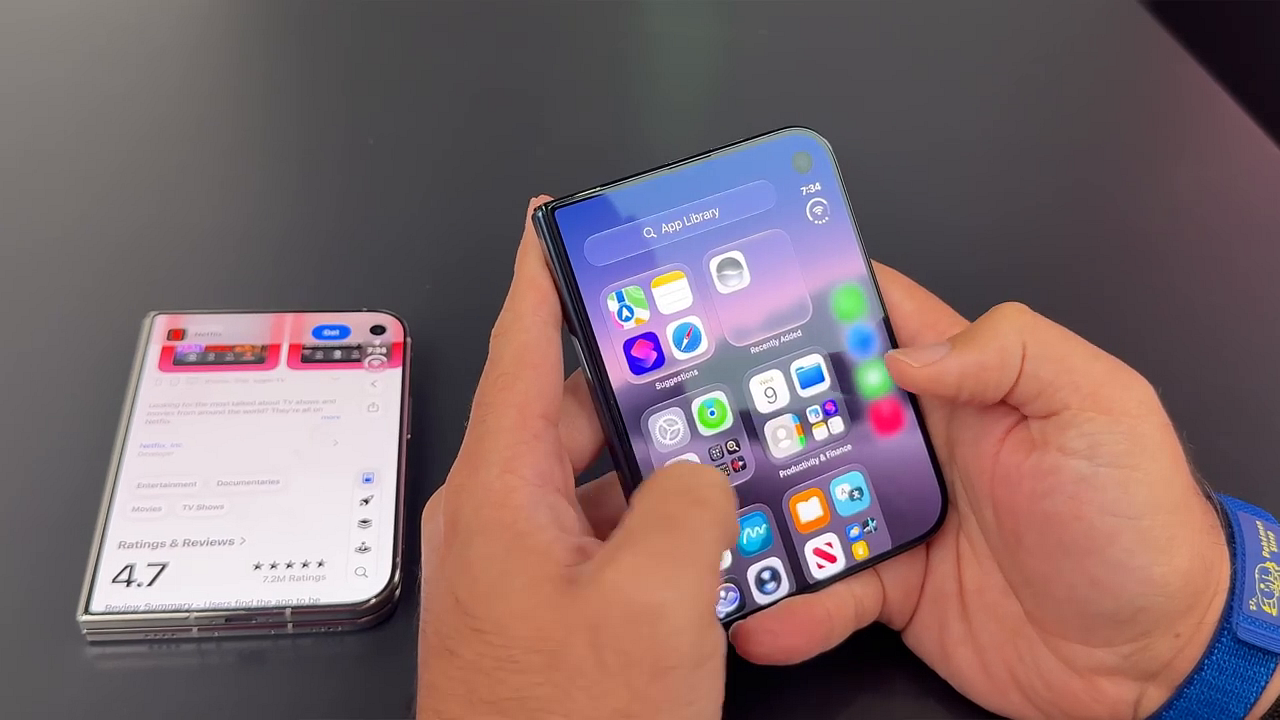
Apple says this is the thinnest iPhone ever made. When open, it measures just 5.2 millimeters thick. Folded closed, it measures 11.3 millimeters. It weighs 254 grams. That is only five grams heavier than an iPhone 18 Pro Max, though the weight is distributed across a wider body.
The multitasking experience
The larger inner screen gives you plenty of room to put things next to each other. You can run two different apps side-by-side. You can even run two separate windows of the exact same app side-by-side.
You can save your favorite combinations as app pairs. For example, you can keep your photos open right next to your text messages. A new side dock makes it easy to access your most used apps whenever you need them.
Moving content around is seamless. You can drag an image directly from the Notes app straight into a Keynote presentation. You can also fold the device halfway like a laptop. When you do this, a Keynote app recognizes the shape. It puts your presentation on the top half and your speaker notes on the keyboard half below.
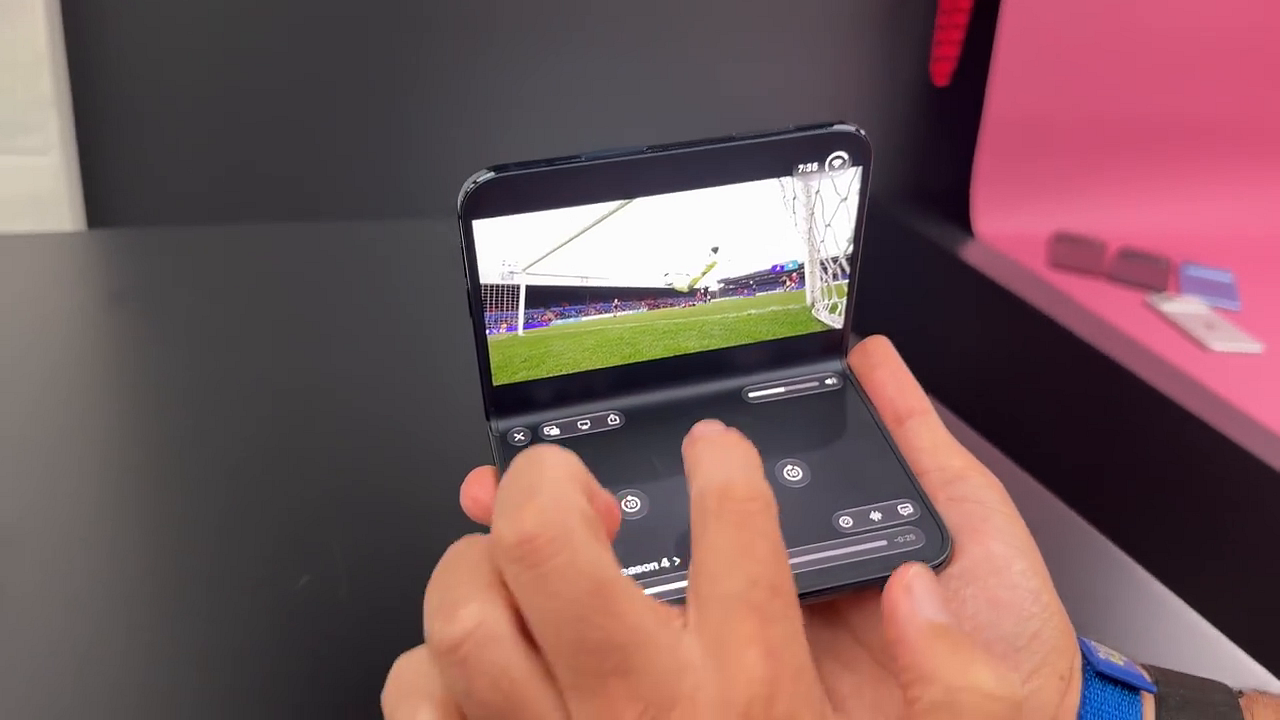
Continuity between the screens is also very clever. Any app sitting on the right side of the inner display automatically transitions to the outer display the moment you close the phone. A neat see-through animation helps keep you oriented as the screens switch.
Hiding the crease with nano-texture
Building a screen that bends without breaking is tough. Apple built a hinge with over 100 parts. The display uses a layered construction featuring glass above and below the OLED panel. A titanium backing plate adds rigidity.
Foldable screens usually suffer from a visible crease. Apple solves this with a clever illusion. The inner display uses a nano-texture polymer finish. This greatly reduces light reflections right along the bend. Less reflection means the crease is significantly harder to see when you look directly at it.
The inner screen feels great under your finger. Apple is also promising USB-C Apple Pencil support for both displays later this year.
A new approach to cameras
The iPhone Duo packs a 48-megapixel main camera and a 48-megapixel ultra-wide camera. The main camera shoots 4K Dolby Vision video at up to 120 frames per second.
The folding design unlocks some great new shooting modes. You can set the phone down halfway folded to act as its own tripod. A new feature called Smart Take automatically captures photos of people as soon as they pose. You no longer need to sprint back to a group photo before a timer runs out.
The Duo Preview feature lets your subjects see themselves on the outer display while you frame the shot. If you are photographing kids, you can turn on Kid Cue. This replaces the camera preview with a fun animation to grab their attention.
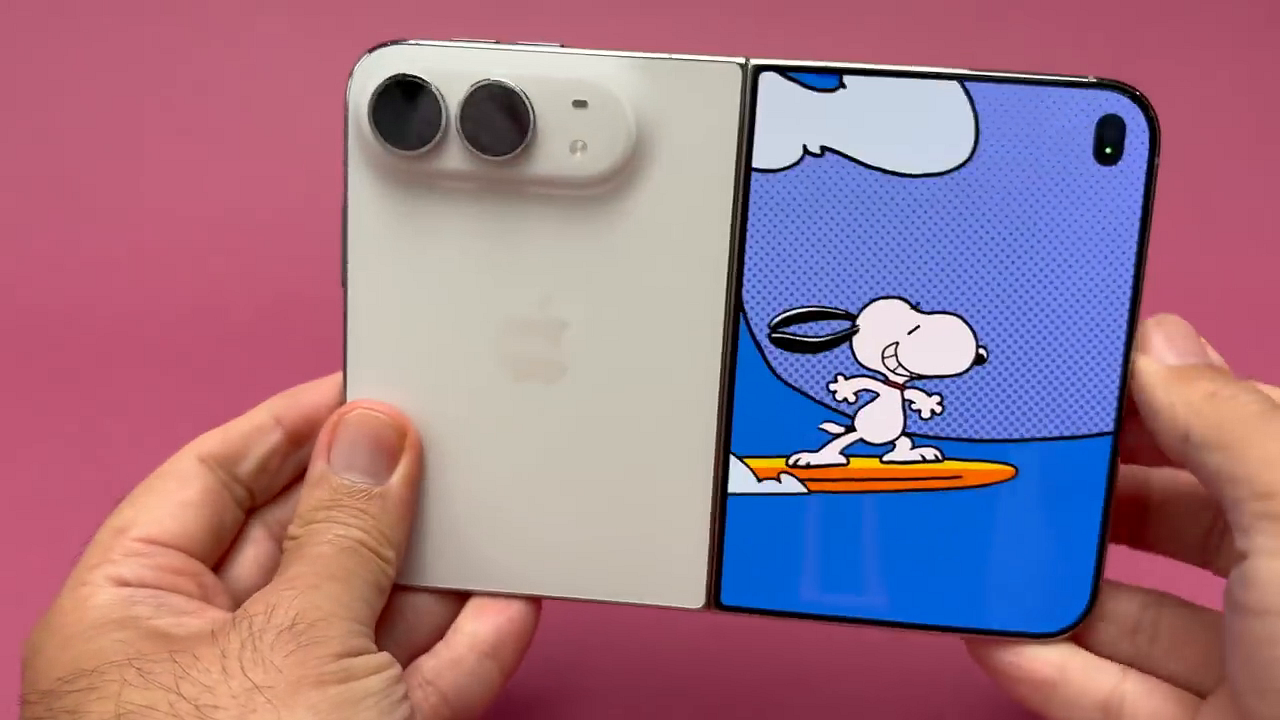
Inside, there is a 12-megapixel under-display camera. It sits completely hidden under the screen for video calls. It records up to 1080p video without requiring a notch or hole-punch cutout.
Performance and battery life
The iPhone Duo runs on the new A20 Pro chip. Apple claims this delivers 20% faster CPU performance and 40% faster graphics than last year's A19 Pro.
Heat management gets a boost from the folding design. A flexible graphite connection moves heat across the hinge to the other side of the device. This gives the iPhone Duo 35% higher sustained performance compared to the iPhone 17 Pro.
Battery life depends heavily on how you use the device. Apple provides two different video playback ratings:
- Up to 44 hours when using the outer screen.
- Up to 31 hours when using the inner screen.
The typical use rating lands at 24 hours per charge. When it is time to plug in, a 60-watt adapter will charge the battery to 50% in roughly 20 minutes.
The trade-offs
Getting an iPhone this thin requires a few compromises.
First, there is no dedicated telephoto lens. The camera relies on a 2x sensor crop from the main lens instead. Second, Face ID is gone. You unlock the device using Touch ID built into the side power button. Finally, the Action button was completely removed to save space.
Then there is the price. The base model with 256GB of storage starts at $1,999. If you want the fully loaded 2TB version, the price climbs to $3,199.
The verdict
The iPhone Duo is the most interesting iPhone Apple has made in years. The larger display genuinely changes how you work on a mobile device.
If your daily routine involves juggling documents, messages, and schedules, the extra workspace is fantastic. If you just want a great camera for taking everyday snapshots, a standard Pro model is still the more practical choice.
Pre-orders for the iPhone Duo start on October 16. The phone officially launches on October 23.