

Friday September 25, 2026 9:20 am
The iPhone 18 Pro’s Secret Weapon: How a Variable Aperture Camera Will Change Your Photos

Posted by Andru Edwards Categories: Apple, Smartphones, Features, Product Reviews
Apple just changed how the iPhone Pro thinks. On the surface, the iPhone 18 Pro might look like a standard, iterative update. But underneath the familiar exterior lies a completely rebuilt architecture. We are talking about a new chip, a massive cooling upgrade, and a camera system that finally does something no other iPhone has ever done. Let's dig into what makes this device a quiet powerhouse.
A familiar design with a few smart tweaks
The body uses a high-heat force aluminum unibody, keeping it lightweight but incredibly tough. Apple introduced four colors this year: Black, Silver, Glacier, and Burgundy. The Burgundy finish is deep, sophisticated, and catches the light beautifully without screaming for attention.
Durability is highly impressive. Both the front and back feature Ceramic Shield 2. You can comfortably run this display without a screen protector and not see a single scratch after heavy daily use.
Up top, the Dynamic Island is about 25% smaller but now shows up to three live activities at once. Apple achieved this by hiding the FaceID IR camera directly behind the display pixels, giving you more screen real estate without losing functionality.
The secret weapon: a variable aperture camera
Here is the feature that will fundamentally change how your photos look. For the first time, the iPhone features a variable aperture lens.
A camera lens typically trades off between two things: how much light it lets in, and how much of the scene stays in focus. A wide-open lens is great in the dark, but it heavily blurs the background. A smaller opening keeps everything sharp, but it needs a lot of light. Previous iPhones forced you to live with whatever fixed aperture Apple chose.
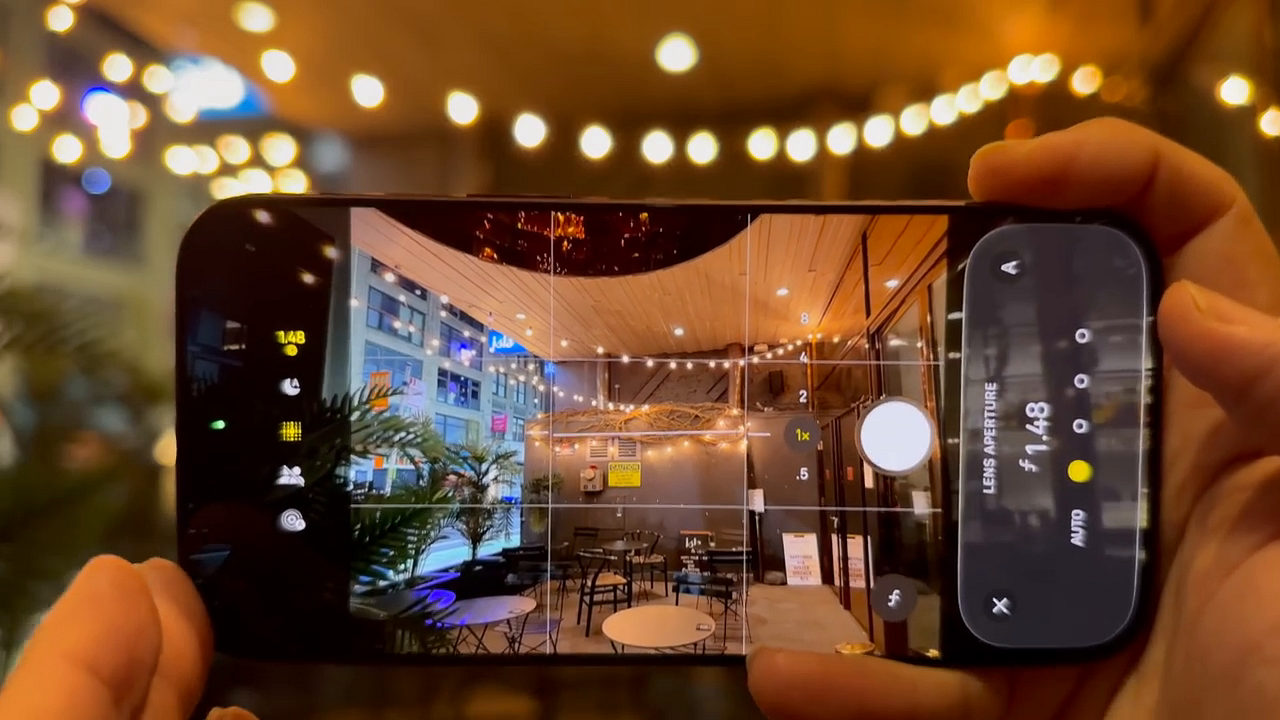
The iPhone 18 Pro changes the rules. It uses six tiny laser-cut blades controlled by a microscopic rotor to physically switch between four settings: f/1.48, f/1.8, f/2.8, and f/4.0.
In low light, the lens opens to f/1.48, gathering 50% more light than the previous generation. But if you are taking a group shot with people standing at different distances, it narrows to f/4.0 so everyone stays sharp. Point it at a light source at f/4.0, and you will even get a natural starburst effect.
Taking manual control
The camera chooses the aperture automatically by analyzing the scene. But you can easily take the wheel in the native camera app.
- Open the camera and swipe up to reveal the pro controls.
- Tap the Lens Aperture icon.
- Slide the dial to switch between f/1.48, f/1.8, f/2.8, and f/4.0 in real-time.
Pro tip: You can also manually adjust shutter speed, white balance, and view a live histogram directly within the default camera app.
A massive leap in sustained performance
Pushing massive amounts of data through a variable aperture lens and AI models requires serious power. Enter the A20 Pro, built on a new 2-nanometer process. It features a 6-core CPU, a 7-core GPU, and dual 16-core neural engines.
But the real story is heat management. Apple moved the memory to sit side-by-side with the chip, rather than stacking it on top. They paired this with a new vapor chamber built into the structural center of the phone. This chamber has three times the surface area of the previous design.
The result is up to 40% better sustained performance. You can game, edit video, and run heavy AI tasks for much longer before the phone ever needs to throttle.
Apple Intelligence and the new Siri
Apple Intelligence is deeply integrated here, powering an entirely new version of Siri. It understands personal context, knows what is on your screen, and can take actions across your apps. You can ask it to cross-reference an old message with a calendar invite, and it actually does the heavy lifting for you.
You also get powerful new image tools. A standout is Spatial Reframe. It takes your original photo and uses a cloud model to let you literally move the camera position after the fact, generating new perspectives and filling in the edges.
Just know that you will need some patience right out of the box. Siri indexes your data entirely on-device for privacy. When you set up the phone, it takes a few days to fully index your messages, emails, and files before Siri reaches its full potential.
What works well
- Incredible battery life: The A20 Pro chip, a new C2 modem, and the updated thermal architecture combine to deliver up to 45 hours of video playback on the Pro Max. It comfortably survives heavy days of gaming and video editing with plenty of charge left.
- True camera flexibility: The variable aperture lens adapts perfectly to tricky group shots, dark scenes, and creative lighting.
- Faster charging: Plugging into a 60W charger now gets you to 50% battery in just 15 minutes.
What could be better
- The wait for AI: Siri requires days of on-device indexing before its new contextual features actually work properly.
- The price tag: Across the board, this generation sees a noticeable price increase.
The bottom line
The iPhone 18 Pro is the most complete camera and performance package Apple has ever shipped. The variable aperture lens genuinely changes mobile photography. Pair that with thermal upgrades that finally handle sustained workloads, and you get a device that stops making you worry about battery life.
If you push your phone hard for content creation, gaming, or just want a battery that refuses to quit, this is a massive upgrade. But if your current phone handles your daily routine just fine, the higher price tag means you are perfectly safe holding off.