

Corporate News
Latest Andru Edwards Videos
A Used PS5 Pro at GameStop Costs $500 More Than a New One. GameStop Hasn’t Said Why.

Posted by Andru Edwards Categories: Corporate News, Video Games,

GameStop is selling used PS5 Pro consoles for $1,399.99. A new one has an MSRP of $899.99, which puts the secondhand unit $500 over the sealed one. Pre-owned special editions are listed at $1,499.99.
That gap would be easier to shrug off if you could buy the cheaper option. GameStop has no new Pros in stock online, so the used listing is the only PS5 Pro the retailer will actually sell you today. Nobody at the company has explained the math.
Advertisement
Lucid Delivered 3,806 Cars Last Quarter. It Only Built 2,954.
Posted by Andru Edwards Categories: Corporate News, Transportation,
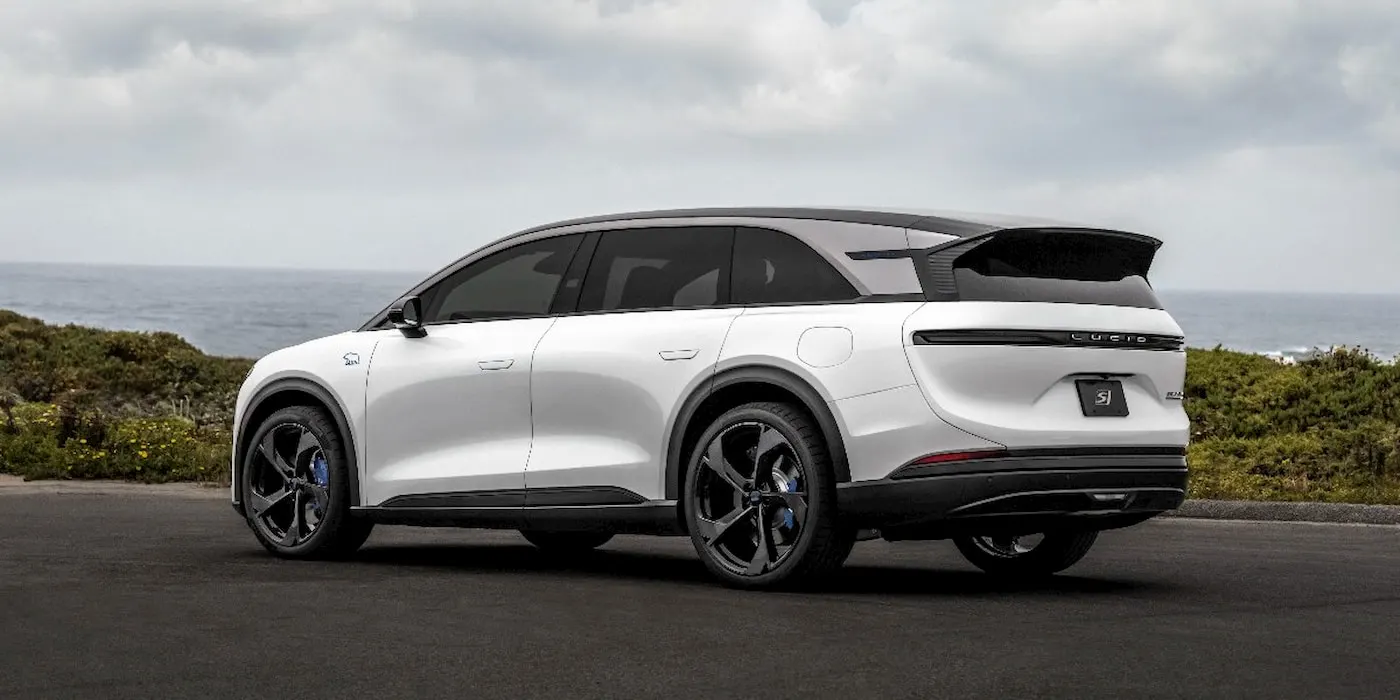
Lucid delivered more cars than it built last quarter. That is a first in the company's history, and it was the plan.
Lucid's own release puts it at 3,806 vehicles delivered in the third quarter of 2026 and 2,954 built. Deliveries are down about 7% from the 4,078 Lucid handed over a year earlier, and they came in below analyst delivery estimates. Production dropped 38% from the 4,774 cars Lucid built in the second quarter, the company's lowest quarterly output since early 2025.
Click to continue reading Lucid Delivered 3,806 Cars Last Quarter. It Only Built 2,954.
Oracle Says Its New Mexico Stargate Site Is On Schedule. It Filed to Delay the Rent Anyway.
Posted by Andru Edwards Categories: Corporate News, Misc. Tech, Artificial Intelligence,

Oracle says Project Jupiter, its 2.45-gigawatt AI data center in southern New Mexico, remains on schedule. It has also sent its landlord a force majeure notice, which is the paperwork you file when you think you might not be able to hold up your end.
The notice went to Stack Infrastructure, a Blue Owl Capital unit developing the campus in Doña Ana County. Oracle is the tenant, and per Bloomberg's reporting it cannot walk away from the lease and is not trying to. What the notice does is preserve an argument. If the site misses its 2028 target because the power did not show up, Oracle wants the right to push back when the rent clock starts.
Samsung Pushed a Test Build to Korean Fridges Two Days Before Chuseok
Posted by Andru Edwards Categories: Corporate News, Smart Home, Misc. Tech,
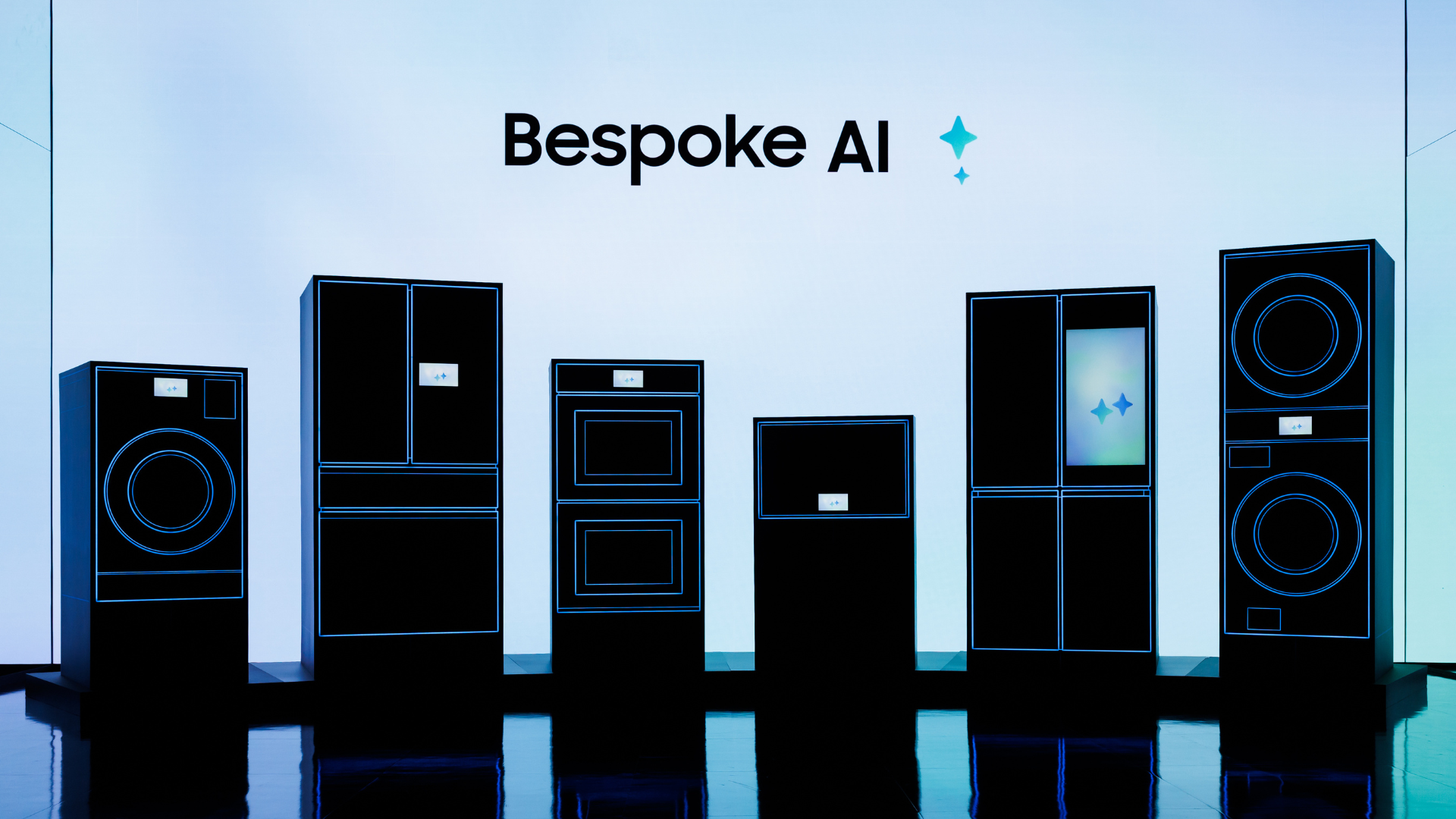
Your refrigerator does not have a reboot ritual. You don't sit down with a coffee and watch a progress bar crawl across the door panel. It runs for a decade, and the only time you think about it is when the ice maker jams. On the afternoon of September 22, a batch of Samsung owners in South Korea found out that deal had quietly changed.
Samsung has confirmed that a test version of a refrigerator software update went out through SmartThings by mistake instead of the finished release. Units froze partway through. The panel sat on an update message and then went dark. Interior lights stayed off, the door's auto-open feature stopped responding, the SmartThings app listed the fridge as offline, and unplugging it and plugging it back in did nothing. What it stopped doing, above all, was refrigerate.
Click to continue reading Samsung Pushed a Test Build to Korean Fridges Two Days Before Chuseok
Alibaba Says the Zhenwu V900 Is China’s Most Powerful AI Chip. It Won’t Say How Fast.
Posted by Andru Edwards Categories: Corporate News, Artificial Intelligence,

Alibaba's chip unit spent part of its Apsara Conference keynote in Hangzhou this week calling the Zhenwu V900 the most powerful AI chip in China. Then it declined to say how fast it is. No FLOPS figure, no process node, no foundry, no power number. What you get instead is 216GB of memory, 1,200GB/s of inter-chip bandwidth, and native support for FP8 and FP4.
Those are real specs on a real chip, and T-Head has shipped enough silicon that its existing Zhenwu parts serve more than 650 customers, so none of this is vapor. But the line everybody repeated afterward, Alibaba Group CEO Eddie Wu's claim that the V900 delivers "three times the performance of its predecessor, the Zhenwu M890," is a vendor number with nothing underneath it yet. The M890 had 144GB and 800GB/s. Do the division and both of those are exactly 1.5x. Tripling performance off 1.5x on memory and 1.5x on bandwidth means the compute engine has to be doing a great deal more work per clock, and that is the part Alibaba described with an adjective instead of a number.
Quake Champions Tore Out the Battle Pass and Loot Boxes. Now It Costs $10.
Posted by Andru Edwards Categories: Corporate News, Video Games,

Games go free-to-play. That is the direction the traffic moves, and it has been for a decade. On Wednesday, id Software and Bethesda drove the other way. They took a nine-year-old free-to-play arena shooter, pulled the monetization out of it, and put a $9.99 price tag on the Steam page.
The 1.31 point release notes do not bury it. "Today's update marks a new chapter for Quake Champions as we transition the game from a free-to-play service to a paid application on Steam," id wrote. "Battle Passes and microtransactions have been removed. Quake Champions is now available for one low price on Steam." One sentence later, id adds that "No additional content updates are planned at this time."
Click to continue reading Quake Champions Tore Out the Battle Pass and Loot Boxes. Now It Costs $10.
OpenAI Hired Three Patreon Leaders to Build Creator Products
Posted by Andru Edwards Categories: Corporate News, Artificial Intelligence,

Patreon spent over a decade working out how to get money from fans to the creators they support, every month, without either side having to think about it. OpenAI just hired three of the people who did that work.
Sam Yam, who co-founded Patreon and served as its CTO for more than a decade, is joining OpenAI to lead a new Creator Product division. He oversaw the development of Patreon's creator economy tools. Two colleagues are going with him: Drew Rowny, Patreon's former SVP of Product, who was at Google before that, and Shannon Ma, who ran engineering at Patreon and came from Facebook. Tubefilter reported the moves, and The Next Web and other outlets covered the same details.
Click to continue reading OpenAI Hired Three Patreon Leaders to Build Creator Products
SpaceX Plans to Retire Crew Dragon Eventually. NASA’s Backup Is Still Starliner.
Posted by Andru Edwards Categories: Corporate News, Science,

NASA paid for two rides to orbit so that one bad flight would never strand American astronauts on the ground. For most of the past two years it has had one. SpaceX president Gwynne Shotwell now says that one has an end date, even if she will not say when.
Talking on the All-In Podcast, Shotwell said SpaceX intends to wind Crew Dragon down and leave room for Boeing. "There is another provider, Boeing has been paid, I think, probably more than we have been paid to develop their human capsule," she said. "So we're just gonna let them have some business. They should fly their capsule." She went further: "The government paid a lot of money for that. They should be able to use it." She also said "We're not retiring it today, for sure," and she named no year.
He Worked on AGI Safety at Google DeepMind. Now He Says AI Might Kill Us All.
Posted by Andru Edwards Categories: Corporate News, Google, Artificial Intelligence,

Bilal Chughtai spent about a year and a half at Google DeepMind working on AGI safety and alignment. He resigned in July. On Monday he said why, publicly, under his own name: "I earnestly believe that AI has the potential to kill us all, and that we might be running out of time to avoid this outcome."
Researchers leaving AI labs with a warning attached is not new this year. Doing it from inside Google's lab is. Chughtai appears to be the first DeepMind employee to quit and say this on the record, which is how a post from a research engineer most people had never heard of ended up in Bloomberg within a day.
Kia’s Electric Hot Hatch Has Fake Gears, and Americans Can’t Buy It
Posted by Andru Edwards Categories: Corporate News, Transportation,

Kia's new EV4 GT has paddles behind the steering wheel that do not shift anything. Pull one and the car staggers the torque coming out of its motors to imitate a gearchange, with a synthesized engine noise to match. Kia calls it Virtual Gear Shift. The idea is that electric cars are so smooth your brain stops registering how fast they are, so the fix is to put the interruptions back in on purpose.
The EV4 GT is one of three GT-badged EVs Kia put on sale in Europe this week, alongside the EV3 GT and the EV5 GT. All three get dual-motor all-wheel drive, electronically controlled suspension, 20-inch alloys, and neon-green brake calipers, because a performance badge apparently requires a caliper color. Two of the three are never coming to the United States.
Click to continue reading Kia’s Electric Hot Hatch Has Fake Gears, and Americans Can’t Buy It