

Friday September 18, 2026 9:39 am
Meta’s Muse AI Agent Will Book the Flight and Haggle the Bill (Invite Codes!)

Posted by Andru Edwards Categories: Internet, Software, Artificial Intelligence
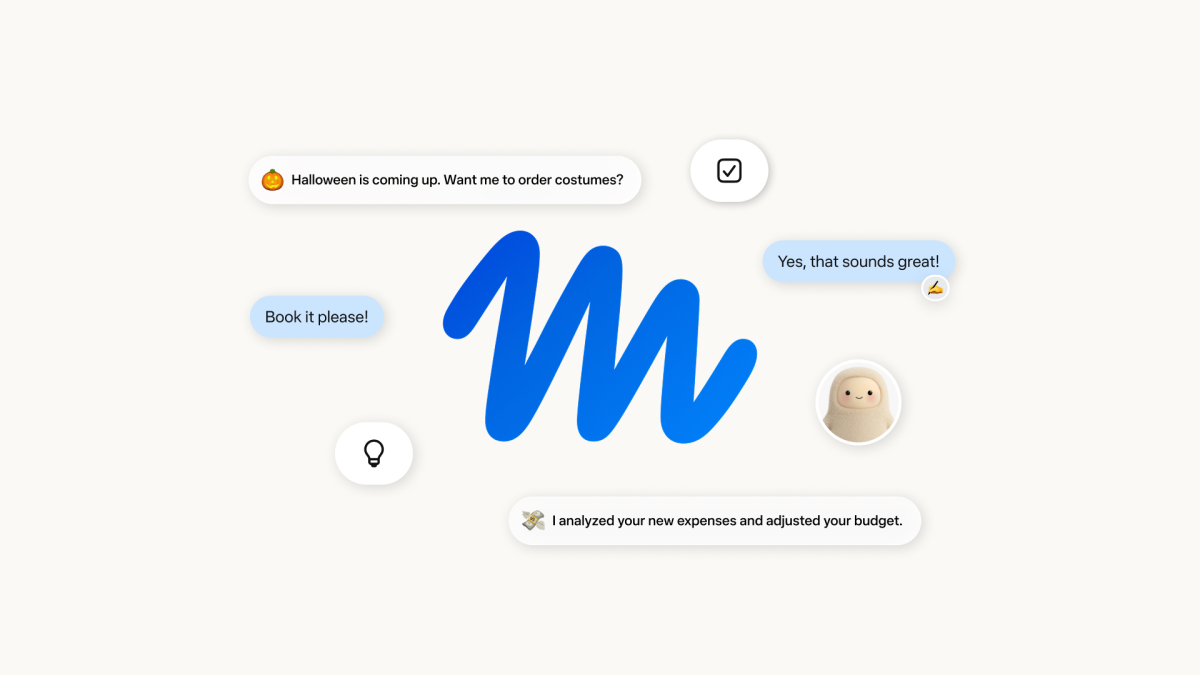
You know the part of a chatbot conversation where it hands you a tidy plan and then you go do all the work yourself? Meta's new Muse is built to skip that part. It's a personal AI agent, a separate product from the Meta AI app, and its pitch is that it goes and does the thing: sends the email, books the trip, fills out the form, negotiates the bill.
It launched September 8 in the US on iOS, Android. You can sign up at muse.ai/join or in the app. You need a Meta account, not a Facebook or Instagram login, and on the web you sign in with your phone number.
Once you're in, open Settings and enter CC2P24 as your invite code. Do that within 48 hours of creating the account, and you get 1 billion free tokens.
What it does that a chatbot doesn't
The Meta AI app is a chatbot. You ask, it answers, you leave. Muse keeps working after you close the app and pings you when it needs a decision. Meta's own examples include turning that Instagram recipe you saved into a shopping list, building an action plan for a long-term goal, sending invitations, booking travel, and haggling a bill down. It opens a browser, fills forms, and checks out through Link by Stripe, with Shop Pay and 1Password support promised later.
It connects to your stuff one service at a time: email, calendar, payments, health and fitness apps, smart home, dining, shopping, music, events. Engadget's setup guide lists Google, Gmail, Spotify, and OpenTable among the early hookups. You approve each connection individually, and you can set permissions to "always ask" before it acts. You can also name your agent and give it an avatar and a communication style, which is either charming or a little much depending on your tolerance for a bot with a personality.
You'll need a Meta account, but not a Facebook or Instagram one.
The model and the sandbox
Under the hood it runs Muse Spark, the model Meta introduced in April and calls its most capable to date. Every user gets what Meta calls a Muse Secure VM, a dedicated virtual machine, with a separate agent named Sentinel watching everything that goes out to the internet and stopping for approval on sensitive actions. Meta says Muse can't see your passwords or payment methods, keeps credentials in separate storage, and doesn't feed your conversations to its ad systems. You can opt out of training and delete specific memories. An end-to-end encrypted "Confidential VM" is on the roadmap.
Those are the promises. Meta's own guidance during setup reads: "Muse may take unexpected actions. Monitor it carefully."
Tokens, metered like a data plan
Muse meters usage in tokens rather than messages per hour, with a weekly reset and a gauge in the app that shows how much you've burned. The free tier gets 100 million tokens a week. Gizmodo ran a portrait redraw, several MIDI melodies, and a handful of small games through it and used 11 percent of the week. Two paid tiers, Power at $20 a month and Maximum at $100 a month, raise the ceiling. Stark Insider's breakdown puts those at 500 million and 3 billion tokens a week, with cheaper web prices ($16 and $80) than the iOS ones. Meta chief AI officer Alexandr Wang told Axios: "For the vast majority of users, they should be able to do what they need to within the free tier."
Where it is and where it's going
US only for now, with more countries planned. It's on iPhone, Android, muse.ai, and inside WhatsApp, with Meta's AI glasses coming and a Mac app that arrived today (more on that separately). It hit No. 2 on the US App Store within two days, on about 83,000 iOS downloads, which TechCrunch notes is a slower start than the Meta AI app's 108,000 launch-day downloads.
Should you hand it your calendar?
If you already trust Meta with your photos and messages, the isolated VM and per-connection permissions are more than the company has offered before, and the free allowance is big enough to find out whether an agent fits your life. If Meta's privacy record (the $5 billion FTC penalty in 2019, Cambridge Analytica) is why you left Facebook, an agent that fills forms with your personal data is the last product you'll want to try. Either way, start it on something low stakes like the recipe-to-shopping-list trick, keep permissions on "always ask," and see whether it saves you time before you let it near your credit card.