

Saturday September 5, 2026 1:44 am
Tesla Said the Cybercab Is Legal. NHTSA Wants to See the Homework.

Posted by Andru Edwards Categories: Corporate News, Editorial, Transportation
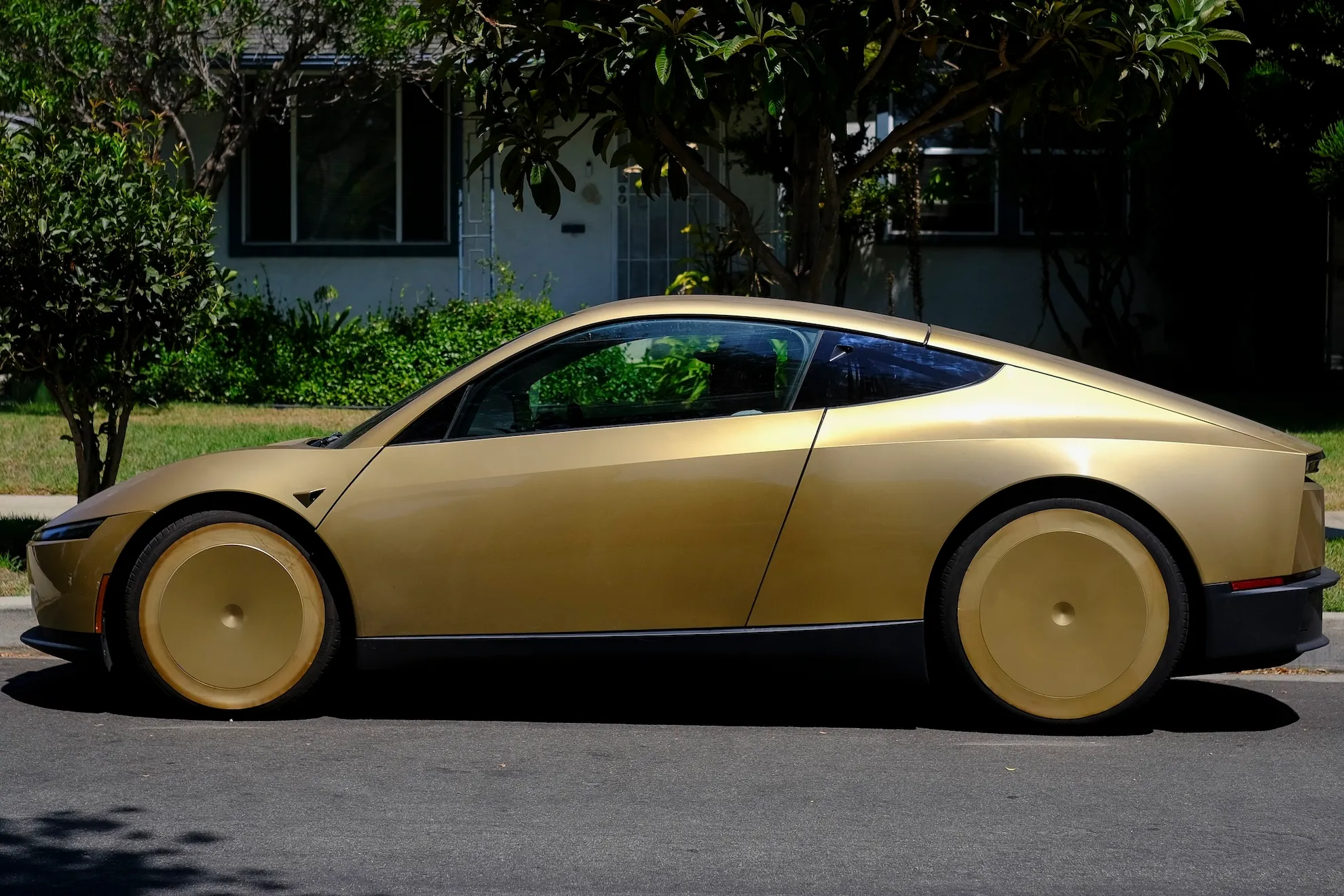
Tesla put its first production Cybercabs on public streets in Austin this week. Federal safety regulators opened a file on them before the next day was over.
The probe is an audit query, AQ26002, from NHTSA's Office of Defects Investigation, and it covers roughly 1,000 vehicles. No crash set it off. The agency is asking about paperwork, specifically the paperwork Tesla filed on itself.
What Tesla certified, and what it decided not to
Nobody in Washington signs off on a new car before it goes on sale. The United States runs on self-certification. The manufacturer declares that its vehicle meets the Federal Motor Vehicle Safety Standards, and NHTSA checks the work afterward if something looks off. Tesla certified the Cybercab as compliant with all applicable standards and started carrying passengers.
NHTSA's description of the car is blunt. The vehicles "lack permanently attached, conventional manual controls, such as a brake pedal, gas pedal, steering wheel and mirrors." Most of the existing standards were written on the assumption that those parts are there. Tesla's reading is that a rule about a brake pedal cannot bind a car that has no brake pedal, which makes "applicable" the load-bearing word in the whole certification.
NHTSA wants that reasoning on paper. The agency says it will "examine the process and technical data on which Tesla relied when certifying the Cybercab," and consider "the extent to which Tesla's certification depended on determinations that certain FMVSS are inapplicable to the Cybercab."
The rule that would make this fine has not happened yet
Tesla did not invent the argument. The Trump administration has proposed scrapping the manual control requirements, brake pedal included, for vehicles built to drive themselves. That proposal went out in late June and has not been finalized. Tesla read where the rules are heading and put cars on the road before they got there.
Zoox already ran this play
Amazon's Zoox has been through this. It self-certified its own steering-wheel-free robotaxi in July 2022. NHTSA opened an investigation into that self-certification in March 2023 and asked the same question it is asking Tesla now. What process and what data produced the claim? Zoox eventually went the exemption route instead, and agreed to stop saying its purpose-built vehicles meet FMVSS. That stretched from 2022 into 2025.
Tesla never filed for an exemption. It went straight to service.
What is confirmed and what is not
Confirmed: the Cybercab is carrying riders in Austin through the Robotaxi app, Tesla self-certified it, and NHTSA has an open audit query covering an estimated 1,000 vehicles. Texas records show 45 Cybercabs among Tesla's 420 registered autonomous vehicles in the state.
Open: how this ends. An audit query is a demand for records and reasoning, not a finding of fault. NHTSA can read Tesla's answers and close the file, or it can decide the certification does not hold, and its options then run from a recall to civil penalties. Anyone telling you today which way it goes is guessing.
What to watch
Three things worth watching. Whether Tesla keeps expanding the Cybercab fleet while the query is open. Whether the proposed rule gets finalized before NHTSA finishes reading. And whether Tesla, having skipped the exemption process once, quietly files for one anyway.
Tesla decided on its own that the Cybercab was legal to deploy, and NHTSA is now going to check that decision. Until it does, the car keeps picking people up.