

Saturday September 5, 2026 11:55 pm
TCL P80 Ultra Puts NXTPAPER on an AMOLED Screen for the First Time

Posted by Andru Edwards Categories: Smartphones, Displays
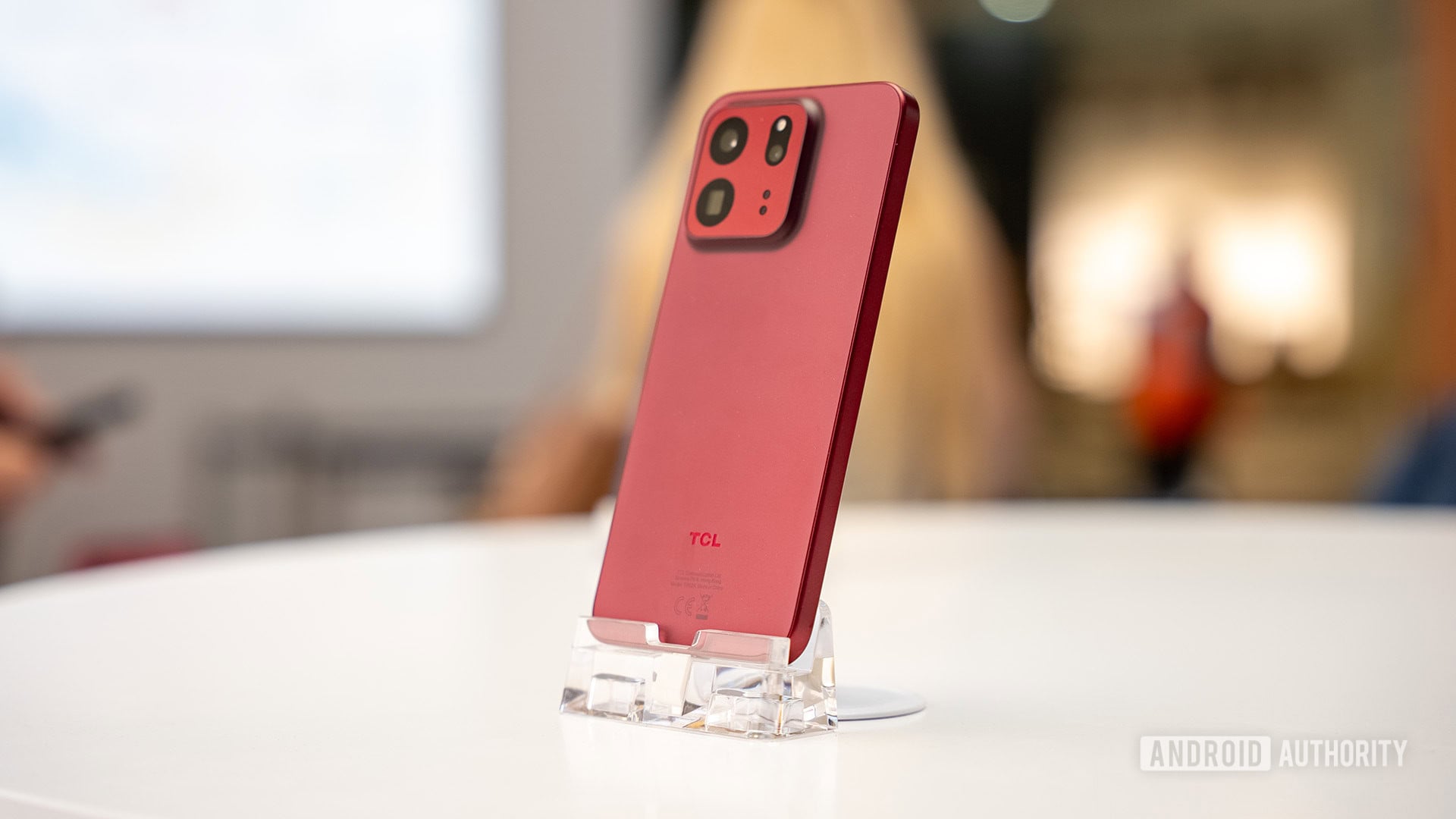
Take any phone outside on a sunny day and the screen turns into a mirror. TCL has been working on that problem for years with NXTPAPER, its matte, paper-like screen treatment, and the catch was always that you had to take it on an LCD. The new P80 Ultra and P80 Pro, both announced at IFA this week, are the first phones where you don't have to make that swap.
Both use a 6.83-inch 1.5K AMOLED running at 120Hz and peaking at 3,200 nits, with the NXTPAPER layer built into the panel. The Ultra starts at 549 euros for 8GB of RAM and 256GB of storage, or 599 euros for 512GB. The Pro is 429 euros. A third phone, the plain P80, comes in at 349 euros and skips the NXTPAPER treatment entirely. European sales started September 3, Latin America follows in October, and TCL says the US gets them later without saying when or for how much.
What NXTPAPER actually does
NXTPAPER is a set of hardware changes to the display itself, not a screen protector or a software night mode. The glass is nano-etched so light scatters instead of bouncing straight back at you, the same trick behind a matte laptop screen or an anti-glare monitor. TCL also swaps the linear polarizer that most OLED phones use for a circular one, which is why the screen stays readable through polarized sunglasses instead of going black when you tilt your head. Add hardware-level blue light reduction (TCL claims 2.9 percent on this panel) and DC dimming that doesn't flicker at low brightness, and the pitch is a phone you can read on for hours without your eyes filing a complaint.
There's a physical key on the side that flips the phone into its reading modes. Paper Mode offers a few paper-like color profiles. Max Ink Mode strips the interface down to black and white, quiets notifications, and stretches the battery to roughly a week of reading. TCL is selling you a Kindle that lives inside your phone.
Nobody outside TCL has tested this panel yet, which is the caveat worth holding onto. Matte treatments buy you glare control and they usually cost you a little contrast and a little color pop. Whether that tax is small enough to ignore on an AMOLED is the entire question here, and a spec sheet can't answer it.
The Ultra's extra 120 euros buys a zoom lens
The Pro and the Ultra are the same phone until you get to the back. Both run a MediaTek Dimensity 7400 Elite with 8GB of RAM (plus TCL's virtual RAM option that borrows storage), both carry a 5,800mAh battery with 45W wired charging, both are IP68 rated. The Ultra adds a 50MP 3x periscope telephoto alongside its 50MP main camera, which sits on a relatively large 1/1.56-inch sensor at f/1.88 with stabilization.
A real periscope in this price range is unusual. Most phones under 600 euros give you a main camera, an ultrawide you rarely touch, and a digital zoom that turns faces into oil paintings. If you shoot your kid's soccer games or concerts from the cheap seats, that's the single reason to pay up for the Ultra.
Seven years of patches, four years of Android
TCL is promising four OS upgrades and seven years of security updates on the Pro and Ultra. The standard P80 gets three OS upgrades and the same seven years of patches. Google and Samsung already commit to seven years on their flagships, so the number isn't new. Seeing it on a 429-euro phone is.
Two things temper it. The OS and security windows don't line up, so for the last three years of that run you'd be getting patches on a version of Android that stopped moving. And a support commitment is a promise, not a spec. Nobody has finished a seven-year run yet, since these pledges only started appearing in 2023, and TCL is asking for trust on a longer timeline than it has ever delivered on. Buy this phone for the screen you can look at today, not the update you might get in 2033.
Who this is for
The Dimensity 7400 Elite is a midrange chip and TCL isn't pretending otherwise. If you play demanding games, or you want a phone that still feels quick after four years of app cruft, look elsewhere. What you're paying for is the display, and a specific person wants this display: someone who reads on their phone every night, someone whose eyes ache by 10 p.m., someone who works outdoors, someone who has been eyeing an e-reader but doesn't want to carry a second device.
If that's you, the annoying part is the wait. TCL hasn't said when the P80 series reaches the US or what it will cost when it does, so for now the only way to find out whether a matte AMOLED holds up is to buy one in Europe.