

Wednesday September 23, 2026 8:51 pm
Meta’s Glasses Can Now Be a Hearing Aid, If You Pay $150 to Turn It On

Posted by Andru Edwards Categories: Wearables, Portable Audio / Video
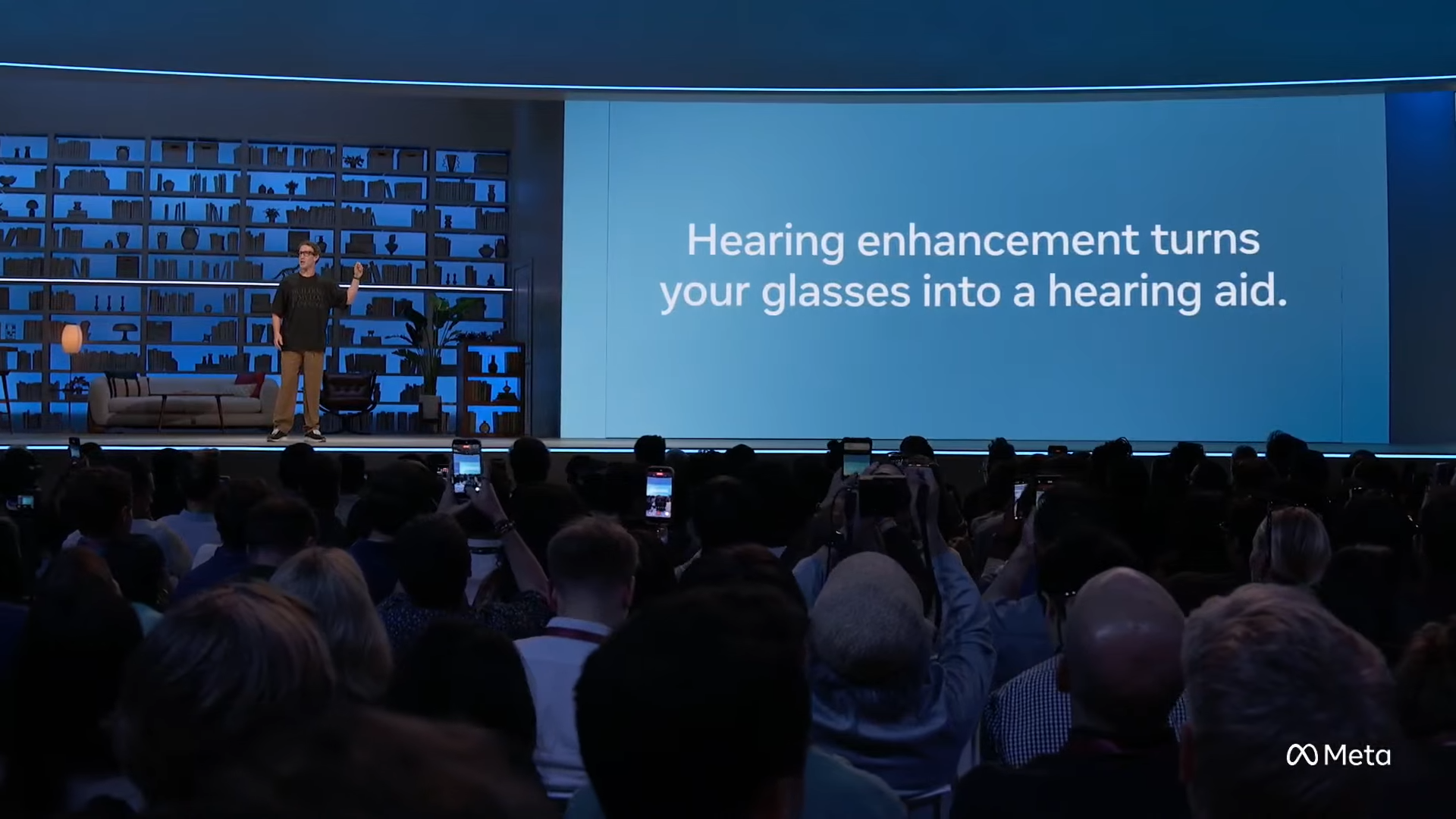
Meta's glasses can now work as a hearing aid. The feature is FDA-cleared for mild to moderate hearing loss, it held up in early hands-ons, and after a 30-day free trial it costs $149.99 on top of the glasses, a number Meta left out of its keynote.
Meta announced Hearing Enhancement at Connect on Wednesday night. Last year it showed Conversation Focus, which helps anyone pick out a voice in a noisy room. Hearing Enhancement goes further. The FDA cleared it as a self-fitting, over-the-counter hearing aid for people with mild to moderate hearing loss, so you don't need a prescription. It arrives in the US later this year on Meta Glasses, the line Meta launched with EssilorLuxottica in June starting at $299. The new Ray-Ban Meta (Gen 3) and the camera-free Ray-Ban Meta Audio get it after that.
How it works
Setup happens at home. In the Meta AI app, you listen to tones at different frequencies in a quiet room and mark when you can barely hear them. Ravish Mehra, a director of research science at Meta, told TechRadar the test takes a minute or two. It builds a hearing profile, and the glasses boost the frequencies where you need help. Meta says its FDA testing found the at-home test performed about as well as a professional fitting. After that, you turn it on or off by saying "Hey Meta, start hearing enhancement."
The glasses use six microphones to pick up the room, and an on-device machine learning model boosts voices while holding background noise down. A 360 mode amplifies everything around you. Focus mode aims the microphones forward, for the person across a restaurant table. The hard part is feedback. On open-ear glasses nothing separates the speakers from the microphones, so the system has to catch that squeal before it builds.
Engadget's Karissa Bell and TechRadar's Jacob Krol both tried it with earplugs in to simulate hearing loss. Bell said it seemed to work very well in her brief session. Krol said it amplified the people around him and that Focus mode singled out the person in front of him, though not perfectly. Earplugs are a crude stand-in for real hearing loss, so take those as good first listens. A verdict needs people who actually have trouble hearing, wearing the glasses for a week.
The $150 question
After the free trial, the unlock is a one-time $149.99 (Engadget lists it as $149). It's also included with Meta One, the subscription Meta launched on September 15, though Meta hasn't said which tier covers it. Meta One plans for individuals run from $2.99 to $19.99 a month. Meta says Hearing Enhancement is eligible for FSA and HSA reimbursement and will share details closer to launch. Gizmodo pointed out that Meta didn't mention the fee during the keynote, and Engadget's Devindra Hardawar compared the paid unlock to carmakers charging for software features.
Apple is the obvious comparison. In September 2024 the FDA authorized Apple's Hearing Aid Feature for AirPods Pro, the first over-the-counter hearing aid software, for adults with perceived mild to moderate hearing loss. That's the same audience Meta is going after, and Apple delivered it as a software update at no extra charge. Meta is asking people with hearing loss to pay $149.99 for software on glasses they already bought.
Against dedicated hearing glasses, though, the math looks better. EssilorLuxottica, Meta's own glasses partner, just announced the Nuance Audio Plus, FDA-cleared hearing aid frames for mild to moderate hearing loss, at $829. A $299 pair of Meta Glasses plus the unlock comes to about $450, and you get Meta's AI glasses on top of the hearing aid. Meta says that even counting the glasses, it costs much less than traditional hearing aids.
Who it's for
Plenty of people who would never wear a hearing aid already wear glasses every day. Mehra told TechRadar that one in six Americans have mild to moderate hearing loss and only about 15 percent of them do anything about it. "Nobody else can tell just by looking at your glasses that you have hearing impairment," he said. Since the FDA created the over-the-counter hearing aid category in 2022, adults 18 and older with perceived mild to moderate hearing loss can buy one without a prescription or an audiologist's fitting. Putting that inside frames that look like regular glasses could get more of those people to try one. I think that's the best argument for this feature.
Some gaps remain. Meta hasn't given an exact launch date, an age requirement, or a timeline for the Ray-Ban models. Other countries come later, as Meta works through each region's medical device rules. Those answers, and reviews from people with actual hearing loss, will decide whether $149.99 is a fair price.