

Thursday September 3, 2026 1:12 pm
JMGO’s Iris Ultra Max Wants to Be the Projector You Can Watch With the Lights On

Posted by Andru Edwards Categories: Displays, Home Entertainment
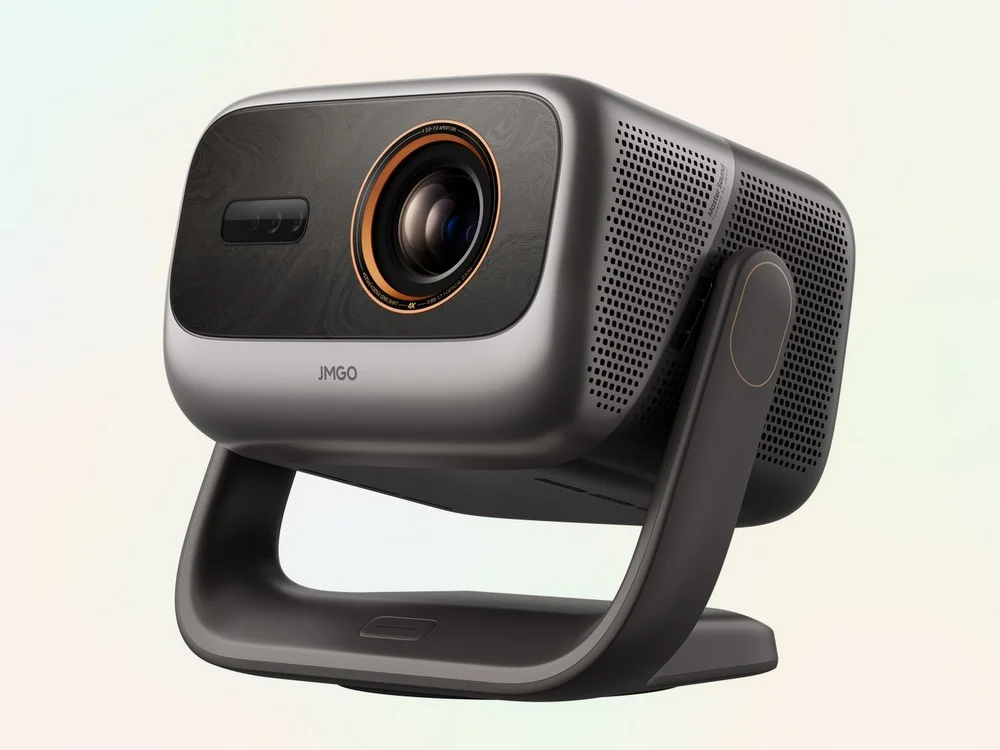
Most projectors end up in a closet for one reason: you have to turn your living room into a cave to use them. Draw the blackout curtains, wait for dark, tell everyone to quit opening the fridge because the light spills onto the wall. That friction is why a lot of people buy a projector, use it twice, and go back to the TV.
At IFA in Berlin, JMGO built its whole pitch around solving exactly that. The new Iris Ultra Max is a 4K projector that runs at 120Hz, uses a triple-laser light engine, and claims up to 6,500 ISO lumens. That last number is the company betting it can throw a picture bright enough to survive a room with the lights on. It is now heading to markets outside China, with preorders opening September 4 and units shipping October 19.
Start with the brightness, because it is the whole story and the easiest place to get fooled. Projector spec sheets are a minefield of invented units, and plenty of brands quote a peak or a "light source" figure that has almost nothing to do with what lands on your wall. JMGO at least used ISO lumens here, which follows an actual measurement standard and is one of the more honest ways to state the number. That is worth a small nod. It is not the same as a promise.
And here is where the number gets slippery. 6,500 lumens on a slide is not 6,500 lumens hitting a 120-inch screen in your sunroom at 2pm. Brightness gets spread thinner the bigger the image, and ambient light washes out contrast. A projector this bright should genuinely be watchable with a lamp on, or with a game running on a Saturday afternoon, which is the real unlock. Just do not expect it to win against a midday window. Nothing at this size does.
The 4K-at-120Hz spec is the other headline, and this one is aimed squarely at people who game. Add VRR and ALLM support plus Dolby Vision, and you have a projector that wants to be the centerpiece of a console setup, not just a movie-night machine. A 120-inch image running at 120 frames is the kind of thing that sells itself in a demo. Whether your room and your patience can deliver a clean install is the harder question.
JMGO also quotes a 10,000:1 native contrast ratio, helped along by a dual-iris system that physically opens and closes to manage light. Contrast and black levels are where projectors usually lose to a good TV, so a mechanical iris working to deepen the blacks is a reasonable move. Native contrast on a single-chip DLP projector is still a different animal from an OLED, though. If inky blacks in a dark room are your top priority, go in with your eyes open.
The rest is convenience, and it matters more than it sounds. Google TV is built in, so streaming works without hanging a dongle off the back. A motorized gimbal lets you point the thing at a wall and let the software square up the image, which removes one of the most annoying parts of projector life. This is the all-in-one design most people actually want: set it down, aim it roughly, watch something.
Then there is the price. The Iris Ultra Max lists at $3,499, with a $2,999 early-bird preorder, which puts it against real home-theater gear and well north of an impulse buy. There is a step-down Iris Ultra at $2,399 that trades some brightness and drops the gimbal and optical zoom if the flagship is more projector than you need. This one is not for someone who wants to dabble. Buy it if you are building a room around it, and you care that the lights can stay on.