

Articles tagged Gaming
Latest Andru Edwards Videos
The Budget Xbox Series S Now Costs 499 Euros, and That’s the Good News

Posted by Andru Edwards Categories: Microsoft, Video Games,

The Xbox Series S was supposed to be the console you bought without thinking about it. Cheap, small, good enough, the thing you got your kid or picked up as a second machine for the bedroom. In Europe it now costs €499.99. That's a 43 percent increase on a console that launched as the budget option, and it's the smallest number in this story.
Microsoft told everyone back in June that Xbox prices were going up on August 1st, but it only shared US figures at the time. The European and UK numbers landed when the increase actually took effect, and they're considerably worse than the American ones.
Click to continue reading The Budget Xbox Series S Now Costs 499 Euros, and That’s the Good News
Advertisement
Gaming on the Hisense 100 Inch TV is MIND BLOWING!
Posted by Andru Edwards Categories: Displays, Home Entertainment, Video Games, Videos,
Hisense 100-inch U75QN Mini-LED TV Review! This is Hisense’s newest 100-inch screen, and it’s wild. From gaming to movies, this massive display finally delivers brightness and contrast that hold up in real life.
I’ve been living with the 100-inch Hisense U75QN for the past couple of weeks: daytime streaming, late-night movies, long gaming sessions, and endless app-hopping. The Mini-LED panel handles daylight without washing out, and the blacks stay cinematic after dark. The built-in audio punches above its weight, but I still prefer external speakers. And yes, Google TV is nice and fluid.
If you’ve been wondering whether a 100-inch TV actually fits into your everyday life, this review breaks down what works, what doesn’t, and whether the Hisense U75QN earns its spot as one of the best 100-inch TVs you can buy.
Get the 100" Hisense U75QG at Amazon or Best Buy!
Apple Arcade: New video game service for iOS and Mac
Posted by Andru Edwards Categories: Apple, Corporate News, Video Games,
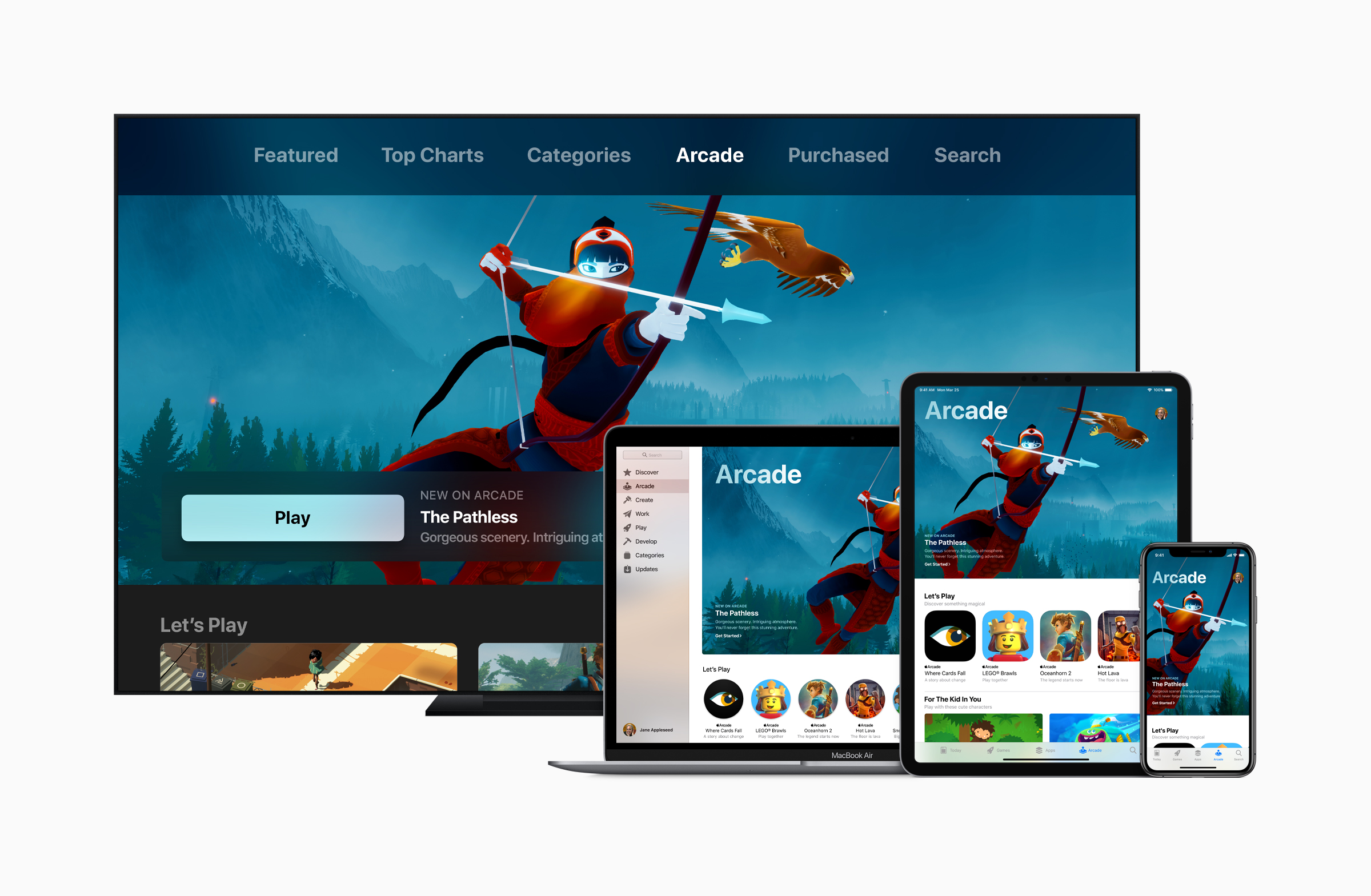
During today's It's Show Time Apple Event, Apple showed off its new video game service - Apple Arcade. Apple Arcade is a game subscription service that provides users with access to over 100 games that are exclusive to the service - that's right, the entire catalogue is not only exclusive to iOS and macOS, but exclusive to the Apple Arcade service itself. Rather than another game streaming service like Google Stadia, Apple Arcade users install their games through the App Store, so that they can be played anywhere without the need for an Internet connection.
Apple showed various games which include familiar franchises like Sonic the Hedgehog, and mentioned that we will see original titles from Will Wright, SEGA, Cartoon Network, Konami, LEGO, and more. More than just selecting games for the service, Apple is also helping with the development costs of the games as well.
Apple Arcade will launch this fall in over 150 countries, with pricing to be announced later (we assume at Apple's annual September event.)
Holiday Top Tech with Best Buy: Nintendo Switch!
Posted by Andru Edwards Categories: Toys, Video Games,
Best Buy has looked through all the recent hardware gadget releases, and the company has put together it's Holiday Top Tech list for 2017, which will be rolling out soon. While we wait for the full list to drop, Best Buy has tasked me with revealing one of the hot items that you'll find on the list - the Nintendo Switch!
If you've somehow missed the phenomenon that is the Nintendo Switch, it's the first console in history that is both a complete home console with high-definition graphics while simultaneously being a completely portable console that allows you to play your game library on the go. The Nintendo Switch launched back on March 3rd, and since then, it's been difficult to find in stock both online and in stores up until about a month ago.
Click to continue reading Holiday Top Tech with Best Buy: Nintendo Switch!
NES Classic Edition Review: Hands-on with a device that very few people can get their hands on
Posted by Andru Edwards Categories: Accessories, Wearables, Video Games,
Haven’t been able to get your hands on an NES Classic Edition console yet? Our video today will give you a sense for what to expect when you finally do.
We go hands-on with the cute little console — the one that’s selling out instantly almost everywhere — with Andru Edwards of Gear Live in this special video recording of the GeekWire radio show and podcast, above.
Also check out Andru’s detailed video review below, and check out his YouTube channel for more reviews.
2 Powerful & Stylish Gaming Laptops
Posted by Andru Edwards Categories: Features, PC / Laptop, Video Games,

The key feature of a gaming laptop is that it should be, you know, a laptop: Easy to pack up and carry around for gaming sessions at a friend's house or on the go. Too many gaming machines add so many extra bells and whistles that you need a crate just to carry them around, which kind of ruins the point. The best gaming laptops should be light enough to easily tote, offer enough customization for you to make them your own, and include powerful features that can deal with demanding games without burning out your hardware by the end of the month.
Click to continue reading 2 Powerful & Stylish Gaming Laptops
Unboxing Live 189: Destiny The Taken King Legendary Edition PS4
Posted by Andru Edwards Categories: Features, Video Games, Videocasts,
This is a look at the Destiny The Taken King legendary edition, which comes with the limited edition white PS4 which has a bunch of Destiny artwork all over it. The Limited Edition bundle includes a 500GB PlayStation 4, a white DualShock 4 controller, a physical copy of Destiny: The Taken King Collector's Edition, and a bunch of Destiny goodies as well.
You can get the Destiny The Taken King legendary edition now.
Don't forget to subscribe to Gear Live's YouTube channel--also, we are giving away awesome perks for our Patreon backers - thanks for your support!
Click to continue reading Unboxing Live 189: Destiny The Taken King Legendary Edition PS4
Unboxing Live 186: Wolf Link Amiibo + Zelda Twilight Princess HD
Posted by Andru Edwards Categories: Accessories, Features, Video Games, Videocasts,
Nintendo sent me an early copy of The Legend of Zelda: Twilight Princess HD bundle, which includes the exclusive Wolf Link amiibo. In this episode, I open up the Twilight Princess bundle, and give you an up-close look at the unique Wolf Link amiibo figure. The Legend of Zelda: Twilight Princess HD is a Wii U remake of the Nintendo GameCube and Wii game, Twilight Princess. It's the second remaster of a Zelda title on the Wii U, following The Wind Waker HD.
Twilight Princess HD features reworked graphics with primarily new textures, giving the game a cleaner look and feel. The original had just a 480p resolution on both the GameCube and Wii, Twilight Princess HD instead has a 1080p resolution, resulting in additional clarity, especially for faraway objects and precise aiming. Most textures in the game are touched up with added details, with notable examples including Link's hair, Zant's armor, and several background textures.
You can get the Twilight Princess Wolf Link bundle now.
Don't forget to subscribe to Gear Live's YouTube channel--also, we are giving away awesome perks for our Patreon backers - thanks for your support!
Click to continue reading Unboxing Live 186: Wolf Link Amiibo + Zelda Twilight Princess HD
Bleeding Edge TV 567: How To Speed Up Xbox One with SSD
Posted by Andru Edwards Categories: Features, Podcasts, Video Games, Videocasts, Videos,
I haven't been liking how slow Fallout 4 is on the Xbox One due to massive loading times, and figured I would do something about it. Rather than running Fallout 4 from the internal 5400RPM Xbox One hard drive, or even my external 7200RPM drive, I decided it was time to hook up a solid state SSD to my Xbox One in order to take advantage of the much faster speeds that the technology has to offer.
The problem with SSDs? External SSD drives are expensive. So instead, I made my own. In this video I show you how to make your own external SSD, and in the process, vastly speed up your Xbox One loading times!
You'll need these two items:
Don't forget to subscribe to Gear Live's YouTube channel--also, we are giving away awesome perks for our Patreon backers - thanks for your support!
Click to continue reading Bleeding Edge TV 567: How To Speed Up Xbox One with SSD
Unboxing Live 183: Xbox One Elite Wireless Controller
Posted by Andru Edwards Categories: Accessories, Features, Microsoft, Peripherals, Video Games, Videocasts,
Star Wars Battlefront PS4 Limited Edition console unboxing! This isn't our typical unboxing where I explain the product in detail, unfortunately, as we had a mishap early on in the video that I needed to take care of, as you'll see. Still, Darth Vader shines here in all his glory, emblazoned across the box of the limited edition Playstation 4, as well as right on the PS4 console itself. The bundle also includes a custom Star Wars PS4 controller which you won't find anywhere else, as well as a hard copy of Star Wars: Battlefront.
- Star Wars Battlefront Deluxe
- Star Wars Battlefront Standard
- Star Wars Battlefront standard bundle
- Star Wars X-Wing Pilot Headset
- Darth Vader Headset
You can order the Star Wars Battlefront PS4 now.
Don't forget to subscribe to Gear Live's YouTube channel, and also--we are giving away awesome perks for our Patreon backers - thanks for your support!
Click to continue reading Unboxing Live 183: Xbox One Elite Wireless Controller