
Find Our Latest Video Reviews on YouTube!
If you want to stay on top of all of our video reviews of the latest tech, be sure to check out and subscribe to the Gear Live YouTube channel, hosted by Andru Edwards! It’s free!
Latest Gear Live Videos
iCloud: Can Apple make the cloud mainstream?

Posted by Andru Edwards Categories: Apple, Editorial, Features, Internet, Music,
 I've long since stopped kvetching over the number of things Apple chief executive Steve Jobs can attach an "i" to and call his own. The maverick CEO's track record is just too darn good. Now that we know that Apple's iCloud is a real thing, there's no sense in wondering how Jobs can have the gall to rebrand cloud computing. I'd rather focus on what Apple will do with the cl...er... iCloud now that Apple has adopted it as its own.
Is Apple new to the cloud? If you accept that at the most fundamental level, cloud computing is simply a matter of thin clients (hardware or software) accessing Internet-based services and intelligence, then the answer is no. Consider Apple's reliance on streaming services for Apple TV's TV show and movie rentals, or the way genius playlists work.
iCloud, which Apple will officially unveil at next week's World Wide Developers Conference (WWDC), will be more, and streaming content is only the beginning. Obviously, we expect some sort of cloud-based, access-anywhere music library. Apple may even cave and offer a subscription-based music service. These plans will only succeed if Apple has done what Google failed to do with Google Music Beta: convince the major labels to let consumers store and access purchased (and rented) music from central servers.
I think music labels fear this not only because they worry about losing further control of the digital bits that make up their vast song libraries, but because no one will ever buy more than one copy of a song again, and if they get subscription access, they're done buying music—period.
Click to continue reading iCloud: Can Apple make the cloud mainstream?
Gallery: iCloud: Can Apple make the cloud mainstream?




Advertisement
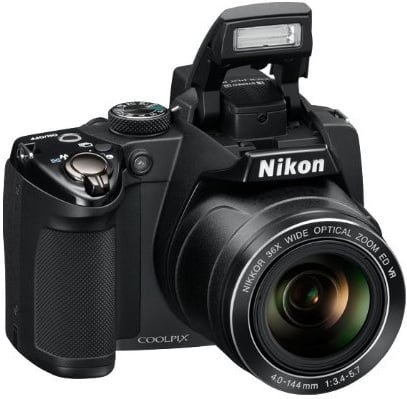
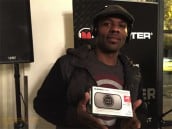
If you want to capture the action close up, the 12.1-megapixel Nikon Coolpix P500, with its 36x zoom lens, will get you right there. But with this digital camera, you get more than just an insanely long lens. Good image quality, speed, and a well-rounded feature set, are part of the deal. Just keep in mind: The P500 is big, since it houses a big lens, but you don't get a large sensor, like you would with a compact interchangeable lens camera or a Digital SLR. Read on for our full review of the Coolpix P500, and how it stacks up against the competition.
Click to continue reading Nikon Coolpix P500 review
Gallery: Nikon Coolpix P500 review
Samsung Droid Charge review
Posted by Andru Edwards Categories: Smartphones, Features, Handhelds, Product Reviews,
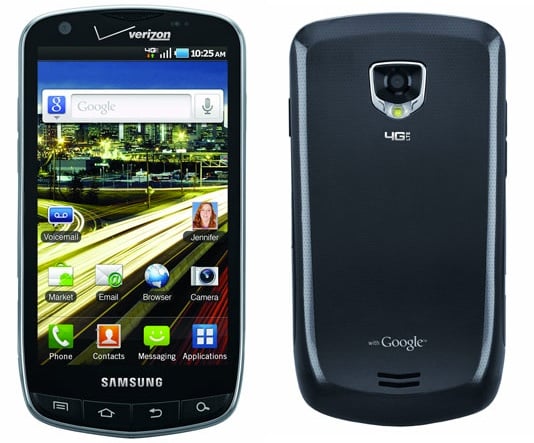
Verizon customers now have two 4G Android smartphones to choose from: the HTC Thunderbolt, and the $299.99 Samsung Droid Charge, which is Samsung's first LTE device, and first officially designated Droid device for Verizon. The two cell phones are pretty similar, but not identical. While the HTC Thunderbolt retains a slight edge, you'll be thrilled with either device.
Click to continue reading Samsung Droid Charge review
Gallery: Samsung Droid Charge review
Microsoft should buy RIM
Posted by Andru Edwards Categories: Smartphones, Editorial, Features, Microsoft,
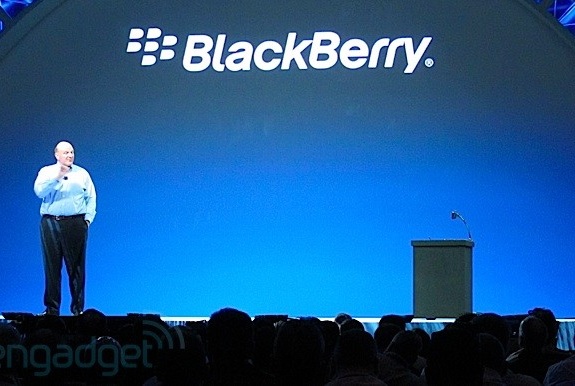
At this week's BlackBerry World trade show, everyone expected the top headliner to be the company's just-released PlayBook tablet and its new software offerings. As it turned out, the gadget ended up taking second spot to a surprise guest: Microsoft boss Steve Ballmer.
Ballmer came out during RIM co-CEO Mike Lazaridis' keynote yesterday morning to announce a partnership that would bring Microsoft's Bing search engine to BlackBerries. Search is a big deal in mobile devices, so it's fitting that a heavy hitter from Microsoft came to give its blessing, but many took the appearance of the CEO as a clear sign of bigger things to come.
Does RIM know what it's in for, though? There's considerable doubt over whether the company's strategy and platforms can be successful over the next couple of years. If they're not, Microsoft could end up owning RIM.
"Will Microsoft buy RIM? That is a possibility and a fast track for Microsoft to gain a foothold in the mobile hardware business," says Harry Wang, director of mobile research at Parks Associates. "RIM's market capitalization is only $25 billion and Microsoft has $48 billion in cash. If RIM's value drops to $15 billion, it will become an attractive target for Microsoft. Maybe Steve Ballmer was planting that seed during his keynote appearance at Blackberry World."
Click to continue reading Microsoft should buy RIM
Gallery: Microsoft should buy RIM
Was it Osama bin Laden’s aversion to tech that got him killed?
Posted by Andru Edwards Categories: Editorial, Features, Misc. Tech,

Osama bin Laden has likely stayed off the grid for the past decade in order to evade capture, but was it his aversion to tech that actually did him in?
During a late-night press briefing on bin Laden's death, the White House said that the Abbottabad, Pakistan's compound's lack of an Internet connection was one of the things that tipped off investigators.
"It's also noteworthy that the property is valued at approximately $1 million but has no telephone or Internet service connected to it. The brothers had no explainable source of wealth," a senior administration offical told reporters.
The brothers in question are a trusted bin Laden courier and his sibling. The White House said intelligence officials became aware of this courier four years ago thanks to information provided by detainees, but only uncovered his location in August 2010.
White House officials said they were "shocked" by the compound.
Click to continue reading Was it Osama bin Laden’s aversion to tech that got him killed?
Gallery: Was it Osama bin Laden’s aversion to tech that got him killed?
9/11 through bin Laden’s death: How tech has changed over the years
Posted by Andru Edwards Categories: Smartphones, Editorial, Features, Internet, Misc. Tech,

Osama Bin Laden's death is a clear victory in the war on terror for the U.S., but as someone who was working in New York City on September 11, 2001, this event also highlights just how much has changed in the world of technology, communication and news dissemination in the last 10 years.
Nearly a decade ago, I marveled at how technology allowed us to not only learn about the attack on the World Trade Center, but experience it as it unfolded. Back then, I relied heavily on AOL's Instant Messenger to communicate with my team in the office and those scattered around the country. As a result, AIM was a constant presence on my desktop and it's through that platform that I learned of the first jet hitting one of the towers. With that distressing information in hand, our staff gathered in a conference room to watch TV news on a larger projection TV. As a result, we all witnessed the second plane hit the other tower and knew we were under attack.
I used AIM throughout the day to stay in touch with family, friends, and co-workers. Most of my news updates, however, were delivered via TV and radio. There was no Google News, no Facebook, no Twitter, or YouTube for anyone to post eyewitness accounts.
Last night, much of the world learned of Osama bin Laden's death hours before President Barack Obama announced it in a televised news conference at roughly 11:35pm Eastern. Back in 2001, those sharing news about the airplane hitting one of the World Trade Center towers were simply repeating what they had seen on local television networks. Real news was rarely traded on the point-to-point instant messaging service. In fact, there was no concept of a viral network or participants simply sharing what they were experiencing to a wider group without thought of import or impact.
Click to continue reading 9/11 through bin Laden’s death: How tech has changed over the years
Gallery: 9/11 through bin Laden’s death: How tech has changed over the years
Businesses: Here’s what you can learn from the Sony PSN security fail
Posted by Andru Edwards Categories: Editorial, Features, Internet, Video Games,

Sony's devastating security breach is not only a public relations nightmare and now, an identity-theft worry for its customers, but it's also a reminder (yet again) of the vulnerability of computer networks.
Sony's PlayStation Network is comprised of networked servers housing massive amounts of data including valued customer data. The parts making up Sony's network are not much different than the parts making up any other business' network, except most business networks are on a smaller scale.
While Sony is not releasing a lot of detail as to how the breach was carried out or what security mechanisms it had in place that failed, there are some good lessons learned for any business no matter what the size about protecting network infrastructure and the data residing on those networks.
One of the key ways any company owner can protect themselves is to forget the notion of, "Why would anyone want to hack into my network?" Why? Because they can. Whether you run a business making chocolate candies or handle financials for thousands of clients, taking an offensive approach against hackers, network intruders, or script kiddies looking to make a name for themselves, is fundamental to protecting your business network.
It's important to know that in the technology world, there is no such thing as 100 percent secure. You can lessen the chances of network or data compromise though, with a few tips:
Click to continue reading Businesses: Here’s what you can learn from the Sony PSN security fail
Gallery: Businesses: Here’s what you can learn from the Sony PSN security fail
The Definitive Guide to Watching the Royal Wedding Online
Posted by Andru Edwards Categories: Editorial, Features, Internet, Software,
If you're just planning to turn on the telly and tune in the Royal Wedding, you'll be missing out. It's 2011, folks! There are a host of online destinations, social media tools and mobile apps that can truly help you experience the full scope of this 21st century event.
All of the major broadcasters will be airing the Royal Wedding on live TV Friday morning, but so will several online venues. YouTube will be streaming the entire event live at The Royal Channel, built specifically for Prince William and Kate Middleton's wedding. Livestream is also streaming the AP Live feed of the day's events, plus more coverage from CBS News, ET and the UK Press Association. And you can watch full streaming BBC coverage at BBC News' dedicated wedding site.
You can also watch the event live on a smartphone or other Internet device on the Sprint TV ABC News Channel, which is part of the carrier's basic Sprint TV channel package. T-Mobile TV will only carry pre- and post-wedding coverage but start-to-finish coverage is available through Xfinity.tv, which has apps available on the Android Market and on iTunes.
In most cases, live-anchored coverage begins at 5 a.m. Eastern Time(2 a.m. Pacific) and live coverage of the ceremony starts at around 6 a.m. ET (3 a.m. PT). That's pretty early for most people, so what to do if you don't want to wake up hours before dawn?
Click to continue reading The Definitive Guide to Watching the Royal Wedding Online
Gallery: The Definitive Guide to Watching the Royal Wedding Online
How to view the tracking data in your iPhone
Posted by Andru Edwards Categories: Apple, Smartphones, Editorial, Features,
Coverage of the iPhone tracking "feature" has ranged from concern to outrage. "I don't know about you, but the fact that this feature exists on an iPhone is a deal-killer," wrote PCMag Columnist John Dvorak, shortly after news broke. Editor Dan Costa drew a softer line, writing, "Apple may not be actively tracking you, but it did turn your phone into a tracking device without telling you."
As frustrating as it is to learn that your iPhone has been spying on you, collecting an unencrypted treasure trove of your travels, the truth is we knew this was happening. Last June we reported that Apple updated its privacy policy, stating that it could, "collect, use, and share precise location data, including real-time geographic location of your Apple computer or device." How precise that location data is remains in question. What is clear, however, is that the update arrived alongside the release of iOS 4—the OS affected by the tracking feature—and identified the four devices (iPhone 3G, iPhone 3GS, iPhone 4, and iPad with 3G) affected by the tracking feature.
I'm not about to give Apple a pass on disclosure or execution. Who combs through an Apple privacy statement when the latest iOS software awaits? And, to "collect" and "share" user data is one thing; to retain it in an unprotected file is quite another.
However, I think it's important that, with a few days' hindsight, we move beyond the bombast, pin down the facts, and see what's actually there. To do this, I've taken a close look at what's at risk and, in empirical spirit, borrowed fellow PCMag software analyst Jeff Wilson's iPhone 3GS to see what I could learn of the man and the travels using Pete Warden's iPhoneTracker app.
Click to continue reading How to view the tracking data in your iPhone
Gallery: How to view the tracking data in your iPhone
You gave Apple permission to track your whereabouts via your iPhone
Posted by Andru Edwards Categories: Apple, Smartphones, Features, GPS, Videos,
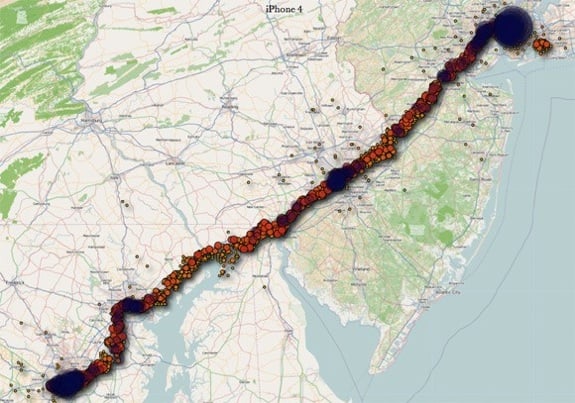
Did you know that Apple is tracking your every move with your iPhone and iPad? A blog post published today on O'Reilly Radar claims that devices running iOS 4 are gathering location and storing it in an unencrypted manner.
"What makes this issue worse is that the file is unencrypted and unprotected, and it's on any machine you've synched with your iOS device. It can also be easily accessed on the device itself if it falls into the wrong hands. Anybody with access to this file knows where you've been over the last year, since iOS 4 was released," wrote Pete Warden, founder of the Data Science Toolkit, and Alasdair Allan, a senior research fellow at the University of Exeter.
The data is being stored to a file known as "consolidated.db," which includes latitude-longitude coordinates and a timestamp.
Of course, this shouldn't surprise anyone who read the entire 45-page EULA, as it clearly states the following clause when going into detail on the type of “non-personal information” that Apple can “collect, use, transfer, and disclose … for any purpose.”
We may collect information such as occupation, language, zip code, area code, unique device identifier, location, and the time zone where an Apple product is used so that we can better understand customer behavior and improve our products, services, and advertising.
Click to continue reading You gave Apple permission to track your whereabouts via your iPhone