
Find Our Latest Video Reviews on YouTube!
If you want to stay on top of all of our video reviews of the latest tech, be sure to check out and subscribe to the Gear Live YouTube channel, hosted by Andru Edwards! It’s free!
Latest Gear Live Videos
Will the Nintendo 3DS pave the way for a 3D iPhone?

Posted by Andru Edwards Categories: Smartphones, Editorial, Features, Video Games,
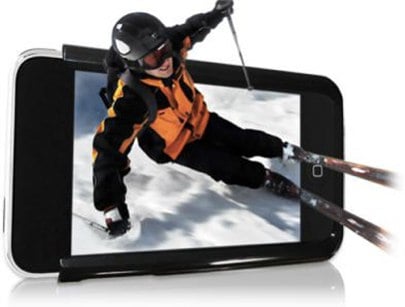
The new Nintendo 3DS promises to be a success not only because it actually works well and does indeed provide a 3D image without any glasses or aid whatsoever, but because it takes amusing 3D photos and is just fun to play with.
When all is said and done, the Nintendo 3DS may actually accomplish what Fuji has been promoting and what many 3D hobbyists have tried: popularizing 3D photography for everyday use.
And, yes, we know that it's a gimmick. But it's a cool gimmick.
After taking a few 3D pictures of just about anything, you'll find that they are so compelling that it is hard to express the odd joy you get from them. This is the key to the eventual success of home 3D. It has always failed in the past, because it was somebody else's 3D. It was never personal.
Photography itself never flourished as a hobby when the cameras were the big bulky clunkers utilized by Matthew Brady and others. Think about this. Photography was nothing new during the Civil War in the 1860's, but all the photos were done by a limited number of pros. You have to wonder what the Civil War would have been like if everyone had a cell phone camera like we do today.
Then Kodak produced the Brownie and gave photography to everyman. Next thing you knew, photography became the number one hobby in the world. 3D is following that same pattern. It's just odd that a game company, Nintendo, is the Kodak and the 3DS is the Brownie.
Click to continue reading Will the Nintendo 3DS pave the way for a 3D iPhone?
Gallery: Will the Nintendo 3DS pave the way for a 3D iPhone?






Advertisement
Nvidia GeForce GTX 590 review
Posted by Andru Edwards Categories: Accessories, Features, PC / Laptop, Product Reviews,
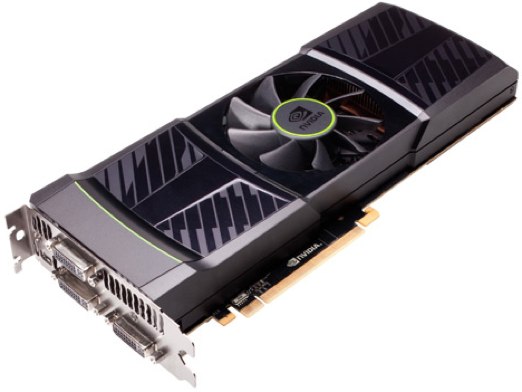
The months-long jockeying for position between AMD and Nvidia has led to this moment: Who has the faster flagship video card? Nvidia held the crown for a long while thanks to its powerful and polished GTX 580, still the best single-processor card on the market. But when AMD released its dual-GPU Radeon HD 6990 earlier this month, and it delivered blistering benchmark results along with a sky-high $699 list price and an ultra-noisy fan, it looked like AMD might own the top tier this generation. Now that Nvidia has released its own dual-GPU card, the Nvidia GeForce GTX 590 (also $699), we definitively know the answer: AMD just wins the performance crown. Nvidia's card has some solid reasons to recommend it—much better noise characteristics, it will fit in a (slightly) wider variety of cases—but for this much money you probably want the fastest card there is. And the GTX 590, in spite of its virtues, is not quite it.
The GTX 590 is, however, packed with power. You'd expect that from any two-GPU card in general—the last one Nvidia released was the GTX 295, in early 2009—and especially from one that essentially fuses two powerful GF110 GPUs (the kind used in the GTX 580). It sports a total of 1,024 CUDA processing cores, 128 texture units, 96 ROP units, and 32 tessellation engines for making the most of one of the most sought-after DirectX 11 (DX11) features. The card's graphics clock runs at 607 MHz, its processor clock at 1,215 MHz, and its memory clock at 3,414 MHz. It's loaded with 3,072MB of GDDR5 memory for the frame buffer, which operates over a 384-bit memory interface.
Click to continue reading Nvidia GeForce GTX 590 review
Gallery: Nvidia GeForce GTX 590 review
AT&T Buys T-Mobile: Good for AT&T, Bad for Customers
Posted by Andru Edwards Categories: Corporate News, Editorial, Features, Wireless / WiFi,
AT&T just announced it will buy T-Mobile USA for $39 billion. If the transaction gets approved by the government and closes in a year as planned, it will create the nation's largest wireless carrier by far.
While this is great news for both companies, it's an awful idea for consumers - and I desperately hope the US antitrust authorities rake this merger over the coals.
An AT&T/T-Mobile merger at least makes more sense than the silly T-Mobile/Sprint idea which was being bandied about. Both carriers use the same technologies: GSM, HSPA+ and LTE. While they're on different frequency bands, radios which use all of the relevant bands are becoming easier to build.
The merger neatly solves T-Mobile's long-term problem of not having enough spectrum for LTE, the 4G technology which will soon be a global standard. It gives T-Mobile's struggling parent, Deutsche Telekom, a gigantic cash infusion. And it lets AT&T once again position itself as the number-one carrier against Verizon Wireless, which leapfrogged AT&T technologically this year with Verizon's 4G LTE launch.
AT&T is ahead of T-Mobile on building LTE. T-Mobile is far ahead of AT&T on building HSPA+, a intermediate 4G technology that fits right between the carriers' existing 3G networks and LTE. Together, they could have a smooth and powerful nationwide network.
AT&T's press release for the merger backs this up. The combined carrier will be able to build out much more LTE Than AT&T could alone, by combining AT&T's 700 Mhz spectrum with T-Mobile's AWS spectrum.
For stockholders, this all sounds great. With reduced competition and the efficiencies of a combined network, the new company will probably be quite profitable.
For phone owners, tech lovers, and American consumers, this is a total disaster.
Click to continue reading AT&T Buys T-Mobile: Good for AT&T, Bad for Customers
Gallery: AT&T Buys T-Mobile: Good for AT&T, Bad for Customers
Zune Death: Why no word from Microsoft?
Posted by Andru Edwards Categories: Editorial, Features, Microsoft, Portable Audio / Video,
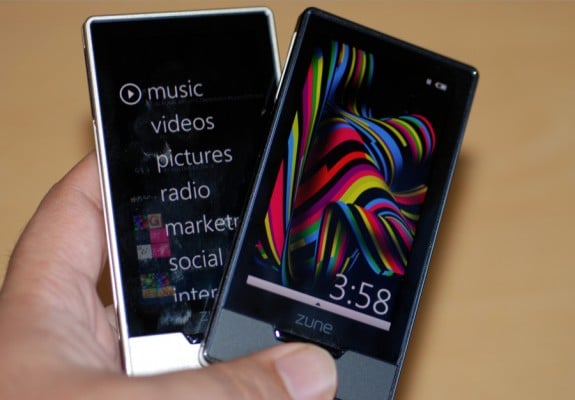
Dear Microsoft: Manage your message or someone will do it for you. Case in point: the recent, none-too-surprising news that the lovely Zune HD will meet a timely death. Within minutes of the news breaking, stories and tweets flooded the Internet declaring, "The Zune is Dead." This was followed by people asking if everything "Zune" was gone or just the hardware. I assured people that the obvious answer was the hardware only, but is it that obvious? And why wasn't Microsoft out in front of this information?
Yes, the fact that Microsoft is giving up on music player hardware is bad news for Microsoft and good news for Apple, but it's up to Microsoft to stand up and explain its decision and strategy. In the absence of clear information from Microsoft, everyone else can and will shape the message. So now, even though most within the industry are quite sure that the Zune software and service, which lives on in phones and PCs, is in no danger, average consumers are no longer certain. They could at this very minute be making plans to switch to Apple, iPods and iTunes.
If I were Microsoft CEO Steve Ballmer, I would have stepped forward and explained the shift away from music-only hardware (leaving aside the fact that most music players do a whole lot more). Then, while wiping away one single tear, I would have quickly shifted gears to a clear strategy, which isn't even new: "For mobile devices, we're focusing our attention on Windows Phone, which already has Zune and Xbox Live functionality." Then I'd add, "This, friends, is not a loss. Lessons we learned from Zune hardware's five-year life have given us invaluable insight and made it possible for use to deliver the Windows Phone platform and some truly stellar partner-driven hardware to wrap around it."
Click to continue reading Zune Death: Why no word from Microsoft?
Gallery: Zune Death: Why no word from Microsoft?
No point in denying it, I've been thinking about how I can get an Apple iPad 2 ever since Apple unveiled it on March 2. As a current iPad owner, though, this means I have some decisions to make.
I could sell it on the open market. But eBay is already stuffed to the gills with new and used iPads. So is Craigslist. I could use one of the services that offer tech trade-ins, but most want to give me $400 or less for my pristine, first-generation iPad. The longer I wait, the less I'll get. Having spent over $900 (with tax and my iPad cover) on the tablet last year, I'm having trouble accepting that I might have to sell my iPad for less than half its original value.
Click to continue reading iPad owners: Will you be buying iPad 2?
Gallery: iPad owners: Will you be buying iPad 2?
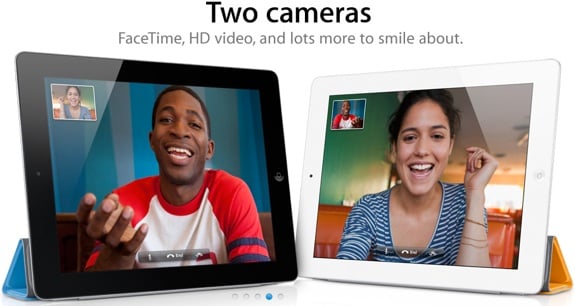
You have to hand it to Apple CEO Steve Jobs. No matter how ill he may be, his showmanship and stage presence remain undimmed. So much so that it took, as it often does, days for the euphoria of the iPad 2 unveiling to wear off. As that happened, though, I, like others, started to have these little, "Hey, wait a minute…" moments. And from there, the inevitable questions about the latest magical device from Apple started piling up. Here are the ones I've been considering or hearing from others. Fortunately, I think we have answers for virtually all of them.
Why No Memory Specs?
Apple's busy touting the iPad 2's huge performance increase (over the original), which comes courtesy of the A5 chip. That makes sense, a dual-core processor should beat the pants off a single core CPU. However, as with any computer, the CPU is only part of the performance story. What's the easiest way to increase system performance? Add memory. We know that the first-generation iPad has 256MB of RAM, but Apple isn't saying how much is in the iPad 2. "More" seems like a reasonable guess.
Why No 4G?
Apple's new best friend, Verizon, has a brand-new LTE network, but you won't find 4G on the new Verizon iPhone 4 or the latest-gen iPad. Why is that? Price is one reason: Adding a 4G radio would certainly have increased the price on the top-of-the line iPad 2. Also, Apple pays pretty close attention to the market and early market research indicated that almost 50 percent of potential iPad buyers were picking up a Wi-Fi-only model (Apple does not break out Wi-Fi-only iPad sales figures). I have a 3G-ready iPad, but I've never activated the service (I find ample Wi-Fi access almost everywhere I use my iPad). I suspect that's a common scenario. If a good percentage of iPad owners aren't using 3G—even when they have it—why would Apple jump to introduce 4G?
Click to continue reading 10 iPad 2 questions answered
Gallery: 10 iPad 2 questions answered
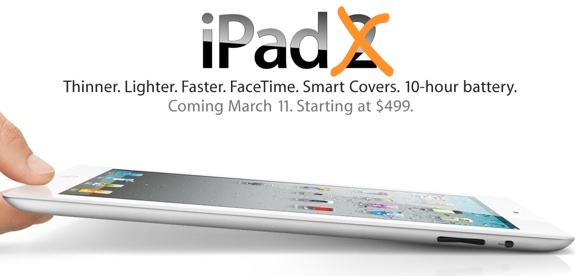
Apple has a new iPad on the way, but you've probably gotten pretty chummy with your original model. For a first-generation product, the Apple iPad is a fine tablet that can do tons of different things and hasn't lost any of its functionality in the last few days. Sure, the newer iPad 2 is more compact, faster, and adds cameras, but besides that, there's not much more in the way of upgrades. So, should you make the move to the iPad 2?
Well, the new one has a camera, so you can use FaceTime, Photo Booth, and other fun iLife apps that focus on taking photos or videos. If your best friend or favorite relative has an iPhone, iPod touch, or a Mac, this would be the perfect way to get some video calls going without getting a new cell phone. And its faster CPU and graphics processor means it's better suited for the apps and games of the future. Still, there are several good reasons why you shouldn't ditch your old iPad just yet. Here are five of them:
It's as good a media player as the iPad 2
The iPad 2 doesn't increase the resolution or improve the brightness or colors of its display over the first iPad, so as a plain movie viewer, there's no compelling reason to replace your iPad. There are no movies you can watch or songs you can listen to on the iPad 2 that you can't on the original iPad.
Click to continue reading 5 reasons not to buy the iPad 2
Gallery: 5 reasons not to buy the iPad 2
Apple iPad 2 hands-on
Posted by Andru Edwards Categories: Apple, Editorial, Features, Handhelds, Videos,
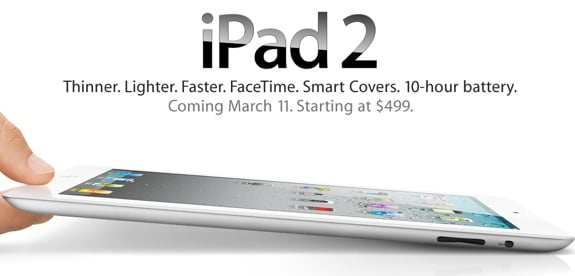
No, the Apple iPad 2 is not a game changer. Instead it simply, firmly establishes Apple once again as the front-runner in the tablet wars. Apple and chief executive Steve Jobs (who made an appearance and received a standing ovation) focused on all the right areas to ensure that the Apple iPad will remain the tablet you have to rule out before you buy any others.
As I predicted, Apple added not one, but two cameras. This makes perfect sense, though I was not particularly happy to hear an Apple exec say on stage that the iPad is perfectly suited for these cameras and FaceTime. Why couldn't the first-generation iPad, which I own, also have been considered perfect for at least one camera? Apple didn't say anything about the resolution on the cameras, though we know the rear one can capture 720P, more or less - the Apple definition for "High Definition." Please, no one tell Steve Jobs that someone on the iPad team sneaked by an accessory that outputs full 1080p from the device (more on that later).
Click to continue reading Apple iPad 2 hands-on
Gallery: Apple iPad 2 hands-on
Here’s why iPad 2 didn’t get a Retina Display
Posted by Andru Edwards Categories: Apple, Displays, Editorial, Features, Handhelds,
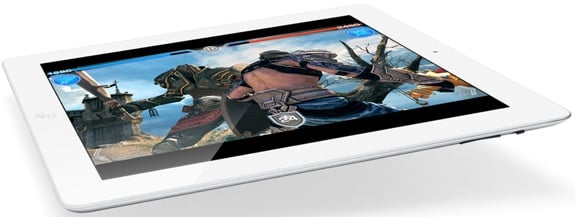
In the lead-up to the iPad 2 announcement, many were predicting that Apple would give the tablet's 9.7-inch screen a bump in resolution. But when Steve Jobs revealed the second-generation iPad to the world, it had the same pixel count as the first one: 1,024x768, even though the display was revamped to be considerably thinner. Why no extra pixels?
Looking at the history of the display on the iPhone offers some clues. Apple kept the display of the iPhone at the same 480x320-pixel resolution for the first three versions of the phone, and when it finally upgraded the display for the iPhone 4, the bump was huge, doubling the display resolution to 960x640 pixels. The upgrade also introduced the term "retina display," a piece of marketing jargon that Apple doesn't quantify, but generally means a display that is better than the limits of human vision.
Click to continue reading Here’s why iPad 2 didn’t get a Retina Display
Gallery: Here’s why iPad 2 didn’t get a Retina Display
Trade in your iPad for cash and cover the cost of the iPad 2!
Posted by Andru Edwards Categories: Apple, Features, Handhelds, Hot Deals,
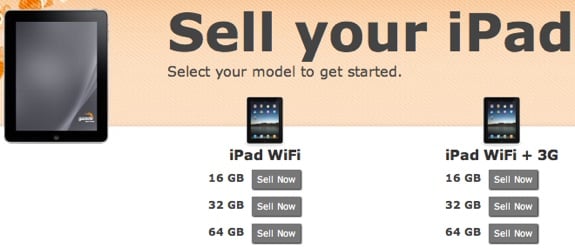
Hot on the heels of the iPad 2 announcement, Gazelle has announced limited-time prices at which you can trade in your original iPad for cash. Why would you wanna do that? Well, with the iPad 2 set to be released in nine days, the easiest way to upgrade is to sell your current device to get cash to put down towards the new one. In fact, depending on the condition of your current model, you could even walk away with enough money to cover the cost of a new iPad 2, and have some left over to put in the bank (or to buy a Smart Case or something.) If you want to take a look at what you could get for trading in your current iPad, here’s the list:
- 64GB iPad Wi-Fi + 3G: $595
- 32GB iPad Wi-Fi + 3G: $552
- 16GB iPad Wi-Fi + 3G: $446
- 64GB iPad Wi-Fi: $463
- 32GB iPad Wi-Fi: $437
- 16GB iPad Wi-Fi: $375
Just choose your iPad model above, and answer the questions they ask about the condition of your device, and you’ll see the amount that you will be paid for it. If you are cool with it, accept the offer, and ship your iPad--they email you a postage-paid label, and will even mail you a box if you don't have one. Couldn’t get any easier.
Read More  | Gazelle