

Saturday September 5, 2026 2:21 pm
Tesla’s FSD Can Now Take the Wheel While You’re the One Driving

Posted by Andru Edwards Categories: Software, Transportation, Artificial Intelligence
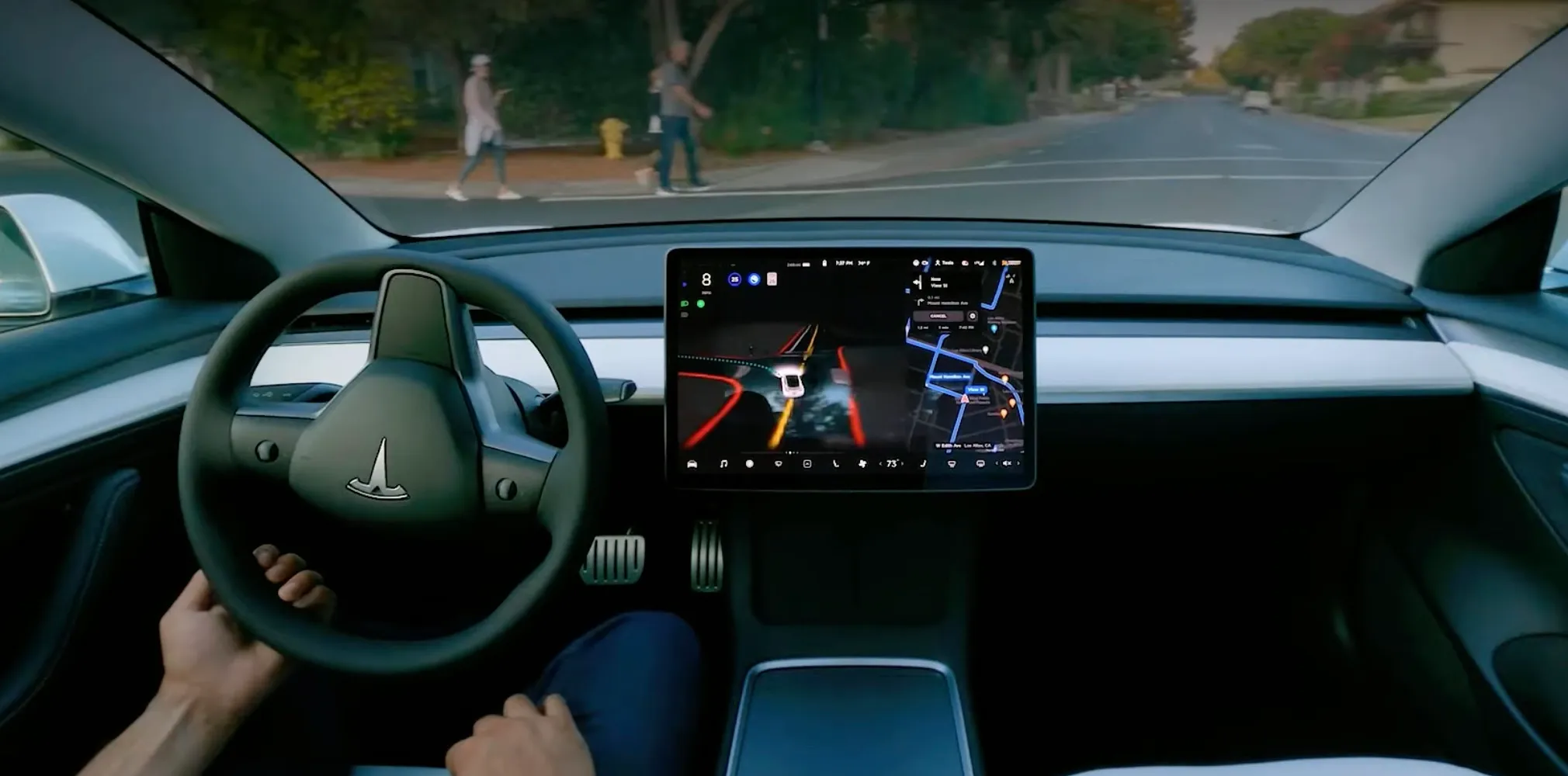
You're driving your Tesla. Yourself, hands on the wheel, Full Self-Driving switched off. A car ahead stops short, and the wheel turns without you.
That is what Tesla added in FSD (Supervised) v14.3.9, detailed in release notes that went out Friday afternoon. Tesla's wording: "FSD Supervised can now activate on your behalf when an imminent collision is detected and Automatic Emergency Braking (AEB) may not be enough." It can also switch itself on, Tesla says, if the car decides you're heavily distracted or that you disengaged FSD by accident. The feature is called Automatic Collision Evasion, and as of Friday it was "starting to roll out shortly."
AEB stops the car. This one goes around.
Automatic emergency braking is common equipment now, on Teslas and on almost everything else with a forward-facing camera. It slams on the brakes. That covers a lot of crashes, and it does nothing for the ones where the only way out is to the left or the right.
Tesla is pitching the new feature as an extension of AEB rather than a replacement for it. If the car thinks braking alone will not stop the impact, it can steer, brake and manage the accelerator to try to get around the obstacle instead. Then, per the release notes, it keeps driving under FSD.
Not a Tesla App reports the maneuver is limited to divided roads below 85 mph, and that once it starts, the pedals stop behaving the way you'd expect. The accelerator has no effect during the evasion. Pressing the brake adds deceleration but does not cancel it. The only way to call it off is to steer against the car with real force. TeslaNorth reports the feature is limited to Hardware 4 vehicles on the v14.3.x branch, with Hardware 3 owners on a separate v14.1 track.
The obvious worry
Electrek, which broke the story Friday, raised three things Tesla has not answered. Nobody has confirmed whether drivers can turn the feature off. Tesla has not explained how the system decides that steering beats braking in a given moment. And Tesla has not said how it handles the cases where every option is bad.
Electrek also points at the history. FSD v14 has a documented habit of swerving when nothing is there, including a case of the car steering toward a ditch for no reason anyone could identify. Autopilot's phantom braking problem has been around for years. A false positive that brakes is frightening and usually survivable. A false positive that steers you into the next lane while you're the one driving is a crash the car caused.
So the value of this feature comes down to how often the system is wrong, and Tesla has not published that number. Until it does, owners are being asked to trust an intervention they did not request and may not be able to decline.
Say the name right
This is FSD (Supervised). It's a driver assistance system, and the driver is responsible for the car at all times, including the moments when the car is steering itself out of a crash you were about to have. Tesla's naming makes that easy to blur, and this feature blurs it further, because the whole premise is the software acting while you thought you were the one in control.
Tesla said "shortly" on Friday, employees have been testing it, and it had not reached a wide public release as of Saturday morning. When it does land, the first real evidence will not come from Tesla. It will come from owners posting dashcam clips of the car steering when it should not have.