

Monday September 14, 2026 8:05 pm
2027 Mercedes-Benz CLA 250+ Review: The Luxury of Going Farther

Posted by Andru Edwards Categories: Features, Product Reviews, Transportation
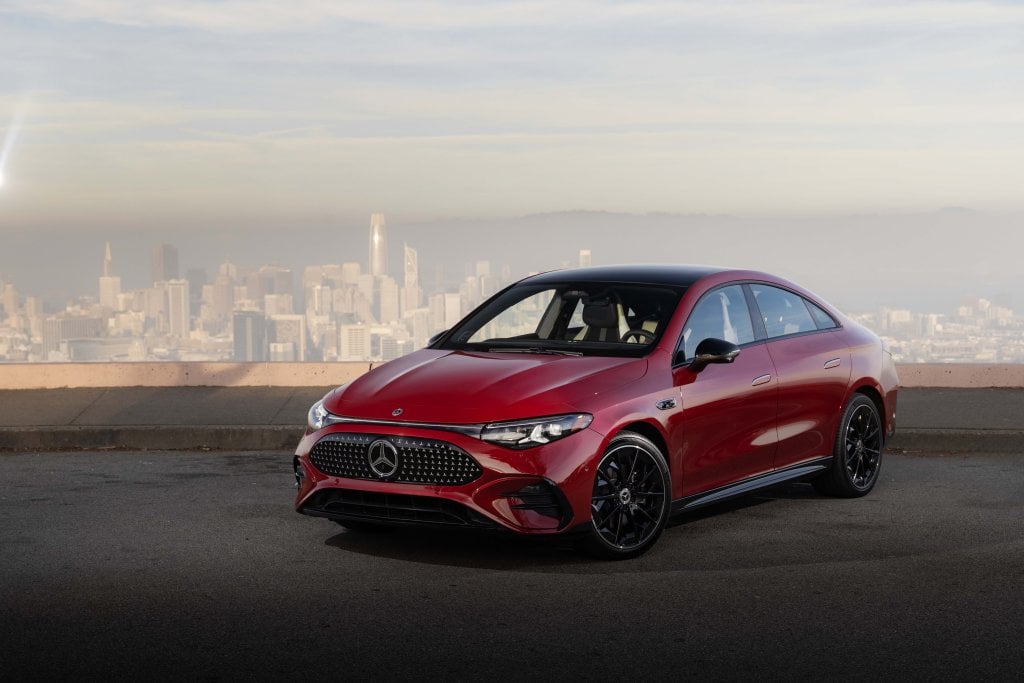
The electric Mercedes-Benz CLA makes an unusually persuasive case for leaving an option box unchecked. Its two EPA range ratings are 57 miles apart, with the smaller-wheel configuration delivering the longer distance. That trade-off matters more to me than the size of its screens or the number of illuminated stars on its nose.
The 2027 Mercedes-Benz CLA 250+ Electric starts at a base MSRP of $47,950, before destination and options. That makes it a relatively accessible Mercedes, rather than an inexpensive car. The price buys serious electric-car engineering, but several conveniences I expect in a luxury sedan still cost extra.
Even for someone who rarely takes a road trip, extra range has value. It leaves more margin for cold weather, an unplanned errand, or a skipped charging session. I care about that flexibility far more than winning the EV acceleration contest.
A Better Shape Than a Sales Pitch
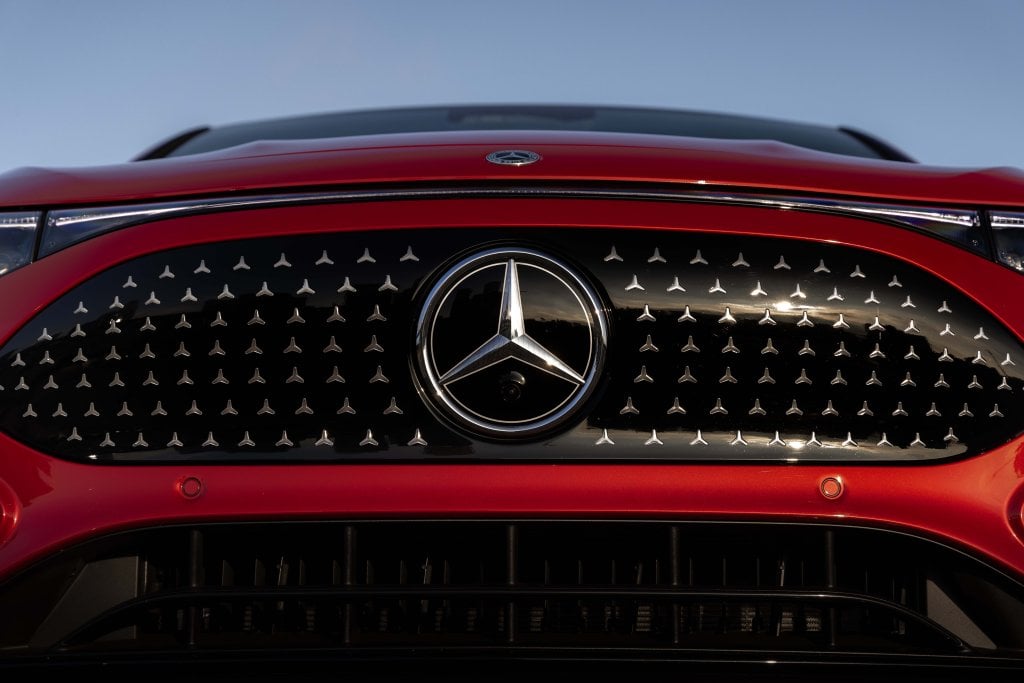
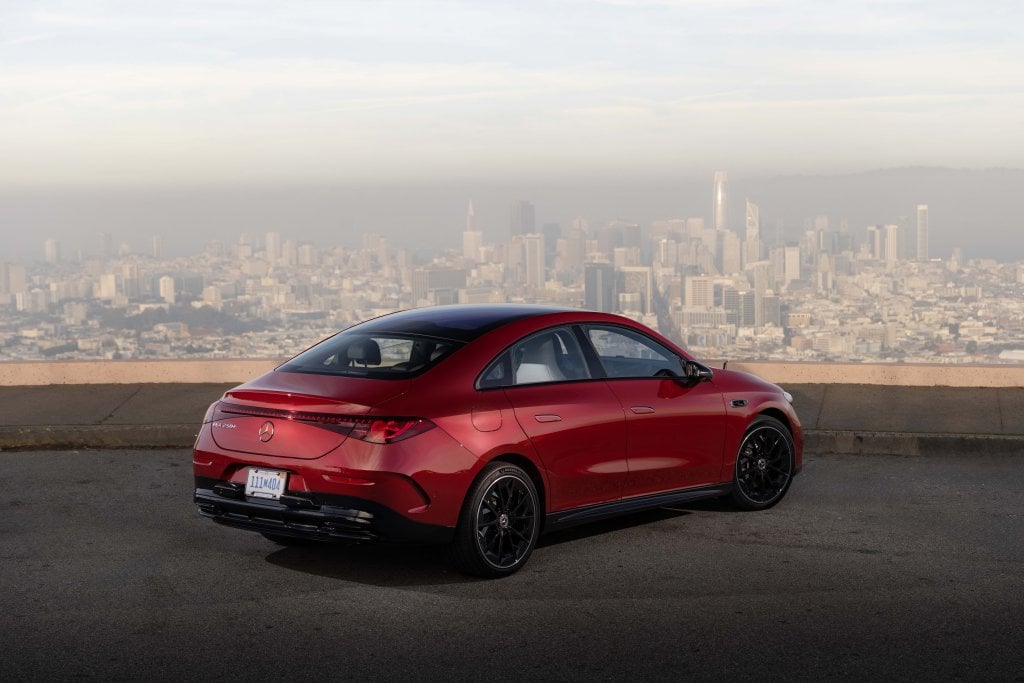
The CLA's low roof, smooth sides, and rounded lighting give it a recognizable small-sedan identity. You don't have to love every detail to appreciate the restraint of the basic silhouette. It looks like a car someone wanted to draw, rather than a diagram explaining where the battery goes.
Mercedes has never been especially worried that you might forget which company made your Mercedes. The illuminated front panel is further insurance. I could do with fewer stars, but the clean bodywork gives the bright detailing room to work without overwhelming the whole car.
For me, the shape matters more than filling every millimeter of the wheel arch. Larger rims can change the stance, but the low roof and smooth sides give the CLA its identity. The car has enough visual personality without every available styling upgrade.
The Front Seats Get the Better Deal
The cabin mixes a broad digital dashboard with patterned surfaces and ambient-lighting options. Its visual warmth is welcome; an electric car doesn't need to resemble an unfurnished apartment. The equipment list is less generous than that first impression might suggest, with some fairly ordinary conveniences reserved for the higher trims.
Heated, power-adjustable front seats with memory and a fixed panoramic glass roof are standard. Wireless phone charging, dual-zone climate control, and keyless entry come with the Exclusive trim. Of those, separate temperature settings and keyless access matter more to me than decorative lighting. They affect the daily routine for the people using the car, and I wish they were part of the base specification.
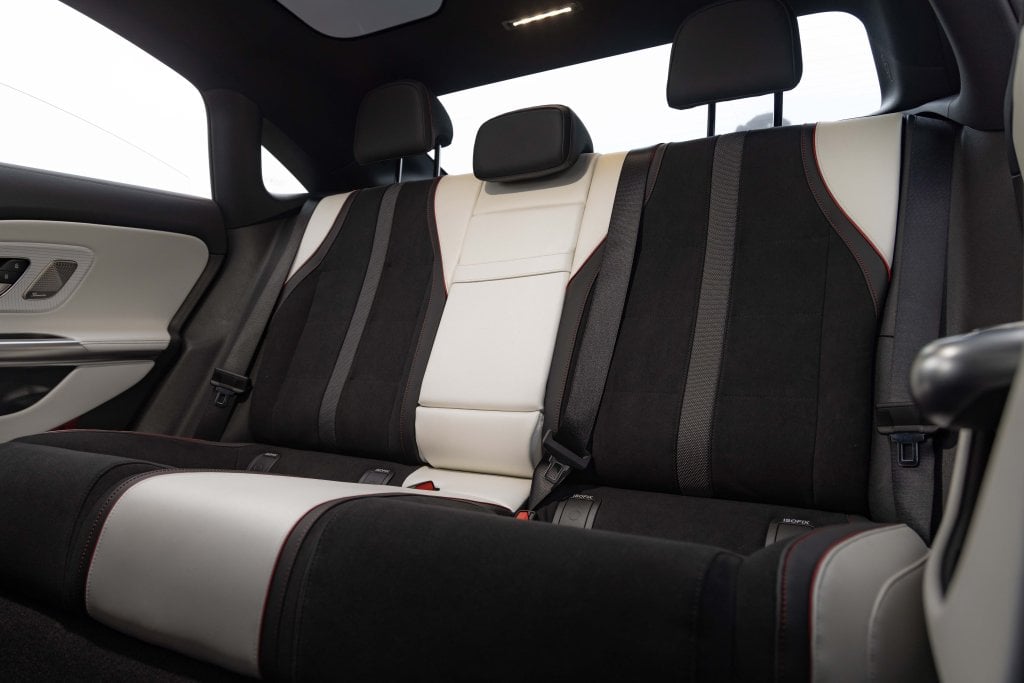
The sloping roof and high rear floor make the back seat less convincing than the front. For tall adults, headroom and seating posture matter more than the presence of a second pair of doors. I see the CLA as a better fit for a driver or couple who occasionally carries passengers than for someone regularly filling the back seat with adults.
The trunk holds 10.3 cubic feet, with another 1.4 under the hood. The frunk gives small items their own compartment, but those spaces cannot be combined into one opening for a bulky load. That is a meaningful limit for anyone whose regular cargo is more awkward than a couple of bags. The CLA's sleek shape leaves less flexibility than a hatchback.
Clever Where It Counts
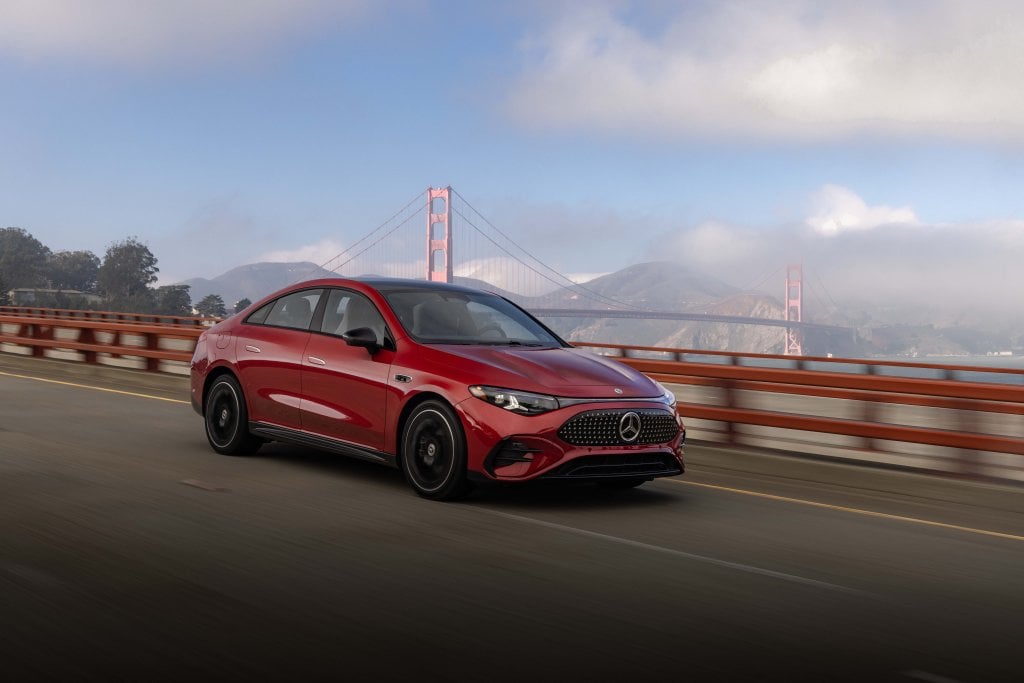
The rear-drive 250+ produces 268 horsepower and 247 pound-feet of torque; Mercedes estimates 0–60 mph in 6.6 seconds. That is enough performance for the daily-driver role that interests me. I don't need a more dramatic launch to enjoy the idea of a relatively compact, rear-drive Mercedes.
The two-speed transmission pairs an 11:1 first gear with a taller 5:1 second gear. That lets the rear motor use different gearing for low-speed response and highway efficiency. I like the attention to cruising efficiency, which matters to the CLA's long-distance appeal as much as the size of its battery.
Mercedes specifies a four-wheel multilink suspension with Comfort tuning, which fits the CLA's everyday brief. Wheel choice still matters: larger-wheel configurations can bring more tire noise and movement over broken pavement. I value comfort more than an aggressive wheel-and-tire look, another reason to favor the efficiency-oriented setup.
Mercedes provides four regenerative-braking settings, letting you choose how strongly the car slows when you lift off the accelerator. I appreciate the flexibility. Drivers coming from gasoline cars should have room to keep a familiar driving style, rather than feel obliged to use the strongest regeneration setting. The choice is useful even if you eventually settle on one mode and leave it there.
The EPA lists 374 miles for the efficiency-oriented CLA 250+ configuration and 317 miles for the other configuration. The higher figure corresponds to the standard 17-inch wheels; larger-wheel versions carry the lower rating. That's the 57-mile difference before weather, speed, or your own driving enter the discussion. To me, that is too much useful range to surrender for wheel design alone.
Mercedes specifies an 85-kWh usable battery, up to 320-kW DC charging, and a claimed 22-minute 10–80 percent charge under suitable conditions. That last figure describes a road-trip top-up, not an empty battery charged to full. It is also more informative than peak power alone: the time needed to add a useful amount of energy matters more than the highest number briefly appearing on a charger.
Charging compatibility needs care. The CLA uses NACS for DC fast charging and a separate J1772 inlet for AC charging. AC charging tops out at 9.6 kW; the headline 320-kW figure applies to compatible DC fast charging. Its best fast-charging performance requires suitable 800-volt infrastructure. Support for 400-volt DC stations depends on the car's charging hardware, and compatible cars charge more slowly at those stations. I would confirm that compatibility for the specific car and the chargers I expect to use; the NACS connector alone doesn't answer it.
A Screen Is Only Useful If It Saves You Work
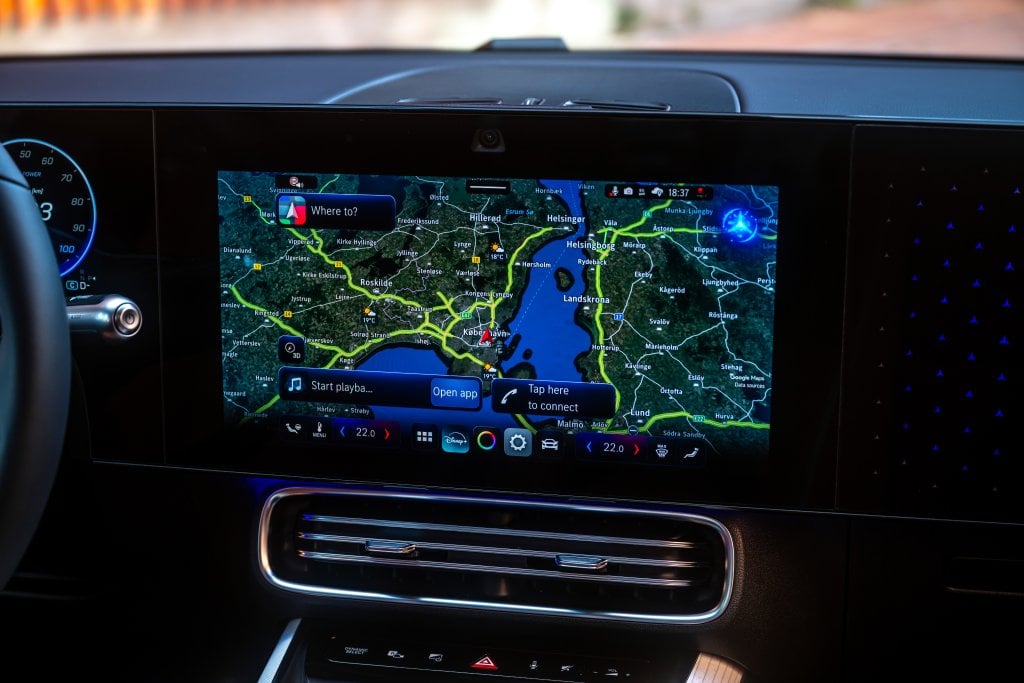
The standard 10.25-inch driver display and 14-inch central touchscreen run Mercedes' MB.OS-based MBUX system. The navigation can prepare the battery for a planned fast-charging stop, giving it a practical reason to stay relevant even if you normally prefer phone apps. I like that connection between software and the drivetrain. A route planner that accounts for charging and helps prepare the battery does more useful work than one that merely points to a charging icon on a map. Navigation services are included for seven years and require a paired Mercedes account.
I am much less sold on touchscreen climate controls and the two driver-side window switches shared between four windows. Selecting which pair of windows the switches operate adds a mode to something I want to do without thinking. Four separate switches would let each control's position tell me its job; the shared arrangement makes me keep track of that job instead.
The 2027 steering wheel's physical rocker and roller controls are encouraging. I prefer a volume roller to a touch target. The mixed approach bothers me: Mercedes recognizes the value of physical controls at the wheel, then makes a familiar door control more involved than it needs to be.
Wireless Apple CarPlay and Android Auto are supported, so familiar apps can remain part of the routine. The optional passenger display has a harder job earning its keep. I remain unconvinced that someone who brought a phone needs a second personal screen built into the dashboard. The head-up display and 360-degree parking assistance included in the higher Pinnacle trim interest me more than its extra entertainment surface.
Engineering Worth Buying
The CLA 250+ makes the most sense for someone who wants a distinctive, relatively compact luxury sedan and values long-distance electric capability more than dramatic launches. The base car already includes the battery and powertrain that make this possible. You don't have to keep adding screens and styling packages to get the engineering that makes it worth considering.
Exclusive is the upgrade that interests me first, because it adds conveniences missing from the base car. Pinnacle has to earn its additional cost through the head-up display and parking equipment; the passenger screen does little for me on its own. My preference remains the efficient wheel setup, whatever other equipment I choose.
The CLA belongs on my shortlist for buyers who can charge at home, seldom fill the back seat, and want long-range electric capability without moving into a much larger vehicle. Regularly carrying adults and bulky luggage is a good reason to look elsewhere.