

Tuesday August 11, 2026 2:22 pm
2026 Dodge Charger R/T Plus Review: The Case for a 420-HP Hatchback

Posted by Andru Edwards Categories: Features, Product Reviews, Transportation
The Case for Four Doors
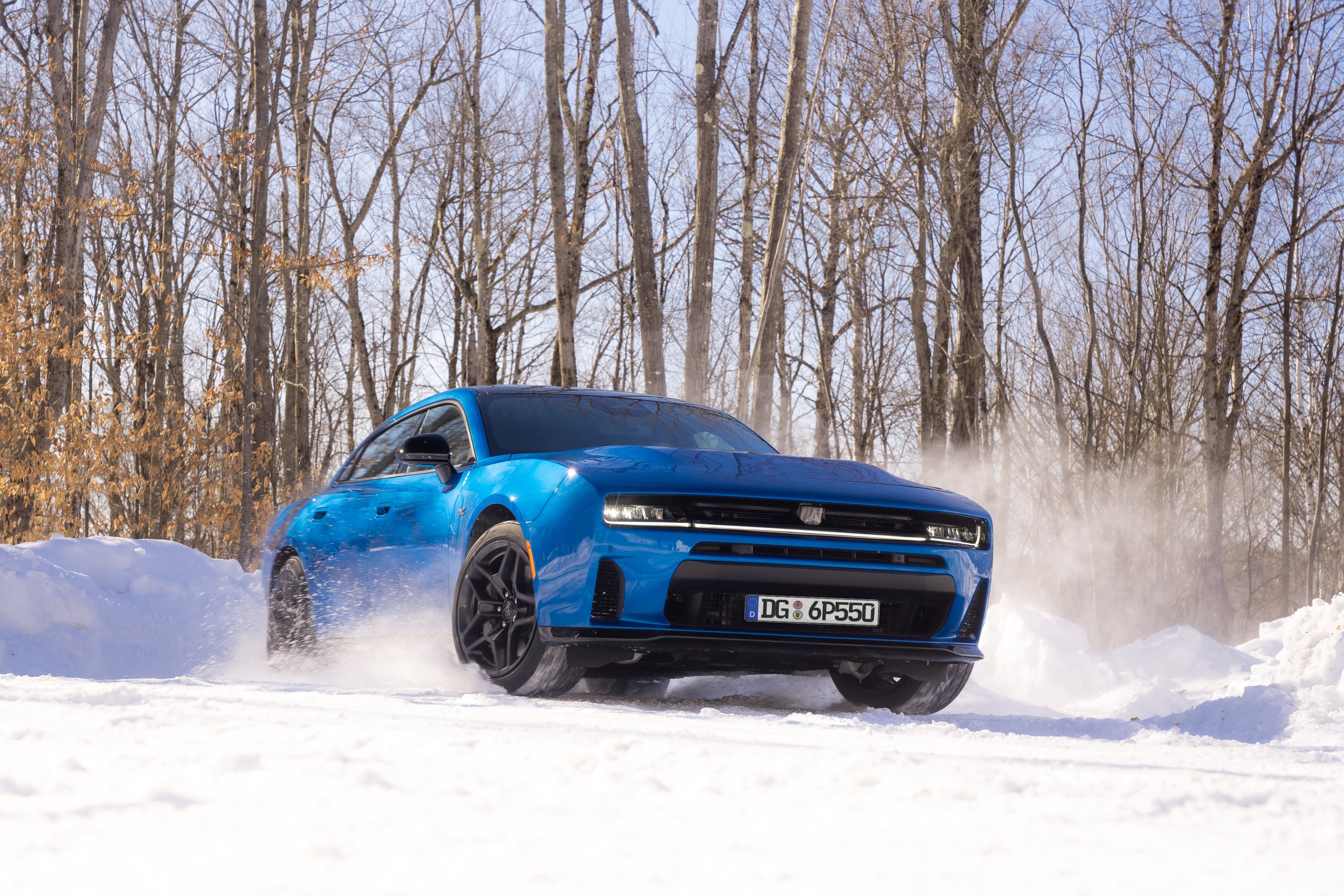
The hatch is what makes the 2026 Dodge Charger R/T Plus four-door interesting to me. Dodge has kept the long hood, broad stance, and considerably more horsepower than the school pickup line requires, then given you a credible reason to bring all of it home. Rear doors, folding back seats, and all-wheel drive make this easier to justify as your only car. At more than 17 feet long, it also demands a generous definition of practical.
The four-door Charger R/T starts at a base MSRP of $51,995 in the U.S., before destination, taxes, and options, with the better-equipped Plus sitting above that base model. I'm interested in the Plus for what it adds to ordinary driving, particularly its seating and head-up display. The underlying R/T already has the engine and useful body style; the upgrade needs to earn its premium inside the cabin.
This is the gasoline-powered SIXPACK Charger, with a twin-turbo inline-six rather than a V8. The electric Charger wears the Daytona name. The R/T gets the standard-output version of the six, below the more powerful Scat Pack. Calling 420 horsepower the starting point gives you some idea of Dodge's priorities.
Please Measure the Garage
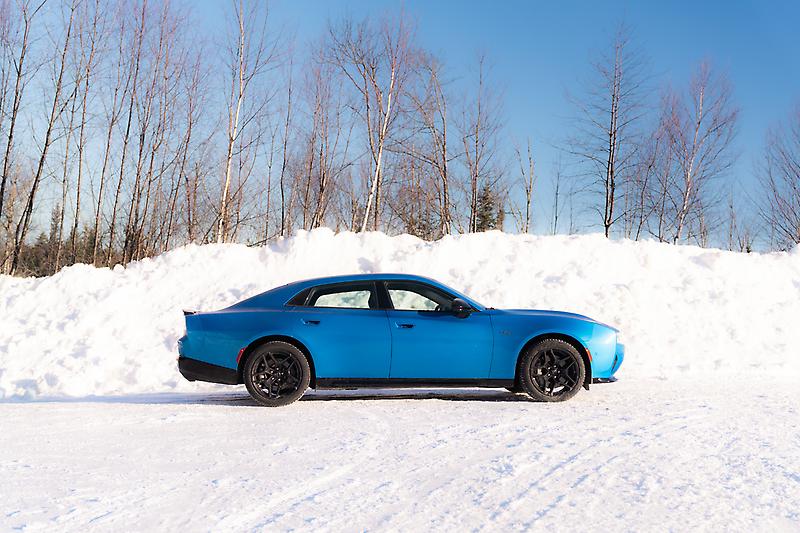
The Charger has the kind of proportions that make silver interesting. Triple Nickel lets the long hood, broad shoulders, and fastback roof do the work. The shape has recognizable muscle-car ancestry, but the clean surfaces keep it from looking like a costume.
Adding rear doors doesn't spoil that shape. I prefer four doors on a car this large; everyone should get a convenient way inside. You retain the dramatic profile without folding a front seat every time someone needs the back. The extra doors also make sense for anyone regularly loading a child seat or carrying passengers.
The measurements are about 206.6 inches long and 79.8 inches wide. That's more than 17 feet of car before you allow room to walk around it. The rear doors need space to open, too, so a garage that merely accommodates the body may still be a poor fit. The useful measurement is the space left after the shelving and other car are in place.
The substantial hood and limited sightlines add another complication in tight spaces. Available parking assistance deserves attention here, but the size remains a daily commitment. I have a harder time justifying this footprint for narrow parking structures and crowded street parking.
The Most Useful Trick Is at the Back
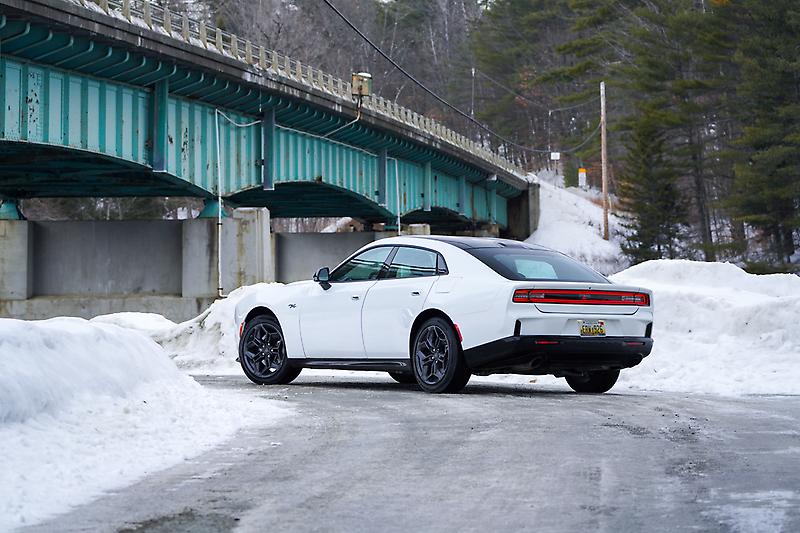
The rear glass lifts with the hatch, opening the cargo area in a way a conventional trunk cannot. The broad opening makes loading bulky purchases and awkward equipment easier; folding the back seats creates more room for longer loads. The sloping roof still limits vertical space, but I like the basic layout. That flexibility gives me a practical reason to consider a car with such extravagant proportions.
For someone who wants this profile but regularly carries gear, the hatch is a reason to consider the Charger instead of defaulting to a crossover. The hatch deserves more attention than the selectable interior lighting.
Passenger space is a different matter. The low roof and rear seating position mean those enormous exterior dimensions don't guarantee expansive accommodations for every adult. Tall passengers need to try the back with the front seats set for their actual occupants. Four doors make getting in easier; they can't tell you whether there's enough headroom once you're seated.
Up front, the Plus adds power-adjustable seating and a more elaborate digital environment. The sweeping dashboard and door treatment give the cabin a coherent identity, while the pistol-grip shifter supplies a welcome physical focal point.
I'm selective about aggressively bolstered seats. Extra lateral support has a purpose, but a sportier shape doesn't automatically make a seat better for me. For a car intended to handle commuting, passengers, and longer trips, ease of entry and room to shift position matter alongside how securely the bolsters hold you.
Six Cylinders Are Plenty
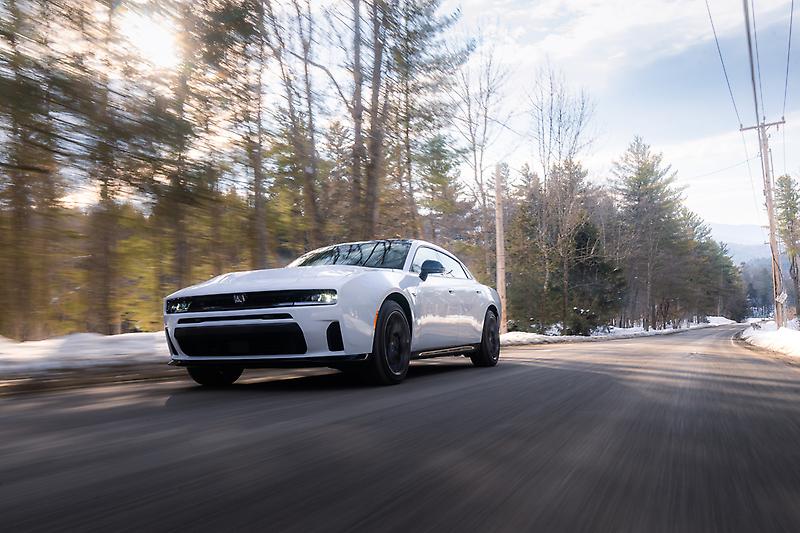
The R/T's 3.0-liter twin-turbo SIXPACK produces 420 horsepower and 468 pound-feet of torque, paired with an eight-speed automatic. Dodge claims 0–60 mph in 4.6 seconds. That's serious acceleration for the entry-level gasoline Charger. At this level, the Plus cabin equipment interests me more than paying for additional horsepower.
Peak torque arrives at 2,500 rpm, which matters more to this car's everyday purpose than bragging rights near the redline. Accessible torque suits a large car used for merging, passing, and carrying people. It also gives the R/T a persuasive reason to exist beneath the Scat Pack, even for someone who takes performance seriously.
Standard all-wheel drive broadens that usefulness, while selectable rear-wheel drive leaves room for appropriate closed-course fun. Traction under acceleration matters in an everyday performance car, although winter tires still matter and AWD doesn't remove the need for braking distance. Rear-drive mode is a welcome extra; AWD is central to the everyday case for this car.
The EPA rates the R/T AWD at 17 mpg city, 26 highway, and 20 combined. Those are ratings, not a promise about your commute. The gap between city and highway economy is also a reason to consider how you'll use it: a week of short urban trips is a different fuel-cost proposition from steady highway travel. Six cylinders haven't made the Charger an economy car.
Comfort is my priority for this R/T. A powerful four-door with room for passengers and gear appeals to me more as an everyday car than as a back-road specialist. For tight, winding roads, my preference is something smaller.
The available Performance Handling Group adds upgraded brakes and suspension, among other equipment, so R/T examples won't all have the same chassis hardware. Those upgrades make more sense for repeated demanding use than for a commuter bought mainly for its shape and engine. Cabin equipment comes first for the commuter version that interests me.
Sound needs its own judgment. An inline-six won't duplicate the old V8's character, whatever the acceleration numbers say. I'd want to hear it at a steady highway cruise as well as under acceleration. If the old engine's sound was a large part of the attraction, this is one decision a horsepower comparison cannot settle.
When More Screens Mean More Work
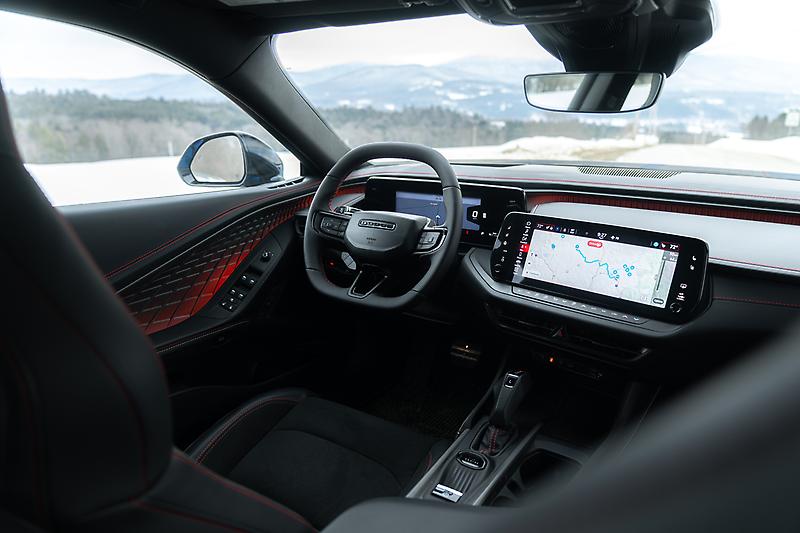
The Plus pairs a 16-inch digital instrument cluster with a 12.3-inch central touchscreen and a head-up display. I see the strongest case for the head-up display, which can put key information closer to your line of sight. The larger cluster provides more display area, but its usefulness still depends on what you choose to show there.
Uconnect 5 handles the central interface, with wireless Apple CarPlay available for familiar phone-based navigation and media. A physical volume knob remains, too. I appreciate that division of labor: use the screen for maps and deeper settings, keep a straightforward control for something you're likely to adjust repeatedly.
The climate-control touch bar is less convincing. Dedicated placement beats burying every adjustment in a menu, but a flat, touch-sensitive surface lacks the movement and separation of buttons or dials. I prefer physical controls for temperature and fan adjustments.
The Plus also offers 64-color interior lighting. It suits the cabin's sweeping design and gives you some room to personalize the atmosphere. I see it as an enjoyable extra bundled with the equipment I want, rather than a reason to choose the trim.
I prefer a restrained display setup, with essential driving information easy to pick out and the deeper menus left to the center screen. Between the large body outside and three places to present information inside, this is a car where I value a clear view over a busy presentation.
Keep an Eye on the Options
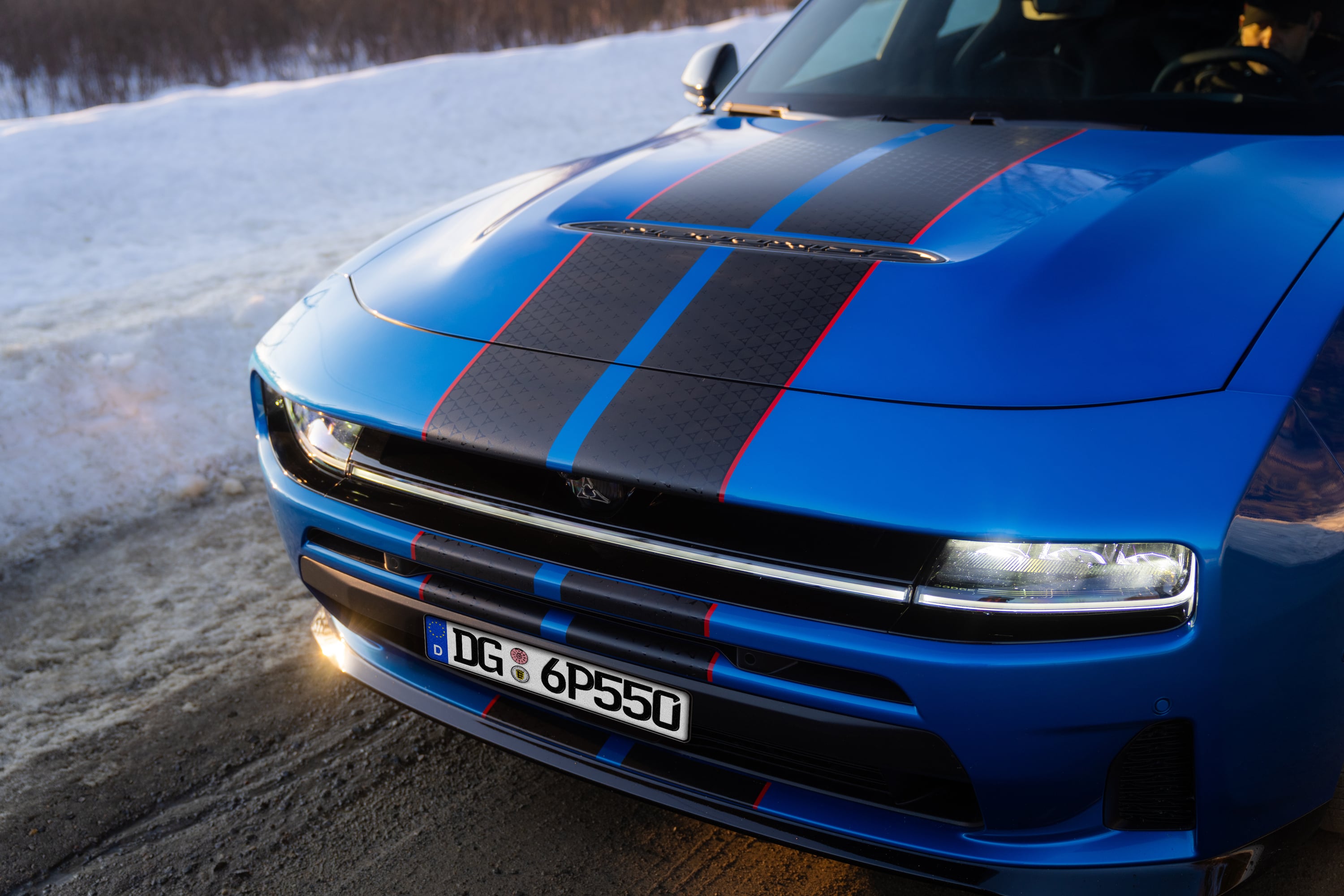
My pick is the R/T Plus four-door with a short option list. The head-up display and seating upgrades suit the daily-driver case better than additional performance hardware. I'd leave the handling package off unless I had a specific use for it, and give the more aggressive seats no preference until their fit justified one.
The base R/T remains the better value for someone who doesn't want those cabin upgrades. It already provides the engine, AWD, and hatch that make the four-door interesting. The equipment has to justify the Plus premium. Paying to avoid the base-trim label, or allowing decorative options to push the total toward a different performance model, makes little sense to me.
The R/T Plus belongs on my shortlist for someone who wants an expressive, powerful car with useful cargo access and has room to keep it. Anyone regularly carrying tall adults needs to confirm the rear-seat fit. For a life dominated by tight urban parking, my pick is a smaller car.