
Find Our Latest Video Reviews on YouTube!
If you want to stay on top of all of our video reviews of the latest tech, be sure to check out and subscribe to the Gear Live YouTube channel, hosted by Andru Edwards! It’s free!
Latest Gear Live Videos
Google throws hidden Easter egg into iOS search

Posted by Andru Edwards Categories: Apple, Google, Internet,
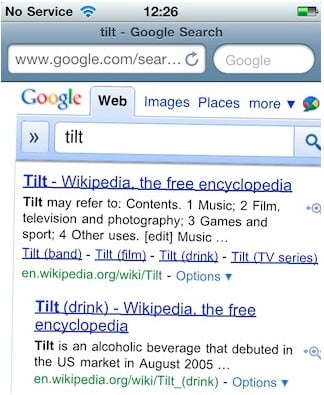
Google has thrown an Easter egg into their iPhone and iPod touch search. To see it, launch Safari, and top on the Google search box. Now type the word "tilt" or the word "askew" and hit search. Enjoy.
Gallery: Google throws hidden Easter egg into iOS search






Advertisement
A look at the remarkable rise of Android, and where it goes from here
Posted by Andru Edwards Categories: Smartphones, Editorial, Features, Google, Software,
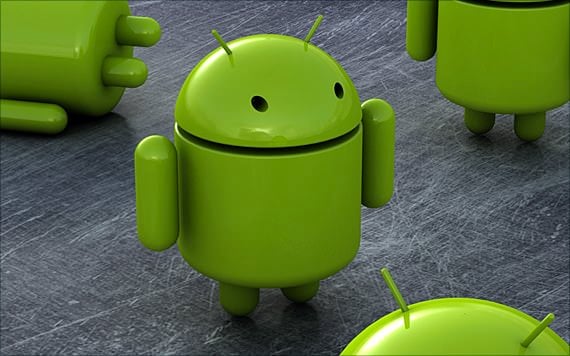
Two and a half years ago, Sergey Brin, Larry Page and T-Mobile introduced the world to the very first phone, the G1. It was a good phone with a workmanlike design, decent keyboard, an average screen and lots of Google goodness built right into it. No one, least of all me, thought it stood much of a chance against the surging Apple iPhone.
For a solid year, the platform looked like a dud. But a funny thing happened on the way to the morgue.
Seven months later, T-Mobile unveiled the keyboard-less MyTouch 3G. As before, it was a nice looking, though slightly curvier, Android phone. It wasn't until the fall of 2009, more than a year after the G1 and Android's launch, that the platform got interesting. That was when Motorola started talking openly about the Droid. By casting aside just two letters and joining with the leading mobile carrier that didn't get the iPhone, Motorola and Google signaled their intention to make Android bolder, sexier and far more desirable.
Click to continue reading A look at the remarkable rise of Android, and where it goes from here
Gallery: A look at the remarkable rise of Android, and where it goes from here
The best of April Fool’s Day 2011 from around the web
Posted by Andru Edwards Categories: Features, Google, Internet,
April Fool's Day is upon us, and that means that you can never be too sure if anything you read today is true or bogus. Everyone from Google and Hulu to Funny or Die and Groupon have come up with their own gags, and here's a look at some of the ones circulating this morning. If you see any other notable April Fool's Day jokes, let us know in the comments.
Chromercise: In a throw-back to Jane Fonda and the Jazzercise era, Google is helping you get your fingers limbered up for some searching with Chromercise. Strap on your most flattering 80s fingerwarmers and Google-fied headbands, and feel the burn.
YouTube: While you might think that YouTube was founded in the last decade, it actually dates back to 1911, when videos of horse and buggy crashes and pre-talkie fruit conversations dominated the airwaves. And of course, pets were still able to play instruments with ease; trumpet cat ftw.
Autocompleter: You thought those auto-completes on Google were done by an algorithm? Nah, it's just Michael, an auto-completer at Google. He started out as a spell checker, but now provides users with suggestions as they type. Michael averages about 34,000 words per minute and goes through a keyboard every eight days.
Comic Sans for Everyone: As we all know, comic sans is everyone's favorite font. As a result, Google will roll it out as its default fonts across all Google products, effective April 4. It's live for a few lucky people in the Google Labs Trusted Tester Beta Preview Sandbox program, so check it out.
Gmail Motion: Typing and using a mouse to write emails? Blech. With Gmail Motion, you can use your Webcam and simple movements to tell Gmail what to write. To open an email, move your hands like your opening an envelope. To reply, point your thumb behind you; use both hands to reply all.
Click to continue reading The best of April Fool’s Day 2011 from around the web
Gallery: The best of April Fool’s Day 2011 from around the web
HP ePrint printers now support Google Cloud Print
Posted by Andru Edwards Categories: Smartphones, Google, PC / Laptop, Peripherals, Software,
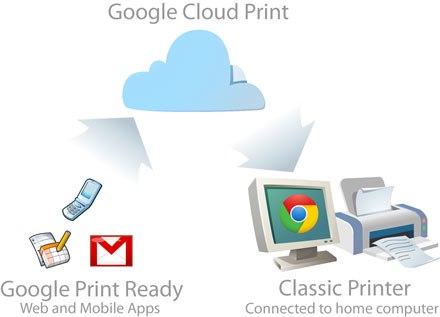
Hewlett-Packard announced today that it has worked with Google to enable its Cloud Print services on HP ePrint-enabled printers.
With the additional feature, HP ePrint printers can now print via Cloud Print right out of the box, via the PC and the beta form of the technology for Android smartphones. However, we found that the technology was clunky at best.
Users can simply "email" the document to the HP ePrint address, allowing it to directly print via the Cloud Print service. Users need to add this email address to their Google account, Google said. A list of supported printers can be found at the HP site.
Previously, users had three ways of printing from an ePrint wireless printer: connect it via USB; go through a lengthy wireless setup process; including manually entering WPA/WEP keys and other security features, as well as creating a link between the computer and router from a "one touch method" that still required users to navigate several menus on the HP printer.
Click to continue reading HP ePrint printers now support Google Cloud Print
Gallery: HP ePrint printers now support Google Cloud Print
Sony Ericsson Xperia X10 to get Android 2.3 Gingerbread upgrade
Posted by Andru Edwards Categories: Smartphones, Google, Software,
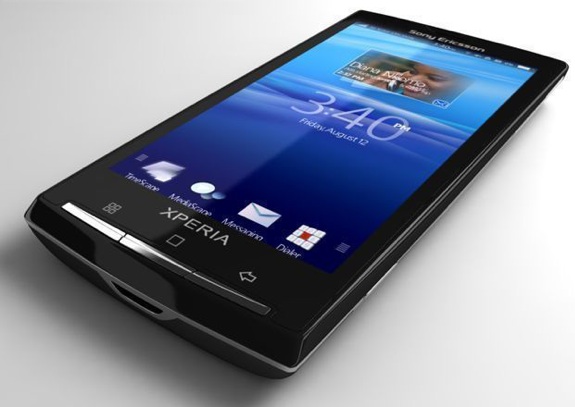
Sony Ericsson announced Friday that its Xperia X10 smartphone will be upgraded to Android 2.3 Gingerbread by the third quarter, though it might not be available to all users.
Sony Ericsson upgraded the X10 to Android 2.1 in November, and had planned to stop there, but customer demand and technology advances prompted the company to consider another upgrade.
"We have listened to our consumers," Sony wrote in a blog post. "In addition, the development of the software for our new 2011 range of Xperia phones gave us a solution that made it possible to deliver Gingerbread on Xperia X10."
Sony Ericsson decided to bypass the Android 2.2 update because it has been focused on Gingerbread for its upcoming line of Xperia phones, including the Xperia Play "PlayStation phone."
The rollout, which will technically be Android 2.3.3, is planned for the end of the second quarter into the third via the company's PC-based upgrade client. At this point, the Xperia X10 is available from carriers and in a version not tied to a specific wireless company, and the Gingerbread update will initially be provided to X10s not tied to a carrier.
Click to continue reading Sony Ericsson Xperia X10 to get Android 2.3 Gingerbread upgrade
Gallery: Sony Ericsson Xperia X10 to get Android 2.3 Gingerbread upgrade
Marissa Mayer talks up Google’s location dominance at SXSW
Posted by Andru Edwards Categories: Google, GPS,
When Google talks, people listen. That is why 3,000 people crowded into a ballroom on the first day of SXSW to hear Marissa Mayer, Google's vice president of consumer services, give her keynote. Her talk focused mostly on Google Maps for Mobile, and didn't do much more than outline the new features on the service. Even so, it should give serious pause to all of the companies currently offering location-based services, from Yelp to Foursquare. And it should give dedicated GPS vendors nightmares.
Google Mobile for Maps recently hit more than 150 million users, adding more than 50 million users since last summer. "Forty percent of all Maps usage is mobile," Mayer said. In fact, there have been days this year where mobile usage was actually greater than the desktop usage for the application.
Google Maps has always had driving directions, but by adding Street View and turn-by-turn navigation, it is fast becoming the go-to source for directions. "People drive more than 35 million miles a day while being assisted by Google Maps Navigation," Mayer said.
And those directions are becoming much more dynamic. The Route Around feature, for example, presents users with three routes to a destination and then overlays current traffic patterns. Users can select the route with the least traffic; Google said recently that Android users have the option to be automatically routed around traffic jams. This kind of real-time traffic advice is something for which GPS vendors like Garmin and Magellan traditionally charge users a monthly fee—Google offers it for free.
According to Mayer, the Route Around feature saves users two years of drive time every day, or about 12 million miles per year.
Click to continue reading Marissa Mayer talks up Google’s location dominance at SXSW
Gallery: Marissa Mayer talks up Google’s location dominance at SXSW
Tech companies accepting donations for Japan quake relief
Posted by Andru Edwards Categories: Google, Internet, Misc. Tech,
As the devastating images of the earthquake and subsequent tsunamis in Japan come in via cable news, newspapers, blogs, and homemade videos, tech giants like Google, Apple, Twitter, and more are donating funds and using the power of tech to help those in need.
In the wake of the earthquake, Google set up its Person Finder Web site to help people locate the missing or post data on those who had been found. In a Saturday blog post, Google Japan's Ken Miura said his team started working on Google's Crisis Response page within minutes of the quake.
Miura was in Tokyo, about 250 miles away from where the first quake hit, but the Google Japan office – located on the 26th floor – "started shaking slowly," he wrote.
"Although alerts from the building urged us to evacuate via the emergency stairs, I couldn't help but stay and search for information about the earthquake's epicenter and scale," he wrote. Miura said he was a university student when the Kobe earthquake hit 16 years ago and he recalled "the immediate desire for information."
With that in mind, the team launched Person Finder in Japan within an hour of the earthquake, pulled together public information from local governments about affected areas, and posted tsunami warnings on the Google homepage.
Miura also said Google will donate $250,000 to Japanese relief agencies.
Click to continue reading Tech companies accepting donations for Japan quake relief
Gallery: Tech companies accepting donations for Japan quake relief
Google launches Person Finder Japan due to earthquakes and tsunamis
Posted by Andru Edwards Categories: Google, Internet,
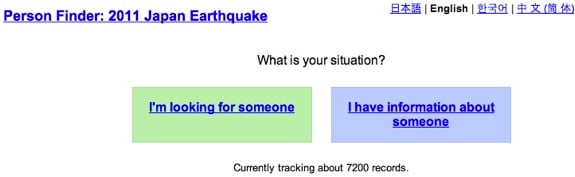
In the wake of the devastating 8.9 magnitude earthquake and subsequent tsunamis in Japan, Google has launched a version of its Person Finder tool for Web users looking friends and loved ones in the affected region.
The tool is available in English and Japanese. Users can click on the "I'm looking for someone" link or the "I have information about someone" link and enter what they know. Search by name or parts of a name, or - if you have information - enter the family or given name to create an entry.
Google stressed that all data entered is available to the public and viewable and usable by anyone. The search giant also does not review or verify the data entered into the system; after the immediate crisis has passed, Google archives the data. At this point, the system is currently tracking about 7,200 records.
Click to continue reading Google launches Person Finder Japan due to earthquakes and tsunamis
Gallery: Google launches Person Finder Japan due to earthquakes and tsunamis
Gmail introduces ‘Smart Labels’ to enhance productivity
Posted by Andru Edwards Categories: Google, Internet,
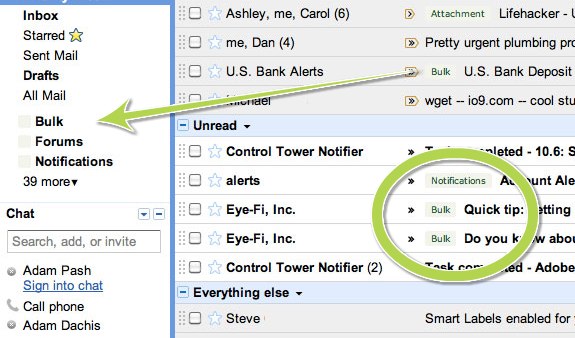
Google on Wednesday unveiled a new option for Gmail that filters messages into bulk, forum, or notification folders.
Smart Labels are a Gmail Labs project that sorts incoming e-mails into three sections: Bulk, which applies to mass mailings like newsletters and promotions; Forums for group mailing lists; and Notifications for e-mails sent directly to you.
Users can replace existing filters and labels with Smart Labels or use them together. To add, enable the "SmartLabels" option in Gmail Labs and hit save. You can further edit your settings on the Filters tab under Settings. "We hope Smart Labels help you more effortlessly get through your inbox," Google said in a blog post.
Click to continue reading Gmail introduces ‘Smart Labels’ to enhance productivity
Gallery: Gmail introduces ‘Smart Labels’ to enhance productivity
Google releases tool to address Android fragmentation
Posted by Andru Edwards Categories: Smartphones, Google, Software,
 Google on Thursday expanded its Fragments API to applications running older versions of Android, meaning apps that are compatible with Android 1.6 or higher can tap into Fragments to create apps that work on larger-screened devices like tablets.
Though Android has been growing in popularity recently among handset and tablet makers, the main complaint about the OS has been its fragmented nature. At this point, about 57.6 percent of Android devices are running version 2.2, followed by 2.1 at 31.4 percent. About 6.3 percent are still on Android 1.6, according to the Android Developers site.
To address this, Google introduced the Android Fragments API in early February as part of Android 3.0 Honeycomb.
"Android 3.0 further helps applications adjust their interfaces with a new class called Fragment," Dianne Hackborn, a Google software engineer, wrote in a February 3 blog post. "A Fragment is a self-contained component with its own UI and lifecycle; it can be-reused in different parts of an application's user interface depending on the desired UI flow for a particular device or screen."
Click to continue reading Google releases tool to address Android fragmentation