

Saturday September 5, 2026 11:59 pm
Valve Leaked Its Own Left 4 Dead 2 Trailer To Get Around The ESRB

Posted by Andru Edwards Categories: Features, Video Games
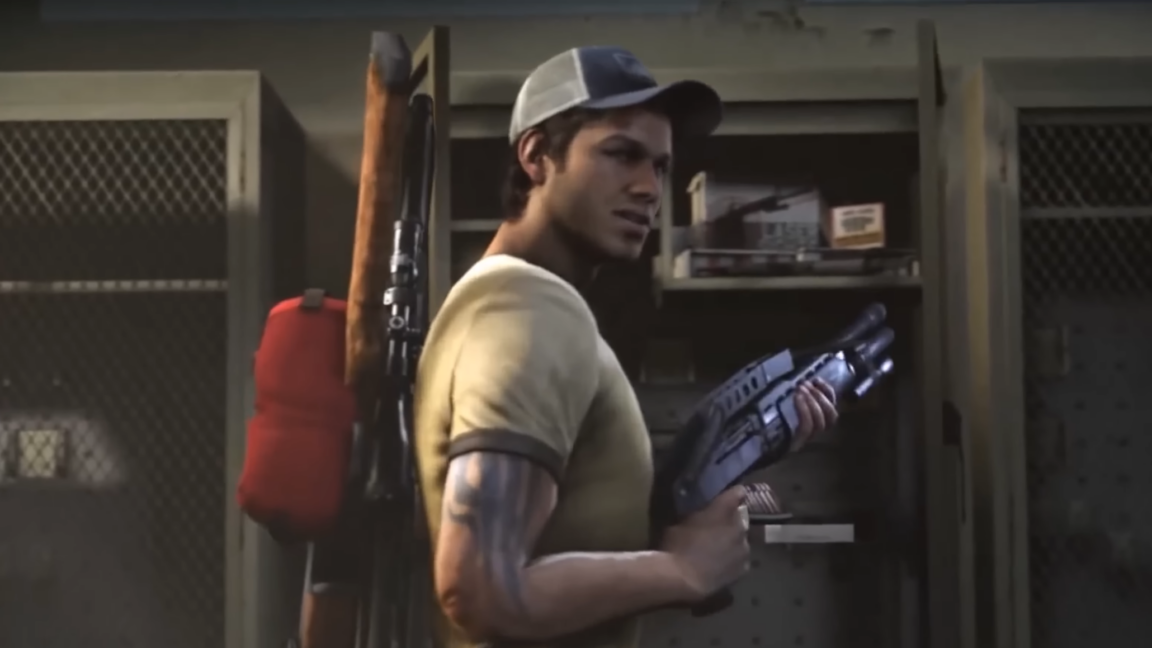
In October 2009, a few weeks before Left 4 Dead 2 shipped, a cinematic trailer for the game turned up online with nobody's name attached. Kotaku covered it on October 22 under the headline "Leaked Left 4 Dead 2 Trailer Full Of Joy, Gore." It was not much of a leak.
Chet Faliszek, a writer on both Left 4 Dead games, says Valve put it there on purpose because the ESRB would not clear it for release. "We leaked our trailer ahead of time, because they wouldn't let us release the trailer," he says in a YouTube video titled "Cutting Left 4 Dead Lines." "I'll just admit that. I think we can't get in trouble for that now. It's like 20 years ago."
The fight Valve was already in
Faliszek describes the trailer as one skirmish in a much longer argument about how much blood and profanity the game could carry. "You have to remember, especially during Left 4 Dead 1 and Left 4 Dead 2 time, Valve was in fights with the ESRB, with Australia, with Germany, with a bunch of countries about the profanity in the game, or the violence," he says.
That part matches the public record. Australia's classification board refused to classify Left 4 Dead 2 at all, and the version that finally shipped there was cut: no decapitation, no dismemberment, no wound detail, no piles of bodies. The uncensored game did not get an R18+ rating in Australia until August 2014. Germany got a censored build too, and the uncut version was not rated 18 there until January 2021. Even the box art changed at the ESRB's request.
Ratings boards grade your ads, not just your game
The ESRB does more than stamp a letter on a box. Its Advertising Review Council reviews what the organization calls qualifying advertising: trailers, videos, packaging, demos, billboards, basically any promotional material aimed at consumers in the US and Canada. Publishers are legally bound to follow the guidelines, and enforcement includes corrective actions and monetary fines.
Editorial content sits outside all of that. An independent write-up of a game is not advertising, so it never enters the process. That gap is the workaround. A trailer Valve posts is marketing and has to clear the guidelines. The same footage sitting on YouTube and getting picked up by games blogs is a story somebody else is telling.
The rules were also tighter in 2009 than they are now. Trailers for M-rated games had to live behind age gates on the sites hosting them. The ESRB loosened that in 2013, letting approved trailers run on sites without age gates so long as they were cut for general audiences. Today a publisher can put more or less any content from the game into an internet trailer without submitting it first, as long as the trailer honestly reflects what the game is. Faliszek's team was working under the old regime, where a cinematic that matched the tone of the game itself could still be too much for the ad rules.
What we can and can't confirm
Not much. This is one person's recollection, told in a casual video about cut voice lines, roughly 17 years after it happened. There is no Valve statement, no internal document, no ESRB record. Faliszek is about as close to it as a witness gets, since he was writing the game and sitting in those arguments, but he is also recalling it loosely. He says "like 20 years ago" when it was closer to 17, and he thinks the video is gone: "I don't think you can look for leaked Left 4 Dead 2 trailer, cause it's lost now."
So take it as a firsthand memory, not a documented Valve decision. People did notice at the time, though. That Shelf's 2009 post about the leaked intro cinematic already wondered aloud whether the leak was a publicity move. Faliszek's account puts a name to it.
The leak as a delivery system
Plenty of leaks are exactly what they look like: a build that got loose, a retailer listing posted early, somebody's cousin at the factory. A leak also happens to be a useful way to ship a video. It gets the footage covered with no approval process, no age gate, and the extra pull that comes from something looking like it was never meant to be seen. If a marketing team can get all three by misplacing a file, some of them will.
Faliszek says the trailer is lost. Kotaku's October 2009 post about it is still online, which is a decent sign the plan worked.