
Find Our Latest Video Reviews on YouTube!
If you want to stay on top of all of our video reviews of the latest tech, be sure to check out and subscribe to the Gear Live YouTube channel, hosted by Andru Edwards! It’s free!
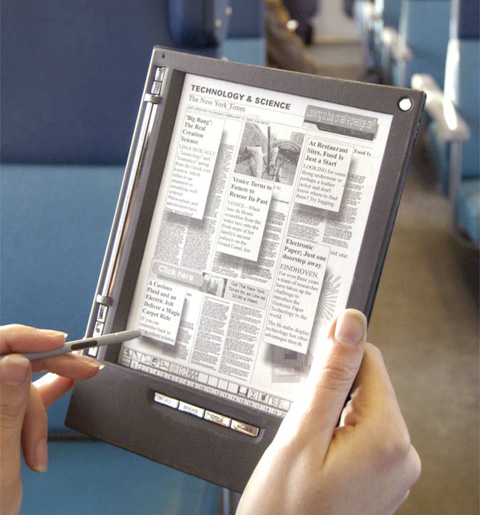
Imagine being able to carry around your entire personal library with you wherever you go. Instead of stuffing a couple of paperbacks into your briefcase for those long business flights, you would merely grab your iRex Iliad E-Reader and load it up with a few electronic books. Sure, you can do the same thing with just about any PDA, but products that utilize electronic ink technology (like the Iliad) offer up a couple of unique benefits. E-Ink (or e-paper) as the technology is commonly referred to, uses very little power, allowing battery powered devices to go for days (if not weeks) between recharges. The viewing surface also delivers outstanding contrast making text easy to read even in direct sunlight.
The Iliad can currently make use of PDF, XHTML, MP3, and TXT files with more to be introduced as time progresses. An 8.1-inch screen with a 1024x768 (160dpi) resolution makes reading easy on the eyes, and a wealth of interfaces (USB type A, CF, 802.11g Wi-Fi, SD/MMC, and 10/100 Ethernet) are available for getting data into the device. The display is also touch-enabled allowing you to write notes directly on your reading material for later reference. A 400MHz XScale processor means War and Peace won’t make the Iliad break a sweat, and 64MB RAM and around 224MB of available ROM memory allows the storage of a large quanity of literature.
The Iliad will be available in April for a yet to be determined price.
Read More  | iRex Technologies
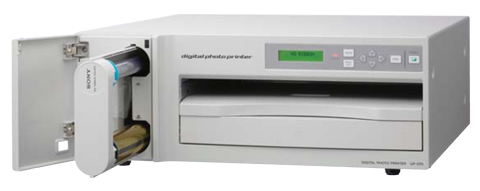
There’s no question that dye sublimation printers produce outstanding results, but their biggest drawback has always been cost (hardware and cost per print). Seeing no need to stray from the norm, Sony introduces the UP-D75 Color Photo Printer, with a suggested retail price of $2,995 USD. Naturally this isn’t aimed at the average home user, but focuses more on the photography studio and self-serve kiosk markets. To give printed images a real photograph look and feel, the printer laminates a clear finish (glossy, textured or matte) onto the picture. This laminate layer also serves to protect the pictures from fingerprints and smudges. Since no one likes to wait, the UP-D75 trys to be obliging with a snappy print speed of 80 seconds for a 300dpi 8x10.
Read More | Fosfor Gadgets
Advertisement
Apple Finally Selling Quality Leather iPod Cases (That Suck)

Posted by Andru Edwards Categories: Accessories, Apple, Design, Portable Audio / Video,
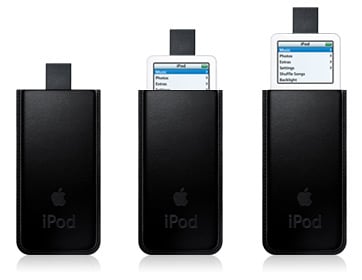
At today’s Apple event, Steve Jobs unveiled a new leather iPod case. The case is hand-crafted from Italian leather, and features a black ribbon that pulls your iPod from within. Nice to see the company finally providing something more than a thin piece of felt to store your iPod in, but couldn’t they have taken the hint from just about every other case manufacturer and given us the option of seeing the screen? Apple’s own case hides the iPod display, and doesn’t even give access to the controls of the device. This one doesn’t get our vote. Still, if you want it, you can get one for $99 USD for either the 5G iPod, or the iPod nano (which requires less material to construct, but costs just as much.)
Read More | Apple Leather Case for iPod
Latest Gear Live Videos
The iPod Hi-Fi Boombox
Posted by Andru Edwards Categories: Accessories, Apple, Home Entertainment, Music, Portable Audio / Video,
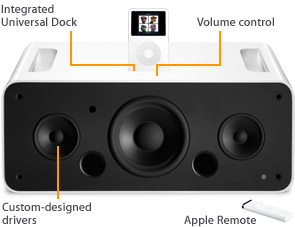
The biggest of the “fun new” Apple products of the day turns out to be the iPod HiFi Boombox. Calling the new accessory “Home Stereo. Reinvented,” the product shares some of the features of the iPod, but with the quality of a home stereo device. The boombox is a three-driver system enclosed in one unit, featuring an iPod dock right at the top. If you have an iPod shuffle, you can use the auxiliary inputs in the back to connect the device. The nice thing about the dock is that it will fit any of the dockable iPod models using inserts. The iPod Hi-Fi has built-in handles on both sides, making it portable. The power supply is built into the unit, so no need to lug around a bulky power brick. Even better, though, is that is can run on six D batteries. Nice for when you forget to bring your electricity generator with you to the beach.
Behind the black grating lie two 80 millimeter mid-range driver with sealed acoustic suspension, along with a 130 millimeter dual-voice coil woofer. In order to enjoy the iPod Hi-Fi to the fullest, you will need to download an iPod update that will be made available shortly. This will add a new “Speaker” menu item to the iPod menu interface, giving you control over tone, backlight, and album art settings. The iPod Hi-Fi can be controlled with the Apple Remote, which comes bundled with the unit. It can also accept audio input through an auxiliary jack and SPDIF optical audio input, which means it can be used with non-iPod audio players. Our only concern is the lack of an FM tuner. I mean, would that have been so hard? You can pick up an iPod Hi-Fi starting today for $349 USD.
Read More | iPod Hi-Fi Product Page
Steve Jobs Announces Upgraded Intel Mac mini With Front Row
Posted by Andru Edwards Categories: Apple, Home Entertainment, PC / Laptop, Software,
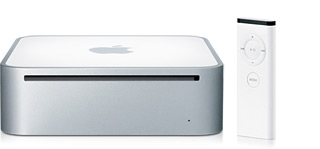
Steve Jobs has just announced that transition of the Mac mini from the G4 processor over to Intel. The base model sports an Intel Core Solo chip, while the more powerful unit boasts a Core Duo chip. The Mac mini maintains the same form factor that the previous version had. This one looks to be the machine you will want to hook up to your television, as the mini finally comes installed with Front Row. The redesigned Mac mini features DVI video out, gigabit Ethernet, a total of four USB 2.0 ports, analog and SPDIF audio outputs (Dolby Digital 5.1), and a new IR sensor for use with it’s remote control. You can now stream music, iTunes television shows, photos, and more all on the fly. A Bonjour update allows all devices on the network to find each other seamlessly. The update will be made available to all Macs that run Front Row.
With a DVI out, Apple has entered the living room. With the new Bonjour software, they have made it a simple transition. No need to transfer all of your content to the mini, it can play media from any machine you have hooked up to your network. The 1.5 GHz Core Solo version has a 60GB hard drive, and combo DVD-ROM/CD-RW drive and will retail at $599 USD. The more powerful 1.67 GHz Core Duo Mac mini has an 80GB hard drive along with a DVD-burning SuperDrive, and will sell at $799 USD. Both are available today.
Read More | Mac mini Product Page
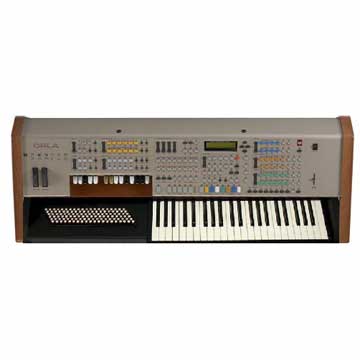
Attention audio mad scientists! If you happen to have a loony tune combining a polka and techno just waiting to get out of your head, here is your new best friend. The ORLA PK 400 Piano Accordion Keyboard is just pure madness. What we wanna know is, can we get a virtual version of this in Reason? Check out the deets on this synth:
Authentic Orchestral Voices and Organ Sounds
All instruments have 292 sampled sounds in each of the orchestral sections. These include the standard 128 General Midi voices + ORLA XM sound library voices. Each manual has real time Flutebars for creating your own original organ sounds with Flute or Tibia voicing. Both Tremolo and Vibrato effects are available on the Flutes.
40 unique accordion samples can be found within the Orchestra sections.
A variety of features such as Reverb, 3D Sound Enhancer, Octave shift and Sustain can be used to enhance the sounds.Built In Registrations and Automatic Set Ups
In order to allow you to sit down and play straight away using professional sounding registrations each of the 90 onboard rhythm styles has an Automatic Set Up. These convenient registrations, set up the whole instrument instantly using sounds appropriate to the musical style selected. The instruments allow the player to adjust these registrations to suit personal taste. The 16 Overall Presets also come preset with settings to get you started once again covering a wide range of musical styles including Organ Sounds, Orchestral, Jazz and Big Band.Advanced Rhythm Orchestrations
Each one of the instruments has an extensive rhythm section featuring 90 different rhythm styles. These cover a broad range - from traditional dance rhythms such as Waltz, Foxtrot and Quickstep to modern contemporary beats and great Latin rhythms. Each style has 3 Variations, fully orchestrated Intros and Endings and Fill In patterns.Built in Performance Recorder with Disk Drive
The built-in disk drive can be used to load and save musical data including registrations, rhythm styles and songs. The new Auto Save facility eliminates many of the problems people have previously encountered when using disks.
The performance recording side of the disk drive is for recording and playback of your own performances.
Once again the emphasis is on ease of use with a minimal amount of button pushing required to both record and save to disk.
You have to give theses guys mad props for even thinking of something so insane. For the mad scientist with a twist of tech, the full specs can be found at the Accordions.com site, or ORLA direct.
Read More | Accordions.com
Read More | ORLA
An Early Look At Google Payments
Posted by Andru Edwards Categories: Corporate News, Google, Internet,

So, we have told you previously that Google Base just may be the eBay/Craigslist killer. All they needed was a good, homegrown payment system. Now it appears that the puzzle is coming together, with the appearance of Google Payments. Our friends over at TechCrunch have posted an in-depth look at Google Payments, and how it integrates seamlessly with Google Base. Very nifty, indeed. Our only hope is that Google comes up with a rock-solid method of rating your buying experience. eBay’s reputation model has a few flaws, and this is Google’s chance to capitalize on it.
Read More | TechCrunch
Navizon Peer-to-Peer Wireless Positioning
Posted by John Goulden Categories: Smartphones, GPS, Handhelds, Wireless / WiFi,
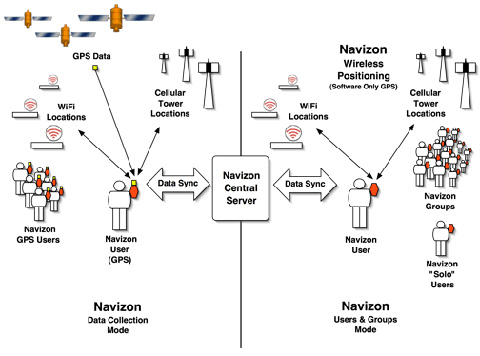
Sadly, not every phone or PDA comes equipped with the wonderful feature that is GPS. Someday maybe, but not yet. Until then, there are many different options for getting a GPS signal to your mobile device of choice, but an extra device isn’t always practical. With peer-to-peer functionality all the rage, Navizon has capitalized on the concept with a wireless positioning system that can operate sans a hardware GPS.
Utilizing Wi-Fi and cellular capable devices, Navizon’s software triangulates your position based on data provided by the items that surround us all (access points, cell towers, etc.). In essence, Navizon’s software mimics a hardware-based GPS, at least as far as your navigation software is concerned. Data is transmitted back to Navizon and it uses said data to help triangulate the location of other people using the service in your area. If you’re concerned about the Big Brother aspect of things, you can purchase a Solo editon of the software that doesn’t transmit any data back to the mother ship. Naturally, the Solo version is a bit more feature limited since a number of options rely heavily on community supplied data, but it helps end conspiracy theories if nothing else.
Navizon’s software is available free of charge for Windows Mobile and Pocket PC devices as well as Symbian Series 60 platforms. Their Solo version costs $19.99 USD.
Read More | Navizon via NaviGadget
VMware New Virtual Appliances Ready To Download

Posted by Frank Bisono Categories: PC / Laptop, Software,
 Recently we broke the news about VMware releasing a free version of their kick-butt virtualization products for all to use and abuse. Now they have added over 40 new virtual appliances for your downloading pleasure.
New virtual appliances include IBM DB2 Universal Database Express Edition, PortWise Identity and Access Management Platform, Zeus Extensible Traffic Manager, Zimbra Collaboration Platform, and rPath’s open source appliances containing Apache, LAMP, Browsing and SugarCRM. Run these virtual appliances using any VMware virtualization product, including the free (as in beer) VMware Player and VMware Server.
Read More | VMware
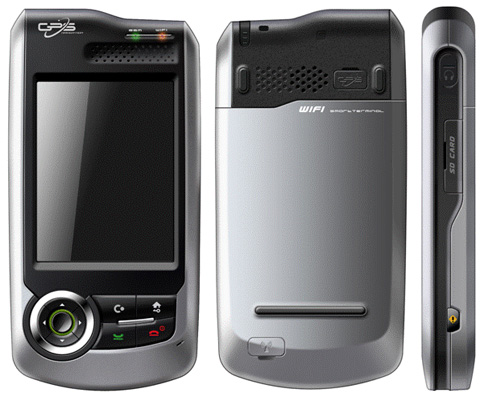
With Linux penetrating the marketplace so pervasively, it comes as no surprise that even the ubiquitous mobile phone now runs a variation of the popular OS. The latest mobile device to run Linux is this smartphone from ImCoSys, a small Swiss company that started up in 2005.
Sporting features like quad-band GSM (850/900/1800/1900), Bluetooth 1.2, EDGE, Wi-Fi (802.11b), and GPS, the phone has the necessary equipment to be competitive in the marketplace. A 200MHz TI OMAP 730 processor provides the necessary computational power, with 64MB ROM/64MB RAM for memory and a QVGA touchscreen LCD to handle input duties. An oddball feature that’s included is RS-232, which certainly seems strange in these days of USB dominance.
Available this summer for approximately $350 USD.
Read More | ImCoSys (de) via Linux Devices