

Thursday September 17, 2026 7:13 am
Lucid and Bolt Want 25,000 Robotaxis in Europe. Lucid Built 18,378 Cars All Last Year.

Posted by Andru Edwards Categories: Transportation, Artificial Intelligence
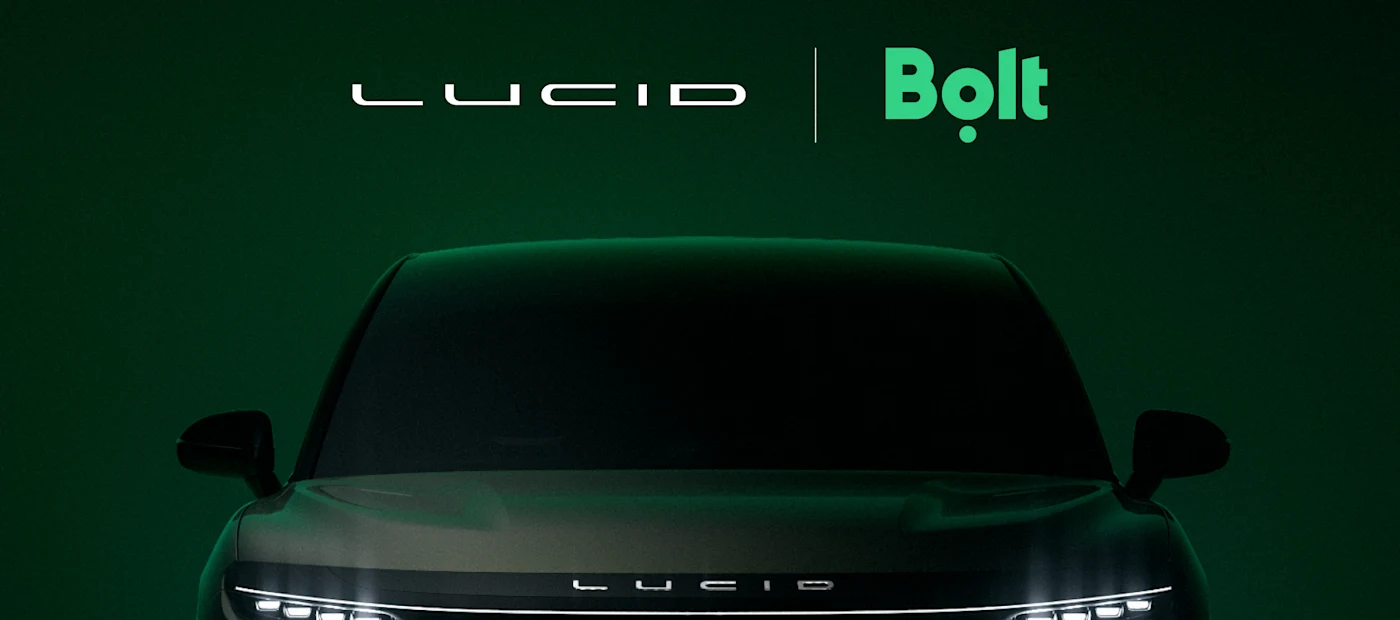
Bolt wants at least 25,000 driverless Lucid cars working European streets. Lucid built 18,378 cars in all of 2025: every model, every market, every customer on earth combined.
That is the deal the two companies announced Thursday morning. Lucid's stock went up on it.
What was actually announced
Bolt, the Estonian ride-hailing and delivery company that operates in more than 50 countries and 850 cities, is going to buy, own and run a fleet of autonomous Lucid vehicles itself, through a new unit called Bolt Autonomous Driving Solutions. It owns the metal, rather than brokering rides in cars that belong to drivers. Lucid handles its half through a new unit of its own, Lucid Technologies, which pulls the company's AI, driver assistance and autonomy work under one roof.
The cars come from Lucid's upcoming Midsize platform and are designed for SAE Level 4, meaning nobody inside is expected to take over within whatever area the fleet is cleared to run in. The computer and the sensors are expected to come from Nvidia's Hyperion reference architecture. Past the first 25,000, Bolt says it wants 100,000 autonomous vehicles on its platform by 2035. Both figures are targets, not orders anyone has placed.
Bolt CEO Markus Villig put the pitch in continental terms: "Autonomous driving in Europe requires data, software, vehicles, and operations to work as one system built for European roads." Lucid CEO Silvio Napoli called shared autonomy "the perfect opportunity to extend our unique technology beyond consumer vehicles."
What was not announced
No start date. No cities. No countries. No price, no order value, no first-delivery target. The release describes a partnership at the product-development stage, which is a fair description of where this is.
The release also names Nvidia for the computer and the sensors without naming the company whose software will actually do the driving. Bolt's unit is described as handling co-design, integration and commercialization. Somebody still has to write the driver.
The production math
Lucid produced 18,378 vehicles in 2025. That was a good year by Lucid's standards: production more than doubled, up 104 percent, and deliveries rose 55 percent to 15,841. In the second quarter of 2026 the company delivered 3,953 cars.
So 25,000 cars for one customer is more than Lucid has ever built in a year, and Bolt is not Lucid's only autonomy customer. Uber has committed to at least 35,000 Lucid vehicles, with Nuro supplying the self-driving software and a Houston service planned for 2027. Uber owns roughly 11.5 percent of Lucid. Add Bolt and Lucid is carrying publicly committed autonomous volume of at least 60,000 vehicles, at a company that has never cracked 20,000 in twelve months.
The Midsize platform both fleets depend on does not exist yet either. In August, Napoli pushed its launch from late 2026 into the second half of 2027 and was unusually blunt about why: "we have disappointed on several fronts, and for far too long." He listed inconsistent execution, missed commitments and premature product launches. Six weeks later his company signed up for another 25,000 cars.
Why Bolt is doing it anyway
Bolt's position is easier to defend than Lucid's. It already has the demand side, with more than 200 million customers and over 4.5 million drivers and couriers on the platform. What it does not have is a car built for driverless duty, and nobody in Europe is going to sell it one at scale in the next two years. Waymo is testing in Munich and has said it plans to launch in Germany in late 2027. Wait for the market to settle and Bolt ends up renting its own streets back from whoever got there first.
Ride-hailing companies spent fifteen years making sure the vehicle was somebody else's problem. Bolt is choosing to put tens of thousands of cars on its own balance sheet, which means it eats the depreciation, the insurance, the charging, the cleaning, the parking and the towing. It is a different kind of company than the one Bolt is today.
What to do with it
Treat it as a plan, because that is what it is. A supply agreement for a car that starts production in late 2027, running software nobody has named, in cities nobody has named, sits a long way from a ride you can hail. What Lucid got on Thursday is a second large customer for a vehicle it has not shipped.
Watch the Midsize production date rather than the fleet targets. If those cars start coming off the line in the second half of 2027, Bolt's numbers become worth arguing about.