

Monday May 3, 2010 4:45 pm
Opinion: Apple, iPhone 4, and the Case against Gizmodo

Posted by Alex Lifschitz Categories: Apple, Smartphones, Editorial, Features, Handhelds, Rumors
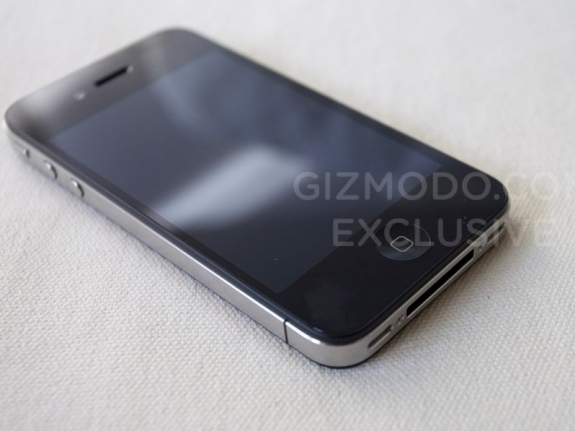
I’m a pretty crappy journalist.
I do it in my free time, and for the most part, I’m an opinions and hands-on writer. I don’t go monstering around the nation’s capital with a fedora and notepad, and I rarely find myself in a position where I have to probe into anything that matters past an arbitrary release date. I don’t always fact check if I’m not making accusations.
But I know a scummy move when I see one. And Gizmodo’s actions in the iPhone HD prototype debacle have been consistently unethical, unprofessional, and, yes, illegal.
It sucks. Gizmodo’s parent company, Gawker Media, is home to a lot of great blogs and great people – people who seem to have some professional standards. But in the face of such reprehensible journalism, Gizmodo has been inexplicably wearing their tarnished reputation from this saga as if it were some kind of badge of pride. I’m sure they have lawyers going over every step of their story, but how someone in their legal or PR departments could have greenlit this is really beyond my comprehension.
Before I get into the ethical issues of yellow journalism, I think it’s important we establish a fact pattern and what I hold to be the optimal course of actions they could have taken through this whole sordid affair. Join me while I use my rudimentary Google-fu to make my case against the actions of nearly all parties involved.
{embed="unboxing:inc/gallery_strip" category_id="167"}
For reference, I will refer to the person who originally found the iPhone as Mr. X, because I’m lazy. Also, because this investigation is ongoing, and I’m forced to refer to this party as the collective. It has been revealed so far that Brian J. Hogan and associates are the ones who came into possession of the prototype and coordinated the sale, but the chain of possession is a little murky - they are still held to legal standards, though.
1. By finding and failing to report the iPhone to authorities, Mr. X committed theft.
Our story begins when Mr. X finds an unusual iPhone in a bar. The iPhone is a prototype lost by Apple engineer Gray Powell, who is later contacted – and infamously defamed – by Gizmodo for the slip-up. When Mr. X discovers that the iPhone is not a regular model, he contacts Apple Customer Service and is blown off numerous times. He eventually decides to stop making efforts to contact the owner.
First, let’s discuss whether he had any right to take the phone in the first place. For this, I defer to a close legal contact of mine.
“Any first-year law student who’s taken a Property class can tell you that Mr. X screwed up. There’s a general maxim for finders law that goes as follows: “When dealing with lost property, possession is good title against the whole world except the original owner.” But the common law makes a distinction between lost property (where there’s no reasonable inference of intent to reclaim) and mislaid property (where the circumstances evidence a mistake with reasonable inference of intent to reclaim). It’s the difference between dropping a money clip that you can’t readily prove ownership of on the floor versus leaving a proprietary piece of electronic equipment in a bar. Essentially, does it seem like the true owner will have good reason to retrace his steps to try to find his property?
“When you have mislaid property, it’s supposed to go to the owner of the locus (the land the mislaid item was found on). That person is deemed to be in a better position to return it to the original owner when he realizes his mistake. Whoever found the iPhone had every reason to believe the true owner would return to the bar to try and claim it, making the owners of the bar the best people to hang on to it until then. Under the common law approach, Mr. X never should have had the iPhone in the first place.”
But in this case, Mr. X did take the iPhone. So let’s go from there.
Section 485 of the California Penal Code says that anyone who finds lost property and “appropriates such property to his own use, or to the use of another person not entitled thereto, without first making reasonable and just efforts to find the owner and to restore the property to him, is guilty of theft.”
Mr. X did the absolute bare minimum to satisfy the burden of reasonable effort. Why? Because there were still clear and obvious ways to get the phone back into the hands of Apple. Take it to any Apple store. Keep barking up the chain. Hell, you’re in the bay area. Drop it off at 1 Infinity Loop. But all in all, the most important thing is this…
WHAT SHOULD HAVE BEEN DONE
He should have surrendered the prototype to the local police.
According to Daily Finance:
“What he never did, however, was notify anyone who worked at the bar, according to its owner, Volcker Staudt. That would have been the simplest way to get the phone back to the Apple employee who lost it, who “called constantly trying to retrieve it” in the days afterward, recalls Volcker. “The guy was pretty hectic about it.”
Nor did the finder report it to the Redwood City Police Department, says Sgt. Dan Mulholland. To be fair, no one from Apple told the police the phone was lost, either. I contacted a company spokeswoman to ask why not but never heard back.”
As Citizen Media Law Project points out:
California law regulates what you can do when you find lost property in the state. Section 2080 of the Civil Code provides that any person who finds and takes charge of a lost item acts as “a depositary for the owner.” If the true owner is known, the finder must notify him/her/it within a reasonable time and “make restitution without compensation, except a reasonable charge for saving and taking care of the property.” Id. § 2080. If the true owner is not known and the item is worth more than $100, then the finder has a duty to turn it over to the local police department within a reasonable time. Id. § 2080.1. The owner then has 90 days to claim the property. Id. § 2080.2. If the true owner fails to do so and the property is worth more than $250, then the police publish a notice, and 7 days after that ownership of the property vests in the person who found it, with certain exceptions. Id. § 2080.3.
The item in question was an iPhone, prototype or not. By acquiring the lost goods, Mr. X was then bound to follow the law or pursue the owner. He did not satisfy his burden, and had no excuse other than greed and ignorance to not surrender this to the authorities.
To be clear, this makes Mr. X the criminal, Apple and Gray Powell the victims, and most importantly, it makes the iPhone contraband.
INSTEAD …
He decided to forego the ethical, legal route, do the bare minimum, and then sell what was not his for personal gain to an unscrupulous journalistic outlet. He is a moron.
Gizmodo says:
“What should he be expected to do…[w]alk into an Apple store and give the shiny, new device to a 20-year-old who might just end up selling it on eBay”
YES, GIZMODO. THAT’S EXACTLY WHAT HE IS LEGALLY BOUND BY THE LAW TO DO.
If I were to correct this phrase by their standards:
“What should he be expected to do…[w]alk into an Apple store and give the shiny, new device to a 20-year-old who might just sell it to some professionally bankrupt media outlet?”
Which brings us to this…
2. Gizmodo knowingly and willfully purchased stolen goods and thereby committed a felony.
By Gizmodo’s own admission, weeks after Mr. X took the iPhone (far longer than it should take to return it), they purchased the prototype from him for the sum of $5,000.
From a purely logical (not legal) standpoint, this sum screams “accomplice to theft.”
According to Gizmodo:
“At the time, we didn’t know if it was the real thing or not. It didn’t even get past the Apple logo screen. Once we saw it inside and out, however, there was no doubt about it. It was the real thing, so we started to work on documenting it before returning it to Apple. We had the phone, but we didn’t know the owner. Later, we learnt about this story, but we didn’t know for sure it was Powell’s phone until today, when we contacted him via his phone.”
WHAT SHOULD HAVE BEEN DONE
Gizmodo should have contacted the authorities.
First of all, you simply don’t pay $5,000 for an iPhone unless you have at least the suspicion that it’s something big. But I think Andy Ihnatko puts it best:
“That kind of situation is so shady that no journalist with an ounce of sense would come anywhere near it. Even if you could get past the professional ethical dilemma and your ethical dilemma as a human being—look, smart people aren’t confused about how to react when someone tries to hand them a knife wrapped in a torn and bloody UPS uniform and asks them to hide it for a couple of weeks. I don’t mind these problems that you have to discuss with your editor. But I try to avoid the sort of problems that result in a conversation with a criminal defense attorney.”
The question lies with if Gizmodo knew that the prototype was stolen.
Look – Gizmodo is a big-time technology blog. They’re not morons, and a deal as sketchy as paying 5 grand for an iPhone is not an everyday occurrence. It was their burden to find out if the prototype was legitimate. They have more than enough sway in the tech community to ring up Apple at any time and ask if the situation is kosher.
But they didn’t.
California Penal Code 496 states:
“In California, receiving stolen property is prohibited under California Penal Code 496 PC. If you knowingly buy, sell, receive, conceal, or withhold stolen property, you may be convicted of this charge.“
To make the case, a prosecutor must prove:
- “that the property was stolen,
- that you received the stolen property, and
- that you knew the property was stolen.”
1 and 2 are indisputable. For number 3:
“For property to qualify as “stolen”, the person who took the property must have intended permanently to deprive the owner of that property. Under penal Code 496, this intent will pass onto you if you knowingly and subsequently receive that property. This means that even if you weren’t aware at the time that you received the property that it was stolen (but later learned or suspected that fact), you must immediately contact the owner of the property or the police to avoid prosecution.”
See that second part? Let’s go back to that Giz quote:
“At the time, we didn’t know if it was the real thing or not. It didn’t even get past the Apple logo screen. Once we saw it inside and out, however, there was no doubt about it. It was the real thing, so we started to work on documenting it before returning it to Apple. We had the phone, but we didn’t know the owner.”
They found it out, and continued to document it. Not knowing the owner still binds them to the same laws that Mr. X broke when he failed to report the property.
{embed="unboxing:inc/gallery_strip" category_id="168"}
INSTEAD…
They had the damn prototype for a week. And documented it. They knew they were in possession of stolen or unreasonably acquired property, and took their sweet time taking highly-confidential material apart for public documentation.
Any journalist with a working frontal lobe could have saw that the deal was shady, and their payment of $5000 and conjecture that it was a prototype meant Gizmodo willfully paid into what were obviously dubiously-acquired and sensitive goods that had not gone through proper legal channels. Gizmodo’s justification of his not doing so is a frankly embarrassing and disgusting example of journalism gone wrong. They probably would have been able to see how sketchy it was had their eyes not turned into dollar signs that jumped out of their sockets with an AA-OO-GA sound effect.
I’m sorry; if you’re a journalistic outlet paying $5,000 for an iPhone, it’s your god damn job to double and triple-check your sources and make sure things are legal. If it isn’t illegal acquisition, it’s sh*tty, short-sighted journalism on a scale that’s staggering for modern media.
Daily Finance reports:
“And make no mistake: In this case, it was up to Gawker to establish that the seller legally possessed the property. Paul J. Wallin, a founding partner at the California law firm Wallin & Klaritch, offers an analogy. “If you purchase a Rolex watch at a swap meet for $200, a reasonable person would be put on notice that it might be stolen goods,” he says. The buyer would thus be required to take extra measures to determine that it wasn’t.
When I asked Denton what steps his company took to ensure that the seller had, in fact, made a good-faith effort to return the phone to Apple before shopping it around, he redirected the question. “We weren’t convinced the phone was even a genuine prototype until the weekend [ie. after Gizmodo bought and dismantled it],” he said. “And we didn’t discover the name of the Apple engineer who lost it until Monday. We called him and—after Apple officials got back to us—we returned the device to them.”
Denton insists returning it to Apple was the plan all along if the phone turned out to be authentic. But Wallin doesn’t believe that argument would be of much use in court. “How many times do people say after they’re caught that their intention was to return something?” he says. “Can someone raise that defense? Of course. That doesn’t mean it’s going to be believed.”
At best, Gizmodo was highly unprofessional; at worst, criminal.
I again defer to my unnamed legal source:
“The long and short of it is, Gizmondo bought property that they knew, or should have known, that the seller had no right to actually sell. The circumstances of the sale betray their claim of ignorance. You don’t pay $5k on something you suspect is a fake. Courts don’t like people hiding behind willful ignorance, which is exactly what Gizmodo did by not taking reasonable steps to further ascertain the legitimacy of the prototype’s sale. No court of equity would ever let them get away with what they did, but unfortunately, no injunction could repair the damage done to Apple’s IP interests at this point.”
That brings us to…
4. Gizmodo willfully disseminated and participated in the compromise of Apple’s trade secrets for financial gain
There are some tent poles of intellectual property law: Copyrights, trademarks, patents, and trade secrets. Beta News offers a good summary of the case:
“California’s “Uniform Trade Secrets Act” is unambiguous, partly defining “trade secret” as “information, including a formula, pattern, compilation, program, device, method, technique, or process.” The Act uses several definitions of “misappropriation,” of a trade secret with one being: “Acquisition of a trade secret of another by a person who knows or has reason to know that the trade secret was acquired by improper means.”
An unreleased phone accidentally left in a bar and sold to Gizmodo surely qualifies as acquisition “by improper means.”
Gizmodo not only acquired the prototype, but took it apart and released the information on a broad media channel. They got millions of page views. Apple doesn’t like this, and they have ground sites into the pavement before over this kind of willful breach of confidentiality, never mind by means that were illegal from soup to nuts.
WHAT THEY SHOULD HAVE DONE
At this point? They’re already in deep sh*t. The best thing they could have done was return it to Apple themselves and keep shut about it.
INSTEAD…
Not only did Gizmodo knowingly and willfully participate in the violation of California laws by acquiring the phone illegally, but they participated in both the acquisition and dissemination of trade secrets that could frankly result in Apply sticking a big old lawsuit right up their ass. This is a charge that no extra evidence other than the original site post is needed for.
Apple has sued over this kind of #### before - smaller, even - and run sites into the ground. Gizmodo might be too big, but that does not make them invincible. Again, they’re a technology website, and they’re not morons. Even if, by some stroke of idiocy, they figured that the sale was legitimate, there is simply no way to argue that they didn’t know it was a prototype and harbinger of trade secrets when they posted that right in the god damn article.
But come on. I mean, they couldn’t mess it up any worse, right?
5. Gizmodo maliciously reveals the personal information about Gray Powell for no foreseeable gain
Alright, so this isn’t a legal issue in as much as it is Gizmodo being reprehensible.
After breaking the new iPhone story, Gizmodo decides to layer the page with information about Gray Powell, the Apple engineer who lost the iPhone. They mention his name, his actions in the bar that (admittedly stupidly) lead to him losing the iPhone, and they plaster his Facebook ID and picture right in the middle of the story.
This is overkill. This is pure malice and venom. Readers of Gizmodo had no reason to learn the name and see the face of the man who accidentally committed the biggest tech leak of the year. There was no compelling reason to attach him to the story other than to harass him and make his life hell. It’s out of bounds, it’s unethical, and it’s also completely legal. And we should be glad that it is.
“Any intentional false communication, either written or spoken, that harms a person’s reputation; decreases the respect, regard, or confidence in which a person is held; or induces disparaging, hostile, or disagreeable opinions or feelings against a person.”
What Gizmodo did is not criminal – they just acted like pricks. Everything they said about him in the article is true. There were no false communications, merely the facts.
I am a huge believer in freedom of the press and the first amendment. If we stifle what people have to say in truth and confidence, we’re all betraying the freedoms that we enjoy, and Gizmodo has every right to post this information.
However, legal does not mean ethical, and what they did was flatly wrong. This was not about doing their job, and it was not about “the whole story.” When a McAfee update bricks Windows XP installations nationwide, why don’t they find the personal information of the programmer who screwed up and expose him for the world to see? Who cares if it isn’t relevant to the story at hand? Don’t they have to “do their jobs?” No. They wouldn’t. Why? Because it’s not juicy enough. This isn’t about doing their jobs, it’s about sensationalism. It’s about yellow journalism.
Gizmodo isn’t “saving his job” by revealing his name. He has a handful of supporters who don’t want him fired, none of whom really have any reason other than “give the guy a break.” A majority of commentators simply feel sorry for the guy. He made a very stupid mistake, yes, but now what happens when employers search his name? They get “the guy that drunkenly lost a critical prototype for a huge company’s flagship product.” It’s unfortunate, but would anyone really blame apple for firing the guy? How does the idea of people knowing his name even enter into the equation when he’s facing the chopping block for making this kind of mistake? No; Any good that comes to Powell from this story is incidental at best, while the damage is irreparable.
Journalistic Ethics, Publicity, Doing your Job, and the Ethics of Collateral Damage
Journalists do not have a Hippocratic oath. We’re essentially a ravenous brood of nomads with Macbooks, and we each judge what we consider to be a fair game by our own standards (or the publication). A doctor who skirts the boundaries of correct professional behavior can be stripped of his license, but a journalist has no governing body and can simply find a niche audience for rag reporting. It’s impossible to be completely objective about what is and is not correct in the field; no choices are binary. So this is the only way we can respond when we see something as frankly embarrassing as this kind of thing in our field – there are legal absolutes, but it is up to the rest of us to call out an informational outlet when they dirty their hands.
There’s no such thing as de jure journalistic ethics, but there are certain de facto standards that Gizmodo violated in their coverage of the 4G prototype. The idea that the very medium of investigative journalism is inherently unethical is about as intellectually honest as the idea of a fork being unethical – it’s a tool, and the nature of coverage is up to the people who use it. So yes, the reporters here were technically doing their job, but they were to journalism as lobotomies are to psychiatry; it worked, but it was irresponsible and wholly unnecessary.
They can’t hide behind the claim of “doing their job” by going to any means necessary to break the story when they shirked the very same duties they hold themselves to by adopting such a defense. “Doing their job” means investigating the source of the goods they shelled out five grand for. “Doing their job” is making sure that their methodologies are justified for the scale of the situation. Journalistic standards are so ill-defined that they cannot claim they were forced to break the law and publicly destroy reputations to tell you that you might see an iPhone with a forward-facing camera in a few months. If “doing their job” is breaking the law for profit, they reduce the status of a journalist to that of a criminal by nature. I could make the same argument about convenience store robbery. Where does it end? Would people be rushing to their defense if they had stolen the contents of Steve Jobs’ hard drive to tell you about the next iPad?
Gizmodo is not held to the standard of maximizing profit with unethical short-sells. Nobody is. When this occurs, it is a product of greed, even for publicly traded companies. This is the same reason Google can pull out of a lucrative market like China based purely on moral initiative and not get their asses sued off by the shareholders - because they justify that the protection of their brand is more financially intelligent that selling out for a quick buck. Gizmodo was legally and financially bound to jack-sh*t. Besides, according to Daily Finance, Gawker saw no monetary windfall at all from their unscrupulous journalistic tactics.
To those who claim that this is simply publicity for all parties, you may not have worked in a sensitive industry before. Companies don’t like publicity when it means a halt in purchases of current-gen technology and the reveal of confidential information to rival manufacturers. It’s not like non-disclosure agreements are around because revealing secrets will cause the magic fairies to fly out of Cupertino. The first lesson of journalism is that it affects real people, and no, I’m not about to quote Spider-Man to prove my point.
Apple is arguably the best hype-machine in tech: they sell great products with enticing ad campaigns. The internet goes bonkers at every tidbit they drop, and their announcements are the stuff of legend in the tech world. If it indeed was a publicity stunt, well, I’d like to shake the hand of whatever marketing whiz convinced the involved parties that the best way to promote a great piece of technology is to destroy the faith in a publication’s readership.
What Gizmodo did was reckless reporting with absolutely no regard for collateral damage. The very nature of the beast is to acquire and reveal information, but it certainly has moral boundaries. By the standard of the article, I would be dishonest for not tracking down and revealing people put into witness protection when covering a criminal case. The idea that they are somehow saving Powell’s job is tenuous as best, and their portrayal of him doesn’t support the idea that they had any goal in mind but sensationalism.
There are plenty of gray areas to the field, but nowhere is it stated that the ends always justify the means. Gizmodo was irresponsible and unprofessional through every stage of coverage. They could have corrected their actions at any point, but their result-oriented momentum put blinders on their perception of right and wrong. This is not professional. They legitimized the theft of company property, plain and simple. If I were Apple - or the police department - and I knew this was going on, nobody would fault me for grabbing Giz by the balls and squeezing ‘til they sing soprano.
They profited from crime, damaged a company’s trade secrets and brand, and flaunted moral boundaries for page views. They are not white knights trying to bring down a rogue presidency. This is pure greed, pure selfishness.
Jason Chen recently had his computers seized as part of a criminal investigation. Was it legal? Maybe not, if California bylaws are to be believed. I feel sympathy as an (admittedly crappy) journalist, but this is what happens when you tango with Uncle Sam for high profile stories.
Karma is a you-know-what. I’m all for rooting for the little guy, but I’m rooting for Apple this time around. May the wrath of Odin be swift and righteous.
EDIT: We’ve had a lawyer chime in, in the comments, giving us his professional and alternate take on the situation. Thanks, kevmo!