
Find Our Latest Video Reviews on YouTube!
If you want to stay on top of all of our video reviews of the latest tech, be sure to check out and subscribe to the Gear Live YouTube channel, hosted by Andru Edwards! It’s free!
Latest Gear Live Videos
SNEAKEY Reproduces Keys by Teleduplication

Posted by Sheila Franklin Categories: Cameras, Mods / Hacks, Science,
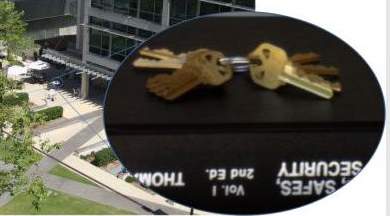
A team from UCSD came up with a way to steal keys without detection. Their SNEAKEY system used teleduplication to take an image of these keys from 195 feet away using imaging equipment, then managed to duplicate them with computer vision algorithms. You can read the details of the studies that were conducted in both laboratory and real settings on their site. The moral of the story is that even though these were the good guys, always keep your keys in your pocket when not needed.
Read More  | UCSD
Gallery: SNEAKEY Reproduces Keys by Teleduplication




Advertisement
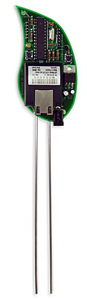 If you believe in the plant that has its own blog, then you might also like to know that you can get your plant to Twitter. A CERN scientist supposedly created this Plant Twitter Kit. Assemble it (some soldering required,) then connect it to your leafy friend and subscribe to its feed, and it will tell you when it needs water or complain if you give too much. We’re still not sure that the gadget will work, and it seems an overpriced $99.99, but hey, if it works on your philodendron, it may work on your puppy.
Read More | ThinkGeek
Gallery: DIY Plant Twitter Kit
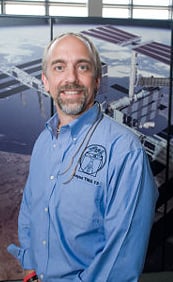 Richard Garriott landed in a Soyuz capsule in Kazastan Friday with 2 cosmonauts after a fun 10 day trip to the ISS. Garriott, who followed in his father Owen’s footsteps, deemed the trip a success. “What a great ride that was,” said Garriott “This is obviously a pinnacle experience.”
The space tourist earned part of the $30 million ticket by testing a watch in microgravity (we wonder if it was a Timex) and conducting an experiment for a biotech company.
Read More | CNN
Gallery: Richard Garriott Re-Enters Earth
N55 Walking House
Posted by Sheila Franklin Categories: Smart Home, Science, Transportation, Videos,
This house can hustle. The Danish art collective N55 teamed with MIT to make a walking house. Standing 10 ft. high, it is both solar and wind powered, and features a living room, kitchen, bathroom, bed, wood stove and a computer for its leg control. They are hoping that the legs can be mounted under any structure and that modules can be linked for larger living spaces. One of the designers, Øivind Slaatto, plans to live in it in Copenhagen. What a great thing it would be if this prototype became real and could get out of the way of tornadoes, overflowing waterways, and nasty neighbors.
Read More | Telegraph
Gallery: N55 Walking House
MINI E Goes For Early Test Drive
Posted by Sheila Franklin Categories: Hot Deals, Science, Transportation,
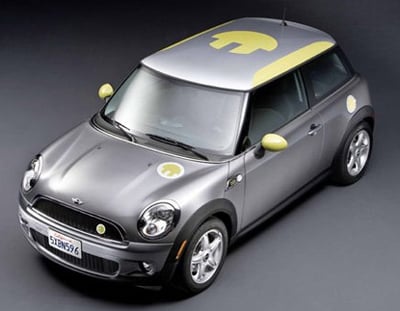
Five hundred lucky folks in Southern California, New York City and New Jersey will be given a chance to test drive the new 3-door MINI E before it is released to the general public. The vehicle is powered by an electric motor and can reach 62 mph in only 8.5 seconds, with a top speed of 95 mph. The motor is made of over 5,000 individual power cells to make up a single battery. Head over to the MINI site to sign up and you may be one of the lucky ones to be chosen.
Read More | Mini E
Gallery: MINI E Goes For Early Test Drive
Buckypaper May Replace Heavy Metal
Posted by Sheila Franklin Categories: PC / Laptop, Science, Transportation,
 Buckypaper may look like regular carbon paper, but is in actual fact Florida State University’s Ben Wang’s material that is 10 times lighter but up to 500 times stronger than steel when stacked and pressed. It has the capability of conducting electricity and dispensing heat. The material is made from tube-shaped carbon molecules 50,000x thinner than a human’s hair. Applications would include energy-efficient aircraft and cars, and more powerful computers. At this point buckypaper, which came out of the discovery of the buckyball (a form of pure carbon,) is only made at half of its strength and is very expensive to produce, FSU is planning to developing it commercially in the next 12 months, according to Wang.
Read More | CNN
Gallery: Buckypaper May Replace Heavy Metal
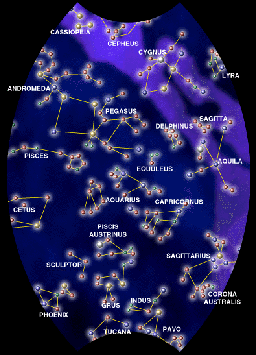 The 2008 Great World Wide Star Count begins today. Amateur and pro skywatchers can go outside, check out a constellation, compare it with one of UCAR’s (University Corporation for Atmospheric Reasearch) charts, then report what you see online. Last year the event drew over 6,600 observations on 7 continents, and the project is hoping to double that amount this year. Running until November 3, the count helps scientists map pollution while forcing all of us to be able to identify something besides Orion.
Read More | UCAR
Gallery: Great World Wide Star Count
Paralyzed Monkey Relearns Movement
Posted by Sheila Franklin Categories: PC / Laptop, Science, Video Games,
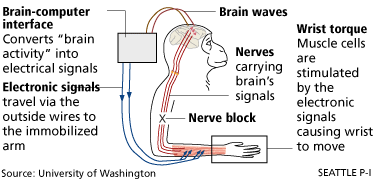
Researchers at the University of Washington have successfully tested a simple approach to help those who are paralyzed. Their method is to use a direct connection between nerve cells and muscles to reteach the brain. The brain-machine interface was used to teach monkeys with wrist paralysis to play a video game. While most scientists were trying to train them to make movements, the team used a biofeedback meter and applesauce (as reward) to change their brain activity.
Read More | Seattle PI
Gallery: Paralyzed Monkey Relearns Movement
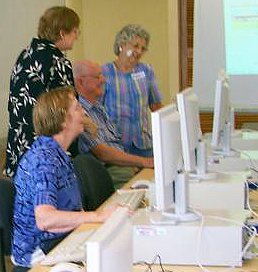 Next time your spouse/partner complains that you are on the Internet too much, you can site this study that will be in an upcoming American Journal of Geriatric Psychiatry. The report suggests that middle-aged and older adults who use the Net may get a brain boosting. Using 24 “normal” volunteers between the ages of 55 and 76, half of the group had previous experience surfing. The participants showed similar brain activity when reading a book and those who went online also registered activity in the frontal, temporal and cingulate areas, which are those that control decision making and complex reasoning.
Read More | Live Science
Gallery: Internet Surfing Encourages Brain Activity
Garriott Heads into The Final Frontier
Posted by Sheila Franklin Categories: Science, Transportation, Video Games,
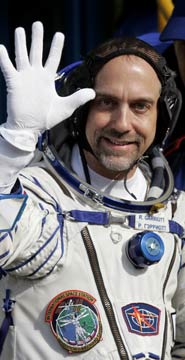 Gaming magnate Richard Garriott made a successful launch into space and becomes the first 2nd generation astronaut. His father, Owen, watched as his son, U.S. astronaut Michael Fincke and Russian cosmonaut Yury Lonchakov boarded the Russian Soyuz TMA-13 spacecraft and took off. Garriott paid $35 million for the privilege of 10 days of galactic fun aboard the Space Station. His projects include blowing bubbles in space to show its effects when done in zero-gravity. Another is to photograph Earth and compare his pictures with those his father took from Skylab in 1973.
Read More | Times Online