

Latest Gear Live Videos
MoMA Features Online Exhibit

Posted by Sheila Franklin Categories: Design, Internet, Science,
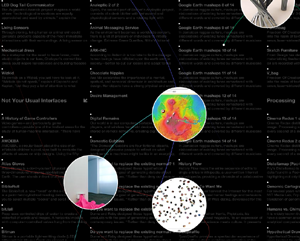
Speaking of MoMA, not only are they exhibiting the likes of AT&T and Nokia at the museum, there is an incredible display online. Combining science with design, there are over 300 concepts in Elastic Mind that are translated into physical objects. The purpose, they say, is to “combine research with attentive consideration of human limitations, habits, and aspirations.”
All we know is that spending a couple of hours on the site may not have the impact of seeing the show itself, but it certainly is worth the time. For example, in Collection for the Lonely Man, it includes the Sheet Thief, which winds up the bed clothes to the other side. Others are Cold Feet, Heavy Breather, Plate Thrower, and Hair Alarm Clock that will run hair across the user to wake him.
Read More  | MoMA Elastic Mind
Advertisement
SOTAB Assists in Oil Spills
Posted by Sheila Franklin Categories: Design, Misc. Tech, Science, Transportation,
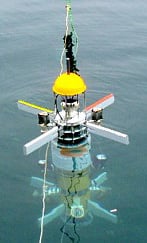 Researchers from Osaka University have developed SOTAB 1 (Spilled Oil Tracking Autonomous Buoy 1) with imaging sensors that can spot globs from a distance. The GPS bot dives down and when it senses something that resembles oil, floats back to the surface and “swims” towards the oil spill. SOTAB then helps cleanup crews by providing data on wind speed, and depth and temperature of the water. Still in the developmental stage, head researcher Naomi Kato hopes the 243 lb. robot will be available commercially in a couple of years.
Read More | Pink Tentacle
NYTE Shows Patterns of Communication Through Art
Posted by Sheila Franklin Categories: Design, Internet, Misc. Tech, Science,
 Once again, science has crossed over into the area of art. MIT has teamed with AT&T to create New York Talk Exchange, which debuted this week at the Museum of Modern Art. The NYTE measures the volume of IP and telephony that goes in and out of the city anonymously. It then is portrayed visually at the museum as well as on the Internet. Globe Encounters displays NY’s connections to other cities globally. Pulse of the Planet shows how they alter during a 24 hour period with time zone changes. The third exhibit studies the five boroughs and how they vary.
Studying the data shows that New York tends to “reach out and touch” Asia and South America, whereas London concentrates on New York and Europe. They are hoping that it will help in studies overall in the area of globalization.The display will be active through May 12.
Read More | MIT News
Cloning Your Pooch
Posted by Sheila Franklin Categories: Smart Home, Science,
 For years people have saved their pets through taxidermy, including Roy Rogers, who had Trigger and Bullet stuffed and placed in his museum. Now, thanks to a So. Korean company, you can have your pup forever immortalized by cloning. RNL Bio will gratefully accept your $150,000 and claims that there is a 25% possibility of success. Seoul National University will be performing the actual procedure and although RNL prefers creating guard dogs, they won’t turn down a beloved pet. While this is a nice idea if you adored your dog, you might want to double think the idea if he/she was hesitant to become housebroken when a puppy.
Read More | Korea Times
Electronic Plant Traps Unsuspecting Flies
Posted by Sheila Franklin Categories: Smart Home, Misc. Tech, Science, Toys,
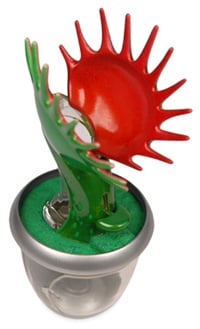 We never could get Venus Fly Traps to stay alive long enough to chomp down on all the nasty summer visitors. Now, with Discovery’s motion activated Trap, just feed it 3 AA batteries (not included) and its sensor will close its “mouth” on bugs without you having to tend it. Add bait if the flying creatures don’t want to go for the pseudo plant and, after they are captured, you can release them or study them for a bit. At a size of 4.25 x 4.25 x 9-inches, the plastic VFT will set you back $19.95.
Read More | Discovery Channel Store
Machine Analyzes Coffee
Posted by Sheila Franklin Categories: Smart Home, Misc. Tech, Science,
 Researchers have devised a machine that can analyze the flavor of coffee. With a built-in electronic taster, it can determine more than 1,000 substances that go into java’s aroma by studying its gases. So far the scientists feel that it can assess espresso as well as its human counterpart. Switzerland’s Christian Lindinger and his team will report their findings in the March issue of Analytical Chemistry. We can’t wait until they place one into a Denny’s and tell them that the coffee they use in pre-packaged containers are probably double the amount of grounds that they need.
Read More | Live Science
UFO May Really Be Army Drone
Posted by Sheila Franklin Categories: Misc. Tech, Science, Videos,
British drone makers from the GFS Projects, who have been given a research contract from the U.S. Army, will be flying (literally) back across the pond to partake in the Grand Challenge in August. They will be entering one of their 31-inch diameter saucers which they feel, according to the competition rules, is an “autonomous or semi autonomous system designed to detect, identify, monitor and report the position of a wide range of threats within a complex military urban environment, including within individual buildings.”
So if you think you espied a UFO kicking around the planet sometime, you may be seeing the real thing.
Read More | Wired
iPods and Pacemakers Get Along After All
Posted by Sheila Franklin Categories: Apple, Music, Portable Audio / Video, Science,
 After the FDA did their homework, they came to the conclusion that iPods probably won’t interfere with pacemakers. After a scare when a high school student said he detected electrical interference, the agency may not have thought much of it, but just to be sure…
Several models’ magnetic fields were used in the test with a saline bag substituting for a human body along with the voltage delivered inside of the pacemaker by iPods. While the results of the testing is great news for music fans, if you have a pacemaker, remember to keep away from those microwave ovens.
Read More | Far East Gizmos
To Clone or Not to Clone
Posted by Sheila Franklin Categories: Design, Editorial, Misc. Tech, Science,
 We understand assembly lines pumping out electronic gadgets at unholy speeds so that the masses can have their toys. But when the FDA announced that cloned beef is acceptable to eat once the USDA has determined that we are “used to the idea,” we just had to wonder. Whatever happened to natural foods? We are still getting accustomed to the hormones injected into our meat that causes puberty in children a few years earlier than seems natural. Genetically altered grain runs rampant. But do we really want to eat a poor animal who has been created solely through scientific means? Should that be considered organic? What do you guys think?
Read More | Washington Post
CES 2008 Video: Tour the AMD Smart House

Posted by Andru Edwards Categories: Full Episodes, Gizmatic, CES, CES 2008, Features, Handhelds, Home Entertainment, Household, PC / Laptop, Podcasts, Portable Audio / Video, Video Games, Videocasts,
While at CES, we got the opportunity to check out the AMD Smart House. The Smart House is a demonstration by AMD of all the different ways that their processors can help enhance day-to-day life of every day consumers. The Mother/Father/Daughter/Sun schtick is a bit thick at times, but the potential of the smart home of the future shines through nonetheless.








Advertisement
© Gear Live Inc. {year} – User-posted content, unless source is quoted, is licensed under a Creative Commons Public Domain License. Gear Live graphics, logos, designs, page headers, button icons, videos, articles, blogs, forums, scripts and other service names are the trademarks of Gear Live Inc.