

Latest Gear Live Videos
Giveaway: Cosmos: A Spacetime Odyssey on Blu-ray!

Posted by Andru Edwards Categories: Features, Home Entertainment, Movies, Science,
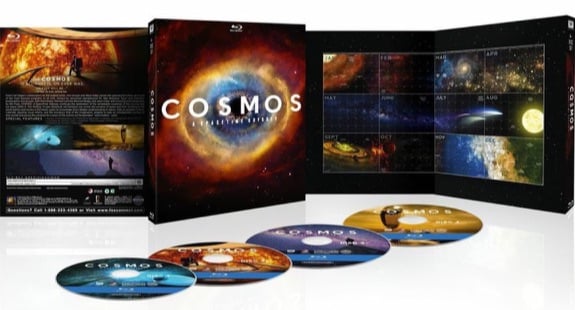
If you happened to catch the 13-part adventure that was Cosmos: A Spacetime Odyssey, hosted by Neil deGrasse Tyson, then you are already aware that it's a visual masterpiece worthy of being in your collection, and we're giving away a copy of the Blu-ray set. Aside from the 13 episodes in crisp 1080p, the $40 set includes over two hours of bonus content:
- The Cosmic Calendar: An Interactive Look at the History of the Universe (Blu-ray Exclusive)
- COSMOS: A Spacetime Odyssey – The Voyage Continues
- Celebrating Carl Sagan: A Selection From The Library of Congress Dedication
- COSMOS at Comic-Con 2013
- Audio Commentary on Episode One: “Standing Up in the Milky Way”
Cool, right? Ready to enter? Simply use the widget below to keep track of your entries! If you're a Gear Live Patreon backer at any level, you get an extra 25 entries in this giveaway! We've got a lot of ways for you to enter even if you aren't, but don't check off any that you don't actually perform. If you do, you'll be eliminated:
Advertisement
Taser-proof your clothes with carbon fiber

Posted by Ariel Levin-Waldman Categories: Wearables, Mods / Hacks, Science,

Remember the scene in Batman Begins where Christian Bale takes a taser directly to his bat armor and doesn't flinch? If you found that pretty cool then get excited, because this same borderline-superhuman ability can be yours. Hackaday user Shenzhen claims to have developed a way to make stun gun-proof clothing.
You won't look as intimidating as the Batman but you can get away with more style since just about any piece of clothing can be converted into high tech shock-armor. You just need a layer of carbon fiber, and that's widely available, given that it is commonly used in upholstery fabric at under $20 per yard.
Click to continue reading Taser-proof your clothes with carbon fiber
2013 Holiday Gift Guide: Strawz Constructible Drinking Straw Kit
Posted by Andru Edwards Categories: Science, Toys, Kids, Under $100, Under $25, Under $250, Under $50, Under $500,

You know how kids love playing with straws, right? Our next 2013 Holiday Gift Guide entry encourages it. The Strawz Constructible Drinking Straw kit takes it to the next level. You'll blow the minds of your kids, as the set lets them drink from multiple glasses at the same time. They're durable too, and can be taken apart and reshaped by your junior scientists again and again.
You can pick up the Strawz Constructible Kit now from Amazon for $11.95.
Read More  | Strawz Connectible Drinking Straw Kit
2013 Holiday Gift Guide: Snap Circuits Jr.
Posted by Andru Edwards Categories: Toys, Kids, Under $100, Under $25, Under $250, Under $50, Under $500,
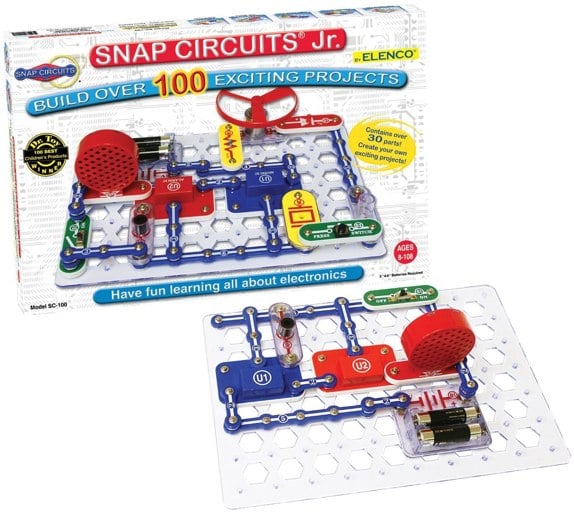
We've found another fun, inexpensive geeky toy to feature in our 2013 Holiday Gift Guide. With Snap Circuits Jr., discovering the wonders of science and building cool electronics can be done in a snap. Winner of a Dr. Toy 100 Best Children's Products award, Snap Circuits Jr. comes with easy-to-follow directions that help you snap together a variety of intriguing experiments. Create things like a dual-speed fan, periodic doorbell, photo sensor police siren, flashing laser light, and more. Comes with over 30 easy-to-identify reusable color-coded parts and instructions. Definitely something cool to do with the little ones.
You can pick up Snap Circuits Jr. now from Amazon for $20.55, a 41% savings.
Click to continue reading 2013 Holiday Gift Guide: Snap Circuits Jr.
Read More | Snap Circuits Jr.
Aquafarm is a self-sustaining aquaponics fish garden
Posted by Andru Edwards Categories: Smart Home, Science,
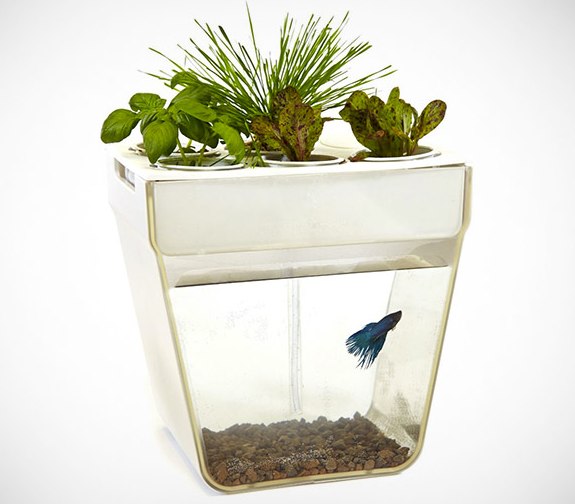
Tiny fish tanks can be boring, but the Aquafarm serves as both a home for your fish and an herb garden that provides you with delicious, fresh plants. Even better, all you need to do is remember to feed the fish to make everything happen. You see, through aquaponics, the plants use the nutrients from the fish poop to nourish themselves and keep on growing strong. In turn, the plants keep the water clean, so you don't have to. You get five planters, and seeds to grow wheat grass, lettuce mix, and basil from Seeds of Change. All this for $59.99 from ThinkGeek.
Read More | Aquafarm Aquaponics Fish Garden
Scientist Names Ancient Creature After Johnny Depp

Posted by Robin Paulson Categories: Classics, Horror, Romance, Celeb News,
.jpg) While Johnny Depp has already become immortalized in the films he has made throughout his career, the Transcendence actor will now always be remembered by the scientific community as the inspiration for naming a recently discovered ancient animal.
While Johnny Depp has already become immortalized in the films he has made throughout his career, the Transcendence actor will now always be remembered by the scientific community as the inspiration for naming a recently discovered ancient animal.
Working on his PhD at Imperial College London, David Legg carried out research concerning a 505 million year old fossil of a creature that he dubbed Kooteninchela deppi, after Depp's character in the classic Tim Burton film, Edward Scissorhands. Legg, admittedly a fan of the 49 year old star explained his thought process in naming the fossil (see what it looks like after the jump):
“When I first saw the pair of isolated claws in the fossil records of this species I could not help but think of Edward Scissorhands. Even the genus name, Kootenichela, includes the reference to this film as ‘chela’ is Latin for claws or scissors. In truth, I am also a bit of a Depp fan and so what better way to honor the man than to immortalize him as an ancient creature that once roamed the sea?”
Click to continue reading Scientist Names Ancient Creature After Johnny Depp
Read More | Imperial College London via People
Guy born with total color blindness can now hear colors
Posted by Andru Edwards Categories: Science, Software, Videos,

Neil Harbisson was born with achromatopsia, which means he can't see colors. He lives in a world of black and white. Not satisfied with having to remember that the sky is blue, or that lemons are yellow, he teamed up with Adam Montandon to develop a brain implant that they call the Eyeborg, which turns colors into sounds. In 2010, the Cyborg Foundation was born--an organization to help humans become cyborgs. Check out the fascinating details in the video after the jump, and be on the lookout for other projects from the Cyborg Foundation, including the Earborg (turns sounds into colors,) and the Speedbord (detects movement through earrings that vibrate.)
Click to continue reading Guy born with total color blindness can now hear colors
Ray Kurzweil joins Google, will focus on machine learning

Posted by John Kilhefner Categories: Corporate News, Google, Science,

Ray Kurzweil announced via his blog that he is joining Google to work on projects that consisting of machine learning and language processing.
"I'm excited to share that I'll be joining Google as Director of Engineering this Monday, December 17," Kurzweil said. "I've been interested in technology, and machine learning in particular, for a long time: when I was 14, I designed software that wrote original music, and later went on to invent the first print-to-speech reading machine for the bling, among other inventions. I've always worked to create practical systems that will make a difference in people's lives, which is what excites me as an inventor."
Kurzweil will serve as a Director of Engineering, though it's not clear on how immediate Kurzweil's focus will be on consumer products.
Read More | Kurzweil
Will.i.am debuting new track on Mars first, Earth second, through Curiosity rover
Posted by Andru Edwards Categories: Music, Science,

Hip hop and pop performer, producer, Grammy-winner, and all-around mogul Will.i.am is set to premiere his new track tomorrow, but Earthlings won't be able to enjoy it. Why? Well, Will.i.am is debuting his new song "Reach for the Stars" on Mars. Wait, what?
No, seriously. The music will be piped through the Mars Curiosity Rover before debuting here on our humble, overrated planet. What's the over/under on Martians being discovered when they seek out Curiosity, destroying it to stop the insipid music? Tonight's gonna be a good night.
Read More | NASA
NASA releases color footage of Curiosity rover descent onto Mars
Posted by Andru Edwards Categories: Science, Videos,
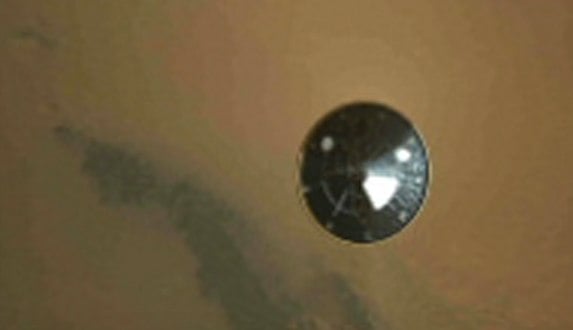
NASA's Curiosity rover landed on Mars yesterday morning, and today we get a detailed look at the descent. Comprised of 297 thumbnail images, this stop-motion video gives us a look at the two-and-a-half minutes it took for Curiosity to touch down on the red planet. Curiosity landed in the Gale Crater, and you can get a look at the video after the break.
Click to continue reading NASA releases color footage of Curiosity rover descent onto Mars
Read More | NASA









Advertisement
© Gear Live Inc. {year} – User-posted content, unless source is quoted, is licensed under a Creative Commons Public Domain License. Gear Live graphics, logos, designs, page headers, button icons, videos, articles, blogs, forums, scripts and other service names are the trademarks of Gear Live Inc.